Scorching summer temperatures quickly transform a simple garden water feature into a vital lifeline for local wildlife. However, simply placing a bowl outside isn’t enough, as poor placement might actually keep feathered visitors away.
During peak heat waves, wild birds face an exhausting daily battle for survival. Natural water sources evaporate, and baked earth makes foraging incredibly difficult. By offering a properly maintained birdbath and appropriate snacks, you can effectively support these backyard creatures.
Garden birdbaths: Choosing the perfect spot and maintaining hygiene
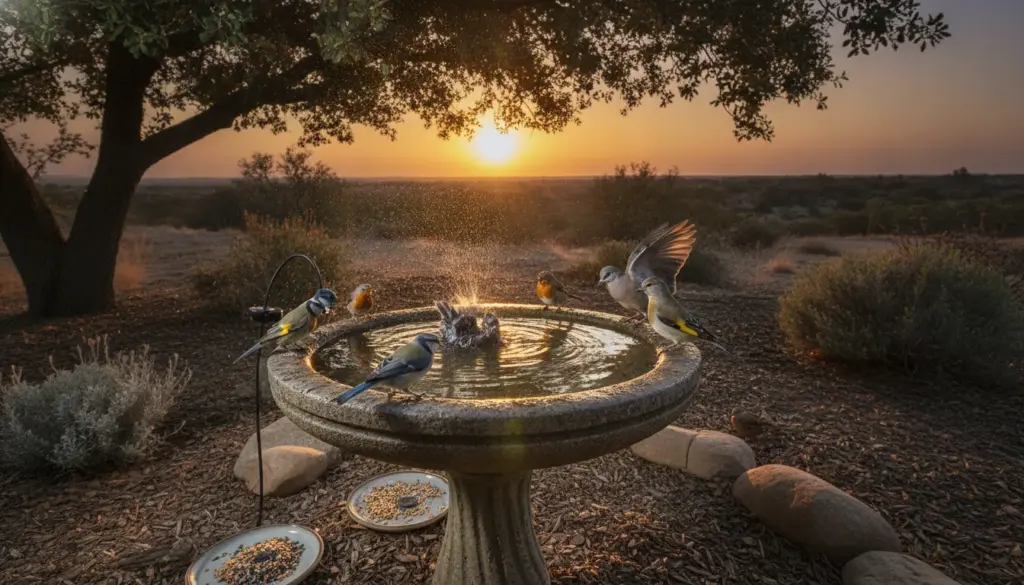
You don’t need expensive equipment to provide a refreshing drink for nature. A shallow clay saucer or a repurposed plant pot tray works wonderfully. To encourage actual bathing, the ideal water depth should sit exactly between two and a half and ten centimeters. This specific measurement allows small flyers to comfortably wash their feathers and bring their body temperature down.
Finding the optimal location is arguably more critical than the container itself. Feathered guests will completely ignore a water source if they sense danger. Splashing around causes major distractions, making them highly vulnerable to stalking neighborhood felines.
To counter this, position your basin near protective bushes or low-hanging tree branches. This provides robins, blackbirds, and other species with a rapid escape route if threatened. Cleanliness is equally crucial to prevent disease spread.
Scrub the dish daily using boiling water and a stiff brush, making sure to replace the drinking supply completely. An excellent expert trick involves rotating two separate basins, leaving the unused one out in the blazing sun to naturally sterilize.
Establishing a reliable mini-pond creates a bustling hub of activity right in your backyard. It naturally becomes a fantastic, unobtrusive location for wildlife observation. You might spot cautious tits or finches darting in for a rapid sip. Meanwhile, highly social species like sparrows and starlings often arrive in large flocks, treating the area to an energetic group splash.
Feeding backyard birds in summer: The right approach
Severe droughts bake the topsoil into a solid crust, making it virtually impossible for parents to pull earthworms for their hungry chicks. Offering supplemental nutrition during this demanding breeding cycle can make a massive difference. Focus on providing highly digestible, protein-packed options that deliver instant energy:
- Dried mealworms and insects
- Small, nutrient-dense seeds
Pay close attention to the physical size of any offered snacks. Chunky peanuts and whole nuts pose a severe choking hazard to inexperienced fledglings. Furthermore, human leftovers, especially baked goods and salted treats, are incredibly harmful to their delicate digestive systems and must be strictly avoided.
To minimize bacterial outbreaks, opt for enclosed feeding tubes rather than traditional open tray houses. Covered dispensers naturally prevent droppings from contaminating the seed supply beneath. Finally, only scatter small, manageable portions that will be consumed rapidly, and remember to sanitize the feeding stations on a rigorous schedule.