Spotting the Silent Invader
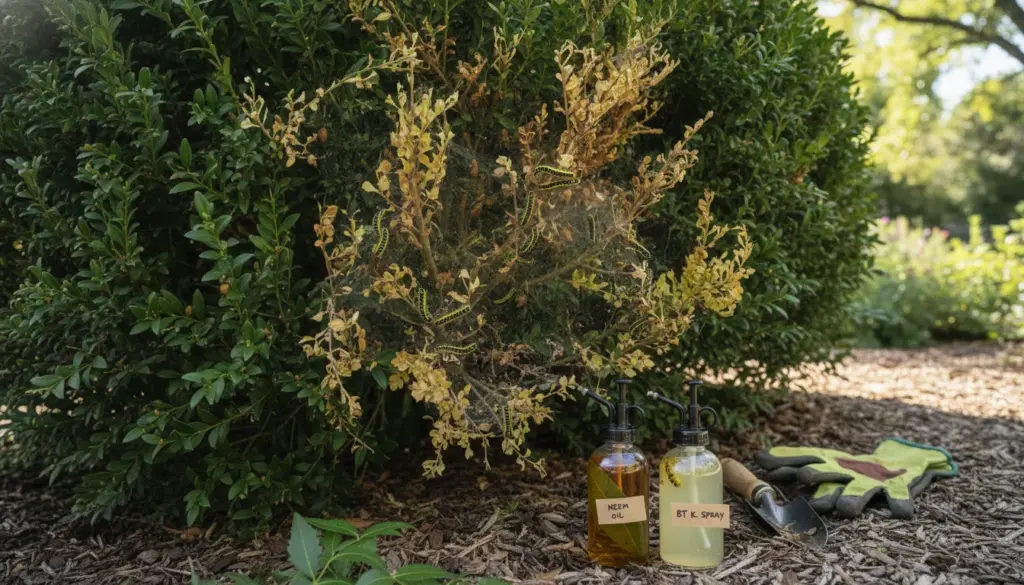
They arrive without a sound, devour your plants relentlessly, and often remain completely hidden until it is too late. The box tree moth, an invasive pest originally from Asia, has become one of the most dreaded invaders in our gardens. Because these larvae systematically munch their way from the center of the shrub outward, homeowners usually only notice the infestation when significant structural damage has already occurred.
If you spot translucent, yellowish-brown foliage or notice delicate silken webs tangled deep inside the branches, your shrub is likely under severe attack. These subtle visual indicators serve as an immediate alarm signal, urging you to take action before the entire plant is permanently defoliated.
Proven Methods to Stop the Destruction
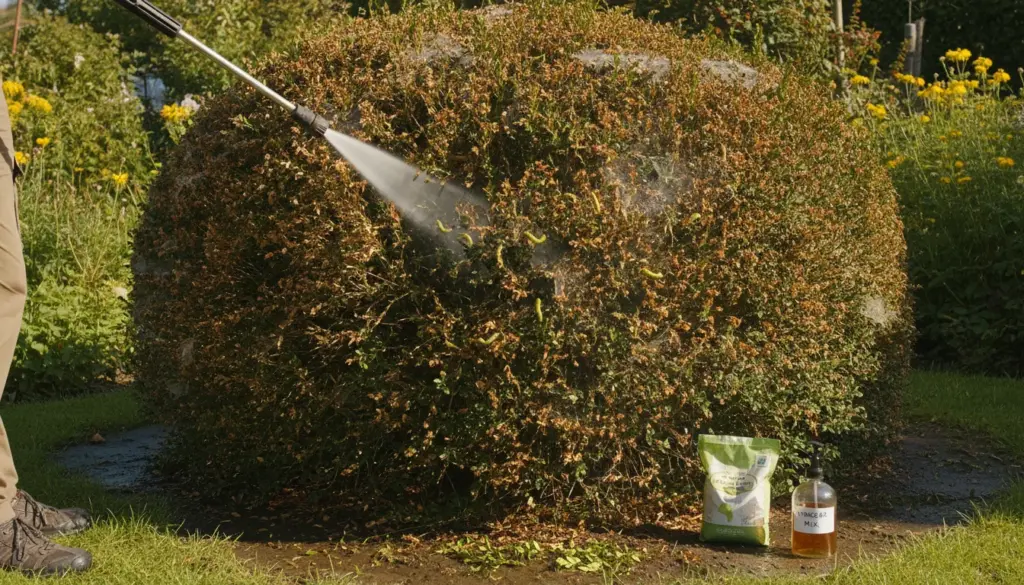
Before resorting to harsh chemical sprays, it is highly advisable to explore natural solutions that genuinely eliminate the problem. For expansive hedge installations, a rigorous mechanical approach is often the most practical first step. Utilizing a high-pressure cleaner effectively blasts the hidden caterpillars out of the dense foliage, allowing for rapid physical removal and immediate relief for the plant.
However, simply eliminating the currently active generation is only half the battle. To ensure lasting protection, applying a specialized algae lime and vinegar mixture takes your defensive strategy to the next level. This powerful natural combination creates a hostile surface environment that actually prevents newly laid eggs from ever hatching into the next wave of hungry pests.
Why Popular Hacks Often Fail
Understanding what doesn’t work is just as crucial for plant survival as knowing what does. Baking soda is frequently touted as a miracle household cure for various garden ailments. While it performs beautifully when managing fungal diseases or common aphid colonies, it falls completely flat when deployed against this specific moth species.
Relying on ineffective household powders merely grants the insects additional time to destroy your carefully manicured greenery. By combining prompt mechanical removal with targeted natural treatments like algae lime, you can successfully break the breeding cycle and restore health to your garden.