Harvesting Strawberries: Why the Stem Must Stay
Summer just wouldn’t be the same without the sweet, juicy burst of fresh strawberries. While these vibrant red treats are a joy to grow on a balcony or in a backyard patch, pulling them from the plant requires a delicate touch. A clumsy harvest often leads to squished fruits and a rapid outbreak of fuzzy gray fungi.
Despite their misleading name, these garden favorites aren’t technically berries at all. They actually belong to the aggregate fruit family. This fascinating botanical quirk doesn’t stop them from being one of the most highly prized summer snacks and a staple for any home gardener.
Raising these plants is fairly straightforward, though they are notoriously sensitive to poor airflow. When the lush foliage grows thick during peak summer, trapped moisture and heat create an ideal breeding ground for fungal spores and hungry pests. Careful, routine inspections of your strawberry patch are absolutely essential to maintain plant health.
Most modern backyard plots feature the common garden strawberry, a hybrid born in the Netherlands around 1750 from American and Chilean ancestors. Over a thousand distinct varieties exist today, yet only a tiny fraction ever make it to supermarket shelves. Growing your own gives you the unique opportunity to explore rare flavors you simply cannot buy.
Harvesting Strawberries: Clearing the Bush
Depending on the specific cultivar, your picking window might stretch from late May all the way into September. Planting a diverse mix of early and late bloomers ensures a continuous supply of sweet treats throughout the warmest months.
When it is finally time to gather your crop, a few golden rules apply:
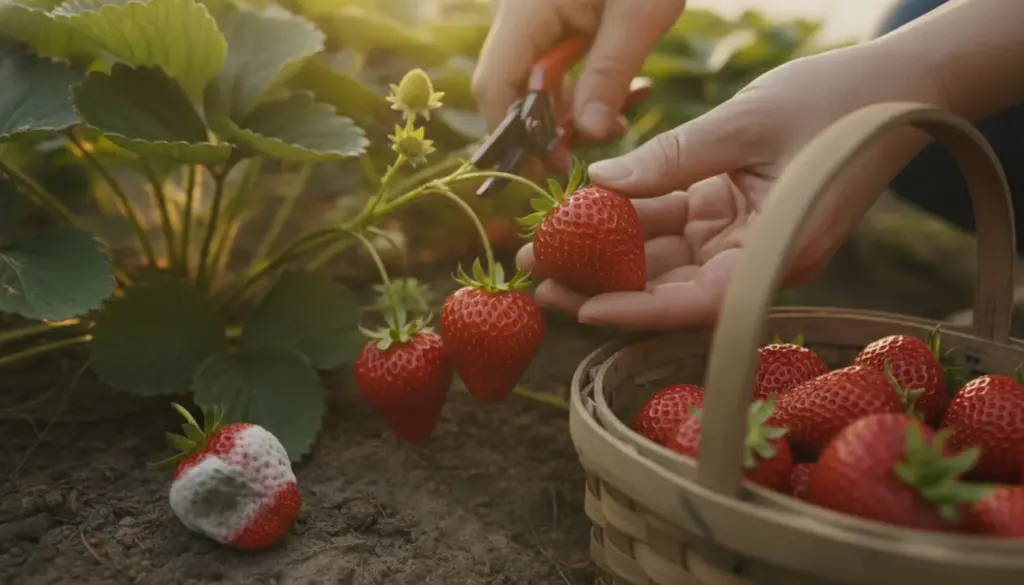
- Keep the green cap intact: Resist the urge to pull the red flesh right off the stalk. Leaving the green stem attached significantly extends the fruit’s brief shelf life. Tearing the cap off creates an open wound, making the strawberry highly susceptible to immediate rot.
- Clear out damaged goods: Every single ripe, overripe, or pest-damaged piece must be removed from the foliage. Leaving decaying matter on the plant acts as a fast track for fungal infections, which will quickly jump to your perfectly healthy, developing berries.
- Avoid overcrowding: Always use a wide, shallow basket for your harvest. Piling these delicate treats too high causes crushing at the bottom, leading to bruised, mushy, and inedible fruit.
If you manage to resist eating your haul immediately, proper storage is crucial. Keep the unwashed crop covered in the refrigerator with their stems securely attached. Try to consume them within two days, as their peak flavor and texture fade rapidly.
Before taking that first bite, a quick saltwater soak is highly recommended. Submerging the fresh produce briefly draws out any tiny, unseen larvae or insects hiding deep within the seed crevices. These homegrown delights also serve as a fantastic, healthy substitute whenever a sudden craving for chocolate strikes.
Never salvage a moldy strawberry. If you spot even a tiny patch of fuzz on one side, toss the entire piece into the compost bin. Because these aggregate fruits have an exceptionally high water content, invisible fungal spores contaminate the entire flesh long before you can actually see them.