The Hidden Value of Green Lacewings and Their Larvae
Many beneficial bugs hide in plain sight among thick hedges, dead wood piles, and dense plant foliage. Green lacewings often go entirely unnoticed, yet these delicate creatures are incredibly beneficial for plant health. Actively encouraging them to settle in your outdoor spaces can naturally transform your pest management strategy.
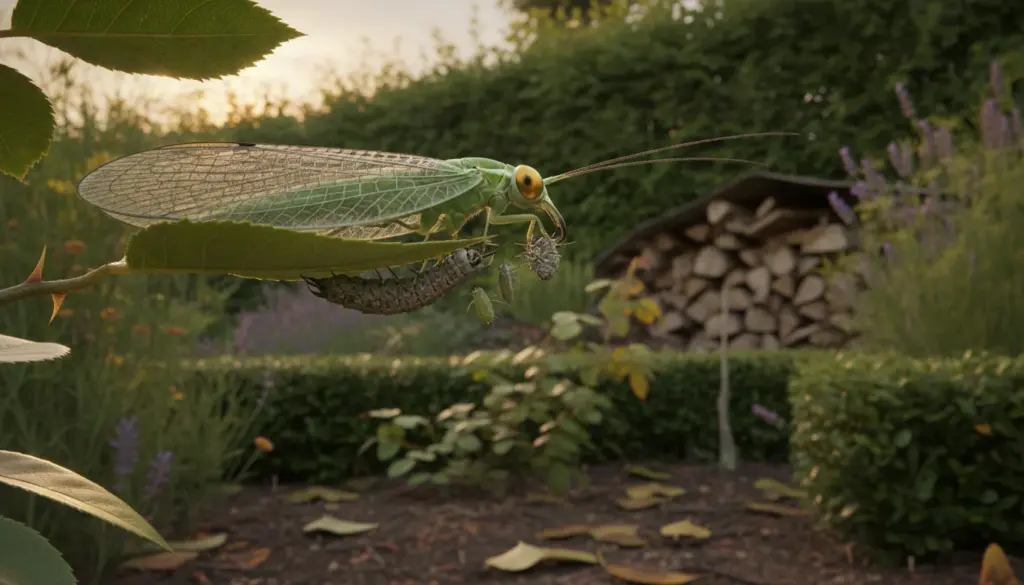
Scientifically known as Chrysoperla carnea, the common green lacewing is a frequent visitor to almost any planted area. Often referred to as the golden-eye or aphid lion, this fascinating species features shimmering metallic eyes and delicate, translucent wings. Interestingly, it was even crowned Insect of the Year in 1999 due to its impressive ecological contributions. While the adult bugs possess a rather graceful, fairy-like green appearance with prominent antennae, their offspring boast a remarkably different, far less elegant look.
Belonging to the net-winged insect family, their name derives from the intricate vein patterns found on their wings. With nearly 35 distinct species present locally, these bugs primarily become active as twilight approaches. During daytime hours, they prefer to rest quietly on the undersides of foliage, which perfectly explains why they are so rarely spotted. A fully grown specimen reaches up to 1.5 centimeters in length, relying heavily on highly sensitive antennae alongside their compound eyes for precise navigation.
Because they adapt so well to human environments, these helpful flyers frequently make themselves at home in residential neighborhoods. When temperatures drop, they often seek refuge indoors, settling comfortably behind window blinds or curtains. Unheated sheds, attics, and even a simple pile of autumn leaves provide excellent winter sanctuaries. Occasionally, they might even take up residence inside empty bird nesting boxes.
The Ultimate Natural Pest Controllers
Why exactly are these tiny flyers such a fantastic asset to cultivators? The secret lies almost entirely with the younger generation. The brownish-beige, elongated larvae look slightly intimidating with their prominent grasping pincers, but they are exactly what organic growers and houseplant enthusiasts need most.
While mature adults sustain themselves strictly on nectar, pollen, and honeydew, the developing young are voracious predators. These hungry youngsters actively hunt down spider mites, aphids, small caterpillars, and mealybugs. Earning their well-deserved nickname as “aphid lions,” a single hungry larva can easily devour up to 100 plant pests in just one day.
However, there is one minor catch to keep in mind, particularly if you are utilizing them inside a greenhouse or home. If their primary food source runs dry, these aggressive hunters may turn on other beneficial bugs like ladybugs—or even cannibalize their own siblings.
How to Attract These Helpful Hunters
Encouraging these natural exterminators to move in is relatively straightforward. Specialized lacewing sheltering boxes offer a great starting point, but cultivating the right flora is by far the most effective method. Creating a biologically diverse, natural garden naturally draws them in.
To make your outdoor space utterly irresistible, consider planting these botanical favorites:
- Buckwheat
- Dog roses
- Corn poppies
- Umbellifers (such as carrots, parsley, and similar crops)
- Composite blooms (including yarrow, marigold, and their relatives)
- Hawthorn shrubs and dense protective hedges
For indoor jungle caretakers, establishing a wild botanical garden isn’t an option, but highly effective solutions still exist. Live breeding kits are widely available, allowing plant lovers to purchase dormant larvae safely. Once released among your indoor greenery or enclosed growing spaces, these microscopic predators will immediately get to work clearing out unwanted infestations.