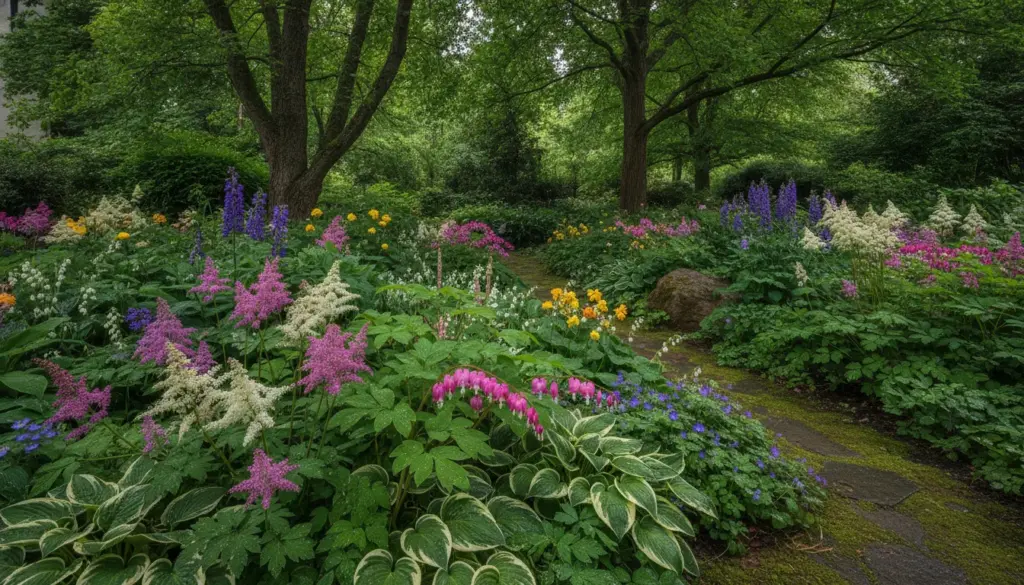
Properties featuring north-facing gardens, enclosed balconies, or mature, leafy trees often suffer from a noticeable lack of direct sunlight. As a gardening enthusiast, I frequently hear the misconception that a shaded yard requires sacrificing vibrant, blooming botanicals. Fortunately, this is entirely a myth.
A surprising number of resilient plant varieties actually thrive away from harsh solar rays. Not only do the following ten perennials flourish in partial shade, but they also boast remarkable winter hardiness. They will return reliably year after year, introducing beautiful textures and truly delightful fragrances to the darkest corners of your landscape.
10 Fragrant and Cold-Hardy Plants for Shaded Spots
1. Lily of the Valley
Growth height: Medium
Appearance: Broad leaves resembling wild garlic, paired with delicate, bell-shaped white blossoms.
Blooming period: May to June
Unlike its culinary lookalike, this woodland classic carries a sophisticated, intoxicating perfume that has long been prized by the global fragrance industry. However, it is crucial to remember that this beautiful plant is highly toxic. Care must be taken never to confuse it with edible wild garlic during your spring foraging.
2. Sweet Violet
Growth height: Low-growing ground cover
Appearance: Modest, yet striking mid-sized purple blossoms.
Blooming period: March to April
Living up perfectly to its namesake, this charming little ground-hugging perennial releases a remarkably robust and sugary aroma into the crisp spring air.
3. Sweet Woodruff
Growth height: Medium
Appearance: Slender stems adorned with whorled green foliage and tiny white floral clusters.
Blooming period: April to June
Emitting a distinctively warm, spicy-sweet vanilla fragrance, this herb owes its unique smell to a naturally occurring compound called coumarin. While it is traditionally utilized as a flavoring agent in seasonal punches and wobbly desserts, it must be handled with respect, as consuming excessive amounts can be harmful.
4. Bleeding Heart
Growth height: Medium to tall
Appearance: Unmistakable, pendulous drop-shaped flowers available in pink or pristine white.
Blooming period: April to May
Though visually stunning with its highly unique floral architecture, this elegant shade-lover provides only a very subtle, understated whisper of fragrance.
5. Foamflower
Growth height: Medium
Appearance: Fluffy, cloud-like spikes consisting of miniature white or pale pink florets.
Blooming period: April to June
Similar to the bleeding heart, this textural beauty offers a gentle, unobtrusive scent that adds a light, airy freshness to heavily shaded garden borders.
6. Astilbe
Growth height: Varies greatly from dwarf to quite tall, depending on the specific cultivar
Appearance: Showy, feather-like floral plumes ranging from soft pastel pinks to deep, vivid purples.
Blooming period: May to September
Often referred to as false spirea, this majestic plant rewards patient gardeners with a finely spun, sweet aroma throughout the warmer summer months.
7. Hosta
Growth height: Medium, though they tend to spread significantly outward over time
Appearance: Primarily grown for their expansive, strikingly patterned, and multicolored foliage.
Blooming period: July to August
While most landscapers cultivate them strictly for their lush, architectural leaves, their late-summer blossoms deliver a surprisingly delightful, crisp, and sugary perfume.
8. Bergenia
Growth height: Medium
Appearance: Elongated stalks supporting clustered, cup-like blooms, accompanied by broad leaves that often transition to a striking crimson in autumn.
Blooming period: March to May
Commonly referred to as elephant’s ears, these highly robust plants yield a welcoming, pleasant fragrance. Keep in mind that the intensity of their scent can shift considerably based on the specific variety you choose.
9. Cranesbill Geranium
Growth height: Ranges from low-lying mats to taller upright forms
Appearance: Deeply lobed, textured foliage with simple, open-faced flowers in a wide spectrum of hues.
Blooming period: May to August
Most true geraniums provide a pleasingly earthy, aromatic character to the garden. However, botanical selection matters—be absolutely sure to avoid the variety known as Herb Robert, which is infamous among gardeners for its deeply unpleasant odor.
10. Woodland Phlox
Growth height: Low, often exhibiting a spreading or creeping habit
Appearance: Loose clusters of petite, star-shaped blossoms in shades of icy blue, soft violet, or pure white.
Blooming period: April to May
This creeping ground cover packs a serious olfactory punch. Its heavy, mesmerizing fragrance is frequently compared to the rich, nostalgic smell of blooming lilacs.
The Optimal Time for Planting
Establishing a fresh botanical display in your yard is theoretically possible at any point in the year, provided you are purchasing established potted plants from a local nursery. However, newly developing root systems are highly sensitive to soggy, waterlogged environments.
Because of this moisture sensitivity, aiming for a planting window between early spring and the end of late summer generally yields the highest success rates. If necessary, setting them into the earth during drier, completely frost-free periods of the winter is also a viable horticultural approach.
Key Facts About Fragrant Shade Plants
Which aromatic perennials perform well without full sun?
A diverse array of cold-hardy species can effortlessly transform your darker landscape corners. Sweet violets, foamflowers, true geraniums, astilbes, and hostas all manage perfectly fine with limited direct light. They will faithfully return each season, continually enriching your outdoor space with their distinct perfumes.
What is the typical flowering schedule?
By carefully curating your selection, you can achieve a continuous display of petals and scents from early spring right through to early autumn. Sweet violets and bergenias typically lead the charge in March. Sweet woodruff and woodland phlox follow closely behind in April, while hostas and astilbes stretch the vibrant floral season all the way into September.
Which shade-loving varieties offer the most potent fragrances?
If you are looking to maximize scent, woodland phlox, lily of the valley, and sweet violets should be at the very top of your list. The phlox mimics the heavy scent of lilacs, the violet offers a concentrated sugary blast, and the lily of the valley produces an elite, perfume-grade aroma. Conversely, if you prefer just a subtle hint of fragrance, the foamflower, bleeding heart, and bergenia provide a much milder olfactory experience.
When should a shaded floral bed be established?
Horticultural best practices suggest getting your foliage into the ground between the warming days of spring and the close of late summer. This specific timeframe prevents tender young root systems from rotting in overly damp, cold soil. While nursery-grown container plants are sold year-round, winter planting should only ever be attempted when the ground is entirely dry and free from hard frost.
Comparing Lily of the Valley and Sweet Woodruff: Which smells better?
In terms of sheer intensity, the lily of the valley is the undisputed champion, boasting a signature scent celebrated by master perfumers worldwide. While sweet woodruff does possess a lovely, warm vanilla profile, there is a catch. Its aromatic compounds are locked away within the leaves and only become truly pronounced once the plant material begins to dry and wilt. When actively growing fresh in the ground, its smell is barely detectable.