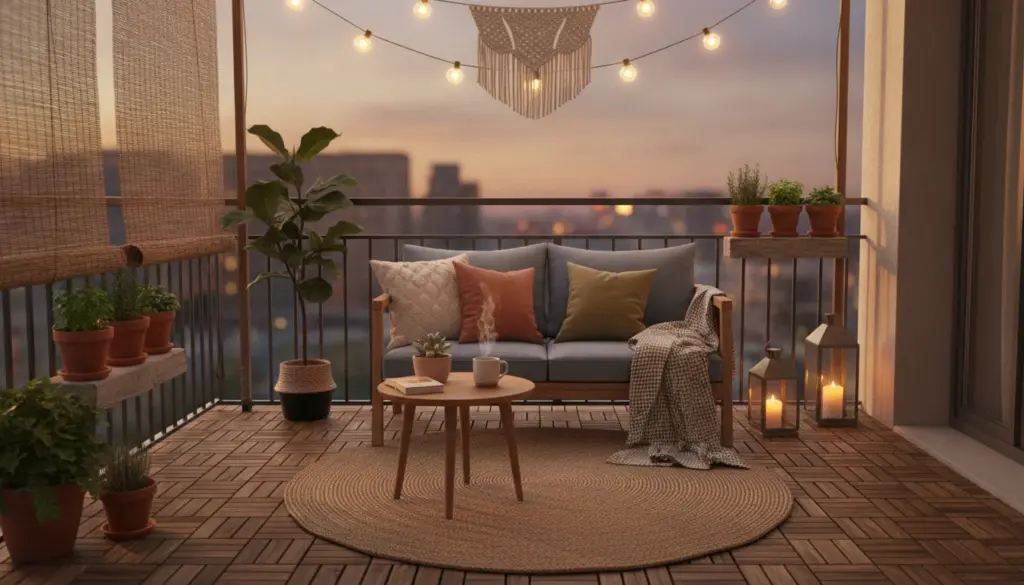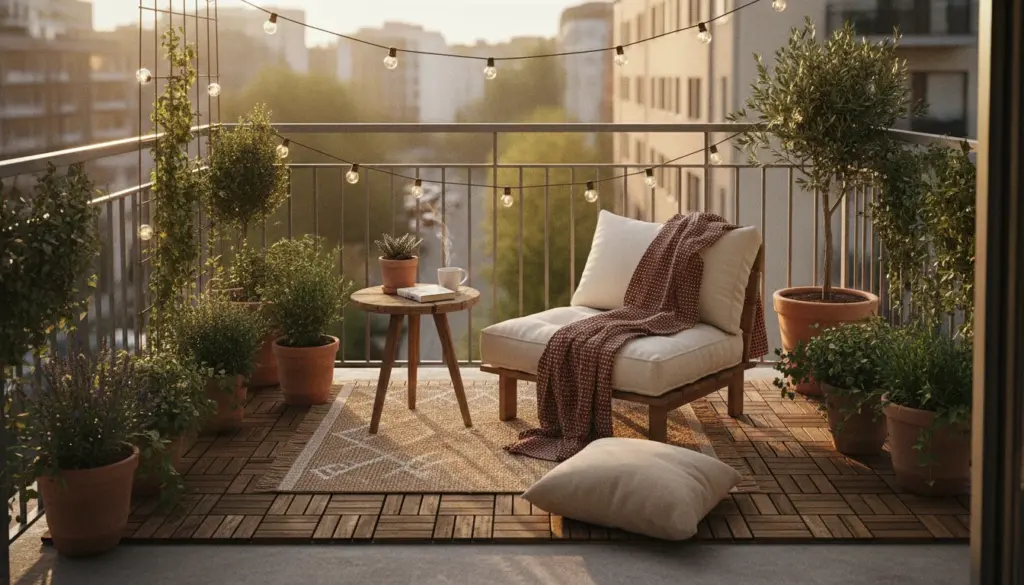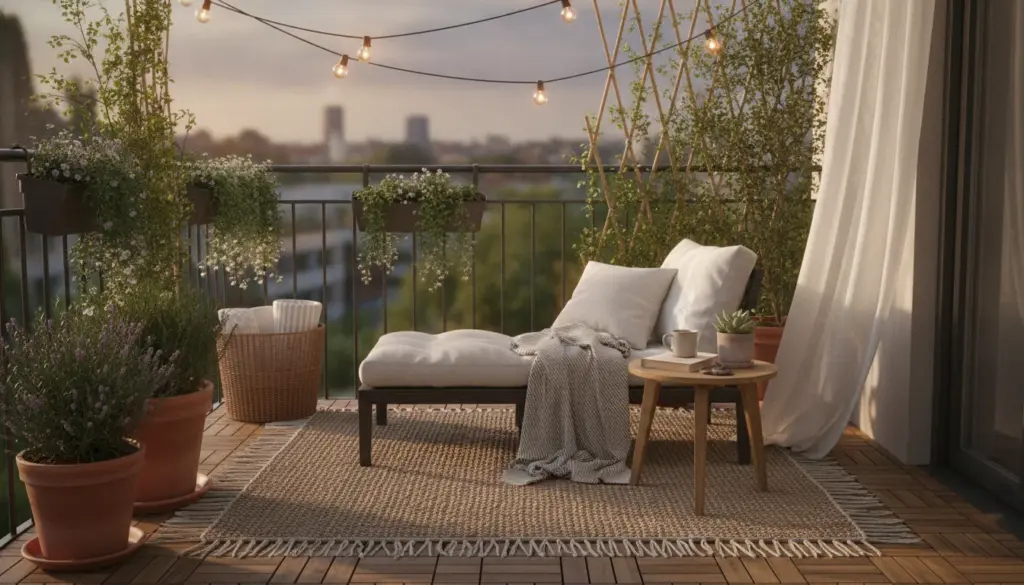
Have you ever stepped outside with your morning coffee, only to end up making awkward eye contact with the neighbor across the street? When your outdoor space feels more like a shop window than a relaxing retreat, it is definitely time for an upgrade. Creating a cozy, secluded oasis is entirely possible, even if you are just renting a tiny apartment. Transforming your exposed exterior area into a shielded sanctuary simply comes down to choosing the right screening methods tailored to your specific spatial needs.
Frontal Shielding: Blocking Views from the Street and Below
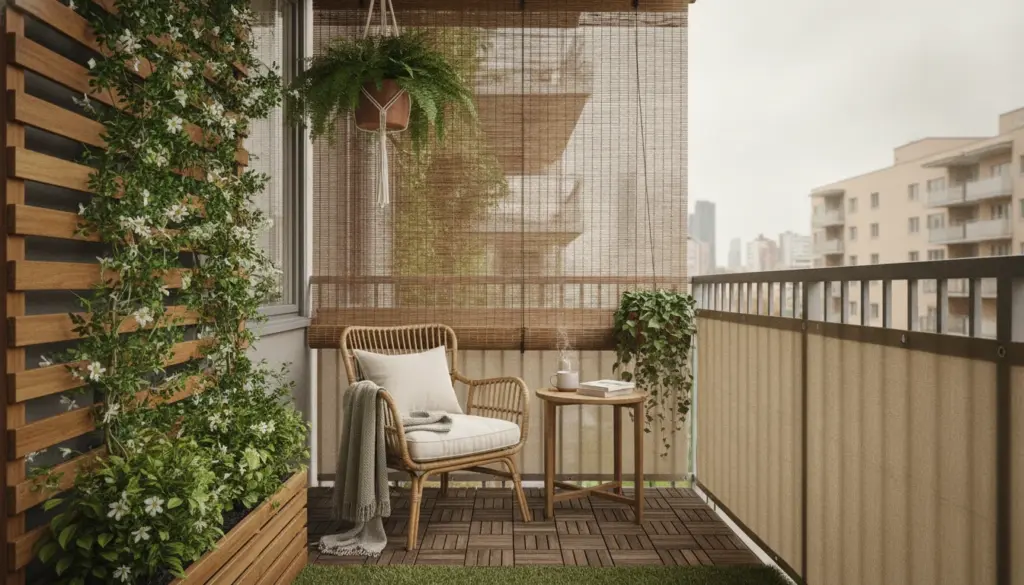
Whether you are dealing with a busy sidewalk or overly curious ground-floor neighbors, feeling constantly watched completely ruins the outdoor experience. The most straightforward defense mechanism is a weatherproof balcony fabric cover. These textiles typically feature built-in eyelets, allowing you to easily secure them to your railing using sturdy cords or zip ties. As an expert tip, always verify that the material is explicitly rated for UV and weather resistance, otherwise, it will quickly degrade and look incredibly unsightly.
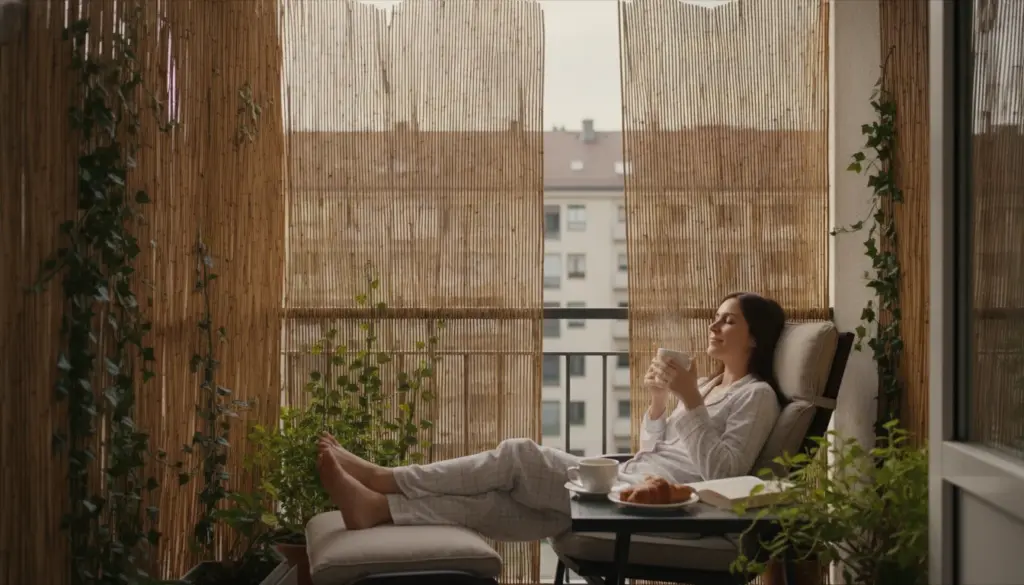
If you prefer a more organic aesthetic, consider privacy mats crafted from willow, bamboo, or reed. These natural barriers are just as simple to attach to the metal framework. However, to maximize their lifespan, ensure they hover slightly above the ground. Direct moisture contact will inevitably cause the bottom edges to rot over time.
The greatest advantage of both of these options is their renter-friendly nature. You will not need to touch a power drill, and you can dismantle the entire setup without leaving a single trace behind.
Side Protection: Creating a Barrier Between Neighboring Balconies
In many apartment complexes, outdoor spaces are situated so close together that you get an unobstructed view right onto the adjacent patio. Fortunately, there are several clever ways to block out sideways glances and reclaim your personal space.
- Folding screens (paravents) offer a remarkably fast, drill-free fix that landlords love. Just keep in mind that they can easily tip over during a sudden gust of wind, so you will need to add extra stabilization.
- A solid privacy wall made of wood, plastic, or WPC (composite) provides excellent opacity and structural stability. Wood requires regular maintenance, while composite materials are virtually effortless to clean. Installing a fixed partition almost always requires permission from your property owner.
- Retractable side awnings deliver a highly stylish, space-saving alternative that works wonderfully in tight quarters. Like permanent walls, their installation involves drilling and therefore demands landlord approval.
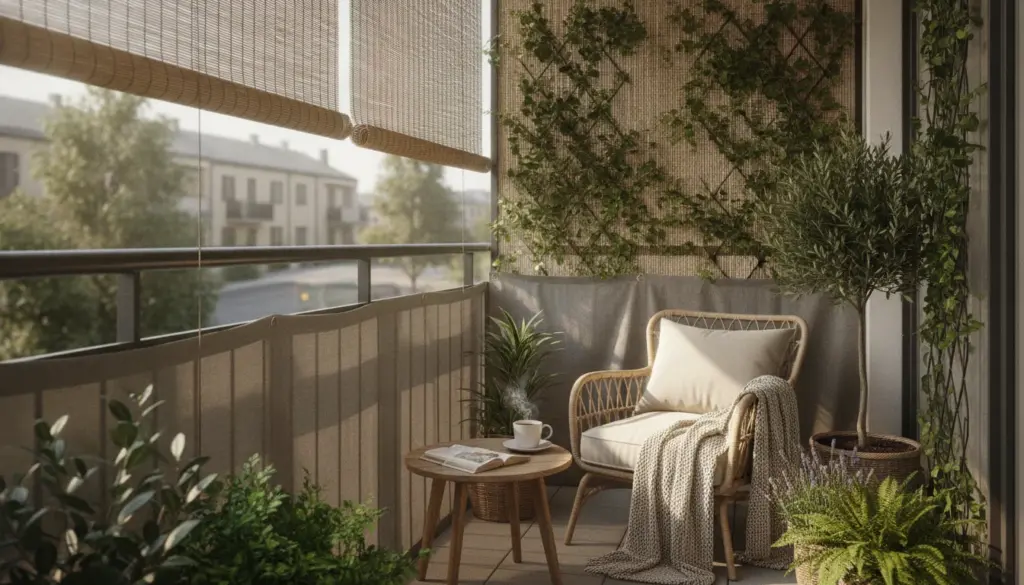
- A trellis laced with climbing vines creates a gorgeous, green divider. You can easily mount the grid using simple pipe clamps, making it perfect for renters. The only drawback is that your leafy barrier will likely disappear during the dormant winter months.
Privacy Screens in Rentals – What Are the Rules?
As a general guideline, any installation that can be removed completely without causing permanent damage is perfectly fine. Potted greenery and temporary mats rarely raise any eyebrows. Conversely, anything that requires drilling into the facade or screwing into the floor—such as heavy awnings or permanent wooden panels—mandates written consent from your landlord. Whenever you are unsure about a specific modification, asking for permission first will save you a massive headache when it is time to move out.
Overhead Coverage: Deflecting Eyes from Above
Living in a multi-story building often means the residents on the floors above have a direct line of sight onto your deck. To counter this effectively, you need a horizontal barrier that acts as a protective fabric roof.
A classic parasol with a tilt joint is the most flexible, non-invasive choice. It can be angled precisely where you need it and set up in mere seconds. On the downside, the covered area is fairly limited, and even the sturdiest models struggle against heavy winds.
A tightly stretched shade sail covers significantly more square footage and stays firmly in place. It also doubles as fantastic protection against sunburn for your delicate potted foliage. The catch is that you need reliable anchor points, such as the wall, railing, or dedicated poles, which usually means reaching for the drill.
If your budget allows, motorized awnings offer the ultimate convenience. With a simple push of a button, you gain immediate, highly reliable weather and sight protection. Because these heavy systems must be bolted directly into the exterior facade, they are the most expensive and strictly regulated option on the market.
The Ultimate Privacy Solution for Small Spaces
When square footage is incredibly scarce, every single inch matters. The smartest strategy is to utilize solutions that consume absolutely zero floor space. Rely on railing covers and woven mats for frontal protection, as these take up no walking room. Choose vertical growing structures like slender window boxes filled with ornamental grasses or tall trellises. Retractable side awnings are also brilliant because they tuck away neatly when not in use. The golden rule for tiny patios is simple: build upwards, never outwards.
Living Greenery: The Most Beautiful Way to Hide
Cultivating a lush wall of foliage is arguably the most atmospheric way to block out the world. Not only does the greenery obscure you from view, but it also casts a cooling shadow and brings a distinct holiday vibe right into the middle of the city.
- Climbing plants trained up a lattice are an absolute classic, with varieties available for every light condition. Ivy thrives beautifully in deep shade, making it ideal for north-facing areas. Scented climbers like jasmine and clematis perform brilliantly in partial sun, offering stunning blooms. For a blazing, fast-growing sun lover, Virginia creeper puts on a spectacular red display in the fall. You could even grow a vertical vegetable garden with beans or tomatoes, though you will have to wait a few weeks for the foliage to fill in.
- Tall ornamental grasses and bamboo flourish perfectly in large containers. Line a few dense pots up against the railing, and your deck instantly becomes wonderfully secluded.
- Elevated raised beds serve as an excellent, highly practical visual barrier if you happen to have a slightly more spacious terrace.
The one notable compromise with a living privacy screen is the changing of the seasons. Once the leaves drop in the colder months, your visual shield drops right along with them. To maintain total seclusion all year round, it is highly recommended to layer your vibrant greenery in front of a solid, weatherproof mat or fabric backdrop.