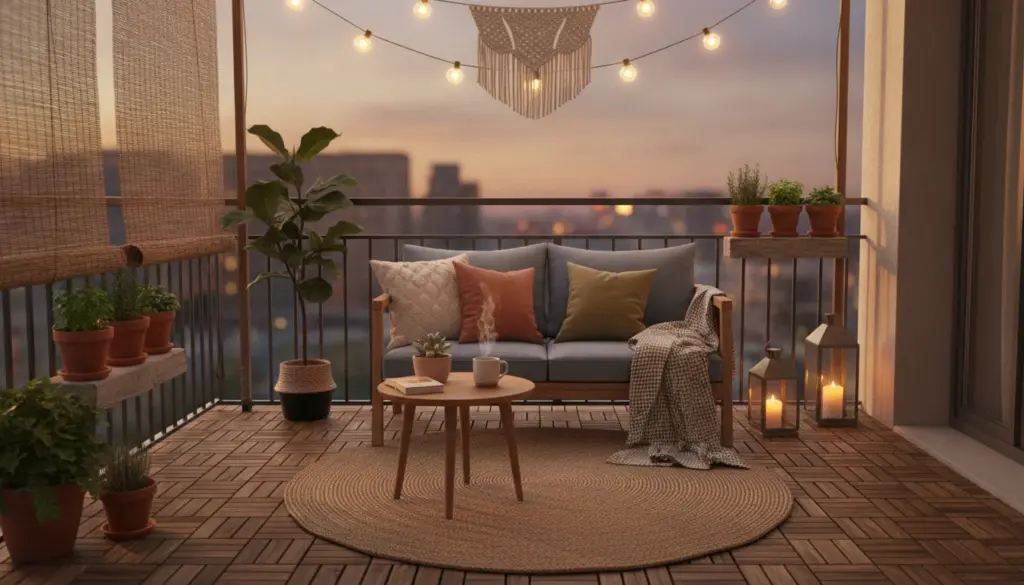
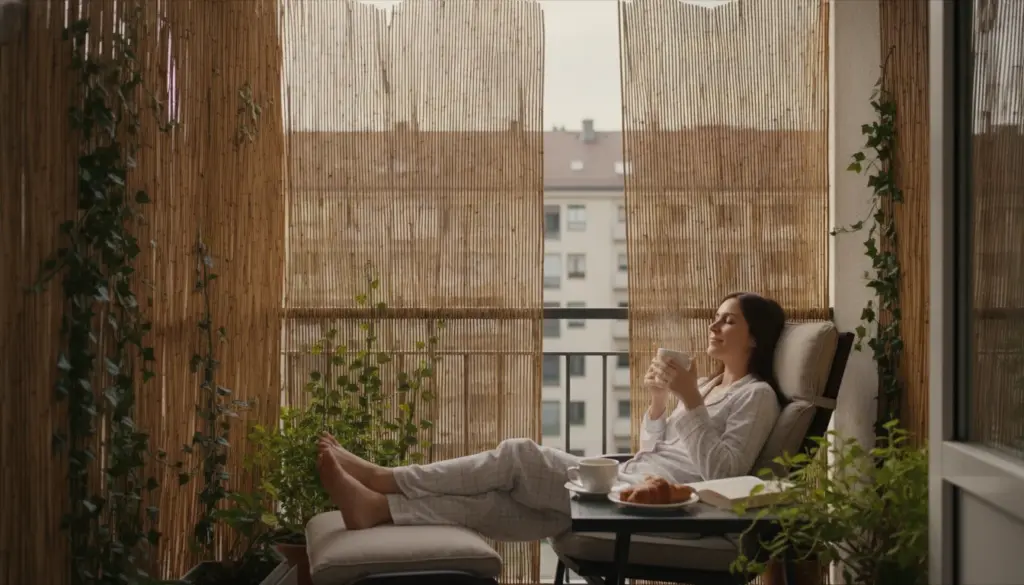
Do you feel like you are sitting on a display plate when relaxing outside? There are practical ways to solve this problem, and they work perfectly even on tiny rented balconies.
You step outside in your pajamas, craving a peaceful morning coffee. Instead, you end up making awkward eye contact with the neighbor across the street, feeling like a mannequin in a store window. All you actually want is to enjoy your outdoor oasis in peace. Rest assured, implementing the right privacy strategies will transform your outdoor space into the tranquil retreat you deserve. The ideal method for your specific situation depends on a few key factors.
Frontal Shielding: Blocking Views from the Street and Below
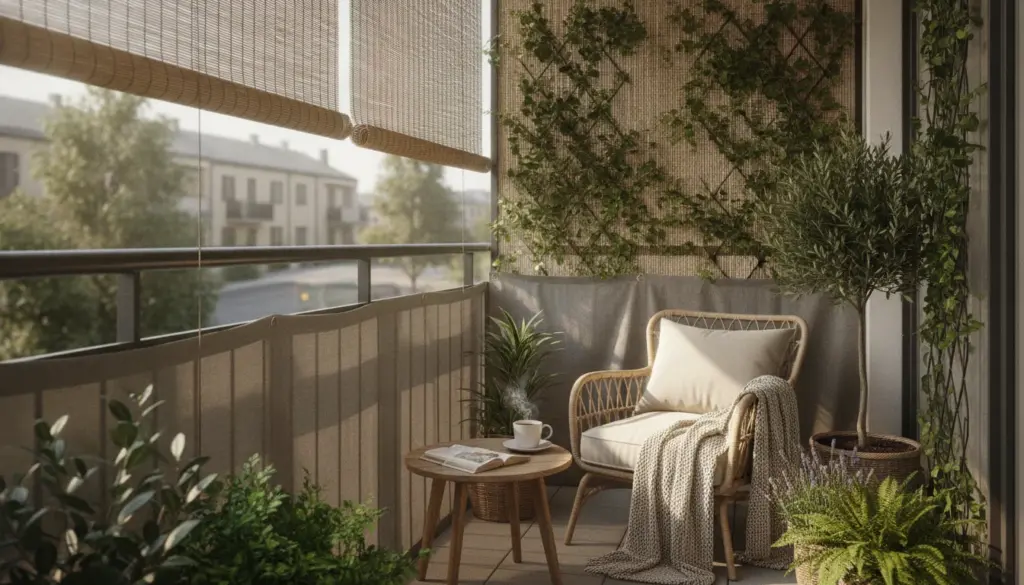
Whether it is a bustling road or inquisitive downstairs neighbors, dealing with frontal exposure makes it nearly impossible to unwind. The most straightforward defense is a weatherproof fabric balcony screen. These coverings typically feature metal eyelets, allowing you to secure them effortlessly to the railing using zip ties or sturdy cords. You must ensure the chosen material is both UV-resistant and weatherproof, otherwise, it will quickly look faded and worn.
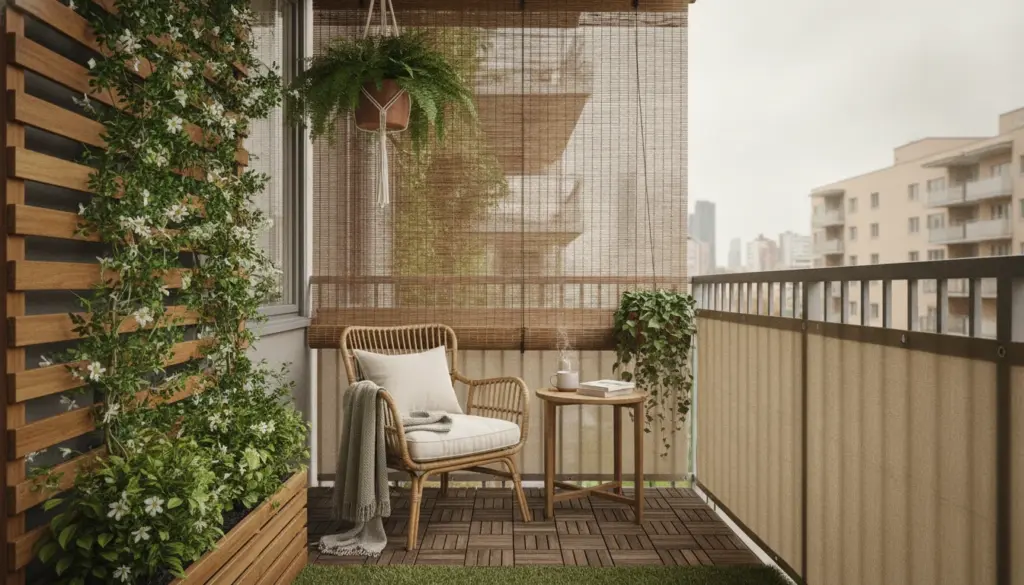
If you prefer a more organic aesthetic, privacy mats made of bamboo, reed, or willow are excellent alternatives. Just like fabric screens, these can be rapidly attached using cable ties. However, if you want them to last a long time, there is one crucial rule: avoid permanent contact with the floor. Moisture from the ground will cause the natural materials to rot from the bottom up.
The greatest advantage of both options is how tenant-friendly they are. There is absolutely no drilling required, and you can tear down the entire setup in minutes without leaving a single trace behind.
Side Defense: Separating Yourself from Neighboring Balconies
Many apartment buildings feature balconies built in tight succession, giving you a full, unobstructed view of your neighbor’s outdoor living room—and vice versa. Fortunately, there are plenty of clever ways to block out these lateral views.
- Folding screens (Paravents): This is a rapid, tenant-friendly fix that requires zero tools. The downside is that strong winds can easily knock them over, meaning you will need to implement extra safety tie-downs.
- Solid privacy walls (Wood, WPC, or Plastic): These provide maximum opacity and excellent stability. Plastic and WPC are incredibly easy to maintain, though wooden versions require regular upkeep. Keep in mind that mounting these usually requires explicit permission from your landlord.
- Retractable side awnings: Highly stylish and incredibly space-saving, making them a fantastic choice for compact areas. Similar to solid walls, you will likely need the property owner’s blessing before installation.
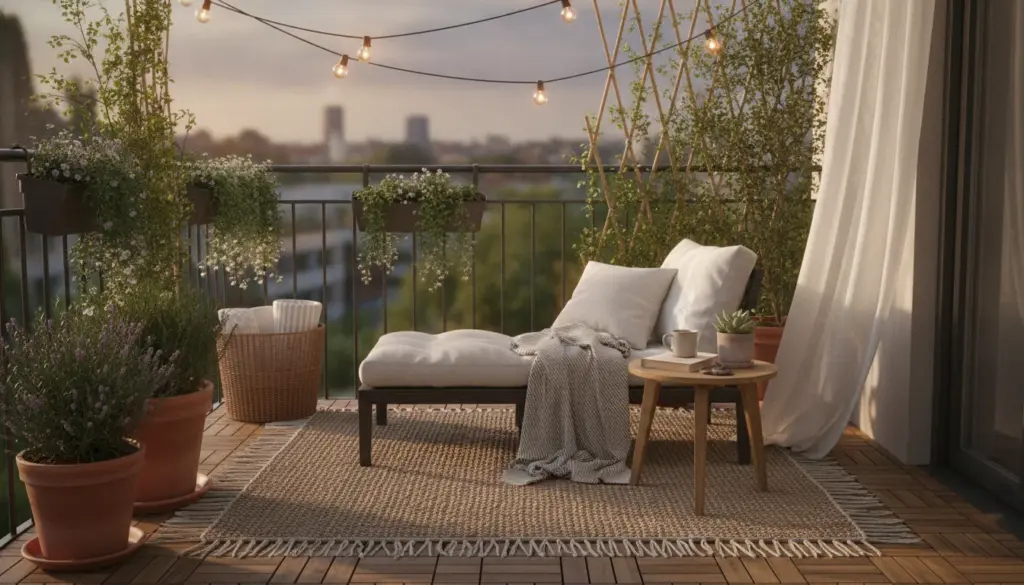
- Trellises with climbing vines: Offering a gorgeous natural look, these frames can be easily fastened to the railing with pipe clamps, making them ideal for renters. The only negative is that you lose your visual barrier during the bare winter months.
What kind of privacy screens are allowed in a rental apartment?
As a general rule, anything that can be removed without leaving a trace is usually permitted. Potted plants also do not require any special authorization. Conversely, anything that needs to be screwed or anchored with dowels—such as fixed walls or heavy awnings—mandates written consent from your landlord. If you are ever unsure about a specific modification, simply ask your property manager beforehand to prevent massive headaches when you eventually move out.
Overhead Coverage: Shielding from Above
Anyone living in a multi-story building knows the struggle of neighbors looking directly down onto their patio. To combat this vertical exposure, you need a horizontal barrier—essentially, a fabric roof.
The most flexible and uncomplicated route for renters is a parasol with a tilt joint. It is quick to set up, highly adjustable, and involves absolutely zero drilling. However, the coverage area is quite localized, and heavy gusts of wind can send even the sturdiest umbrella tumbling.
Alternatively, a tensioned sun sail stays securely in place while covering a much broader surface area. It also acts as brilliant sunburn protection for your delicate potted greenery. The catch is that it requires solid anchor points on walls, railings, or freestanding posts, which usually involves a permanent installation.
If you want peak luxury, retractable awnings are unbeatable. A simple push of a button opens or closes them, providing reliable shelter regardless of the weather. The catch is their hefty price tag, alongside the mandatory facade installation.
What is the ultimate privacy solution for a tiny balcony?
When space is tight, every single inch matters. The smartest choices are methods that consume absolutely zero floor area. Attaching fabric covers or natural mats directly to the railing blocks frontal stares without eating up valuable square footage. Planter boxes filled with tall grasses or vertical trellises encourage upward growth rather than outward sprawl. Retractable side awnings are also brilliant because they pull out only when needed. The golden rule here is to always build vertically, not horizontally.
Living Screens: Creating a Botanical Barrier
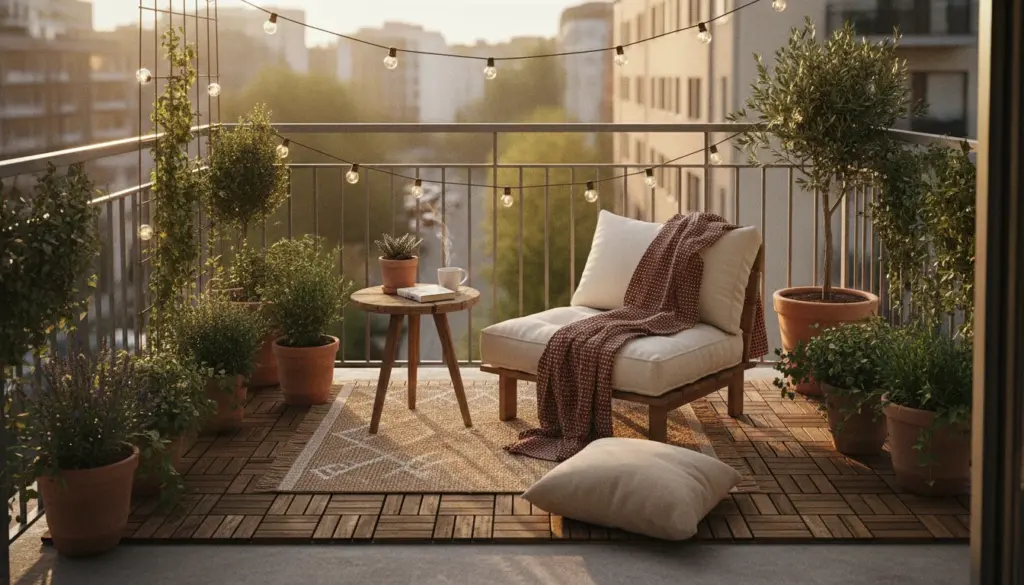
Cultivating a solid wall of greenery is arguably the most atmospheric way to secure your personal space. Not only does the foliage block prying eyes, but it also casts a cooling shade and infuses a dense, vacation-like vibe into an otherwise concrete city setting.
- Climbing varieties ascending a trellis or lattice are absolute classics. You can find a perfect match for any sun exposure: Ivy thrives beautifully in shaded, north-facing spots. Clematis and jasmine prefer sun to partial shade, rewarding you with stunning blooms and sweet fragrances. Virginia creeper adores full sun, grows at a rapid pace, and bursts into vibrant reds during autumn. You might even opt for bee-friendly bloomers, or mix utility with aesthetics by training tomatoes and beans up the grid. The only drawback is the patience required while the green wall matures.
- Potted bamboo or tall decorative grasses are phenomenal container plants. By lining up several large pots close together, you instantly reduce visibility into your private zone.
- A raised garden bed serves as a robust physical barrier on more spacious balconies, while simultaneously offering practical gardening benefits.
There is just one minor caveat to this botanical approach: when winter arrives, many species shed their foliage, taking your privacy shield down with them. For year-round seclusion, your best bet is to combine lush seasonal plants with a solid backdrop, like a bamboo mat or a discreet fabric screen.