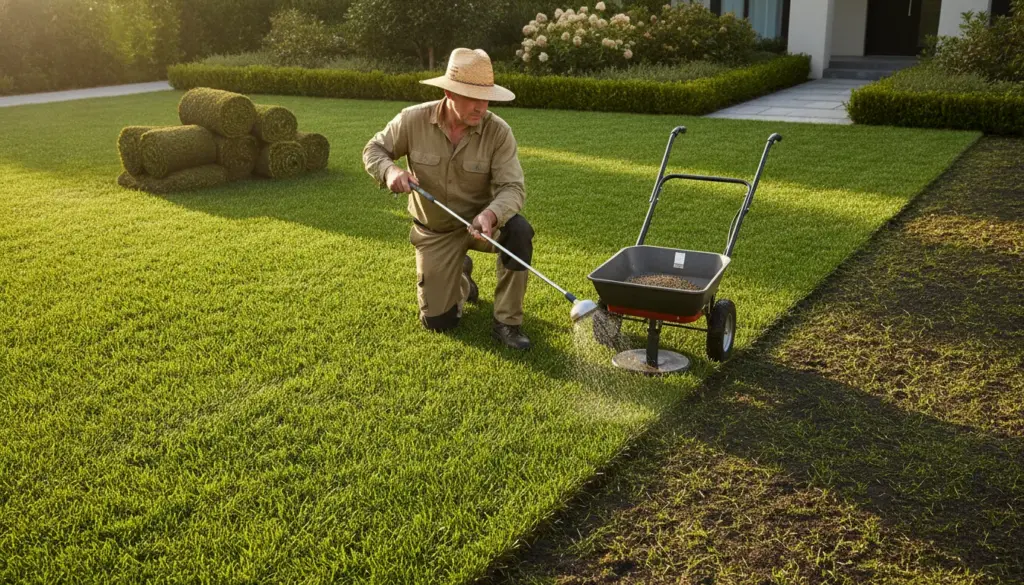
Instant lawns certainly take the hassle out of garden landscaping, but they aren’t completely maintenance-free. Proper irrigation and nutrient management immediately after installation make all the difference. Let’s look at how horticultural professionals maintain that flawless green carpet.
It is not just sports grounds that benefit from a neatly trimmed yard. Ready-to-lay turf has increasingly captured the attention of everyday gardeners. While you can transform your outdoor space in mere hours, preserving that vibrant look requires a strict schedule. Both hydration and feeding work together: moisture transports vital elements deep into the root zone, while nourishment provides the essential building blocks for thick, healthy blades.
Watering your new lawn: Volume, timing, and typical missteps
When it comes to hydrating your sod, deep saturation matters far more than frequent sprinkling. Turf specialists generally advise applying ten to twenty liters of water per square meter during each session. For most climates, one or two heavy soakings a week are perfectly adequate, even when a heatwave strikes. You can easily track these amounts by using a rain gauge or a simple measuring cup, which is much more reliable than guessing.
Establishing a fixed weekly schedule for early morning or late evening watering ensures your grass never faces neglect. Interestingly, if you need to turn on the hose during blazing afternoon temperatures exceeding 30 degrees Celsius, it won’t actually harm the grass. The old myth that water droplets act as magnifying glasses and burn the blades is widely dismissed by professionals. Giving your yard a drink during peak heat is infinitely better than letting it suffer from severe drought stress.
However, a widespread maintenance error is giving the grass light, daily sprinkles. This habit encourages shallow root development, leaving your yard highly vulnerable when dry spells occur. It is highly recommended to let the grass dry out completely between soaking sessions. Otherwise, constant dampness significantly elevates the risk of fungal diseases.
Feeding the turf: Why nutrients beat scarifying
Long-term resilience relies heavily on proper fertilization, and incorrect feeding habits are at the root of countless yard issues. A high-quality, slow-release NPK fertilizer containing magnesium and iron is widely considered the gold standard. Applying these nutrients three to five times a year keeps the grass robust. Additionally, a dedicated autumn feeding rich in potassium dramatically improves the lawn’s ability to withstand winter frosts.
Conversely, one heavily promoted maintenance technique is actually frowned upon by groundskeepers. Scarifying can do more harm than good in a residential setting, often tearing up the delicate sward and causing unnecessary trauma to the lawn.
Quick checklist for optimal turf maintenance
- Check moisture weekly: If the earth feels parched and the grass blades fail to spring back up after you walk on them, it is time for a thorough soaking. Stick to your watering routine at least once every seven days.
- Allow for drying phases: Instead of keeping the ground perpetually wet, give the surface ample time to dry out before the next irrigation cycle.
- Follow a seasonal plan: Spread your fertilization across three to five targeted applications annually. Always follow up with plenty of moisture so the nutrients can effectively penetrate the soil.
When you establish a clear rhythm—allowing moisture to reach deep into the earth and distributing nutrients logically throughout the seasons—yard work suddenly feels effortless. The grass develops a stronger structure and handles environmental stress with ease.
Frequently asked questions (FAQ)
How should an instant lawn be mowed?
Keep up a regular cutting schedule from March through November, aiming for roughly once a week, or slightly more during peak growth spurts. Avoid scalping the grass. A cutting height of three to five centimeters is ideal, though you should leave it a bit longer during peak summer heat. Always use sharp mower blades and never leave clumps of clippings behind.
When is the best time to lay new turf?
Installation is most successful during mild weather conditions when the ground is neither frozen solid nor bone dry. Spring is generally considered the perfect season, though early autumn works wonderfully too. The most crucial factor is your commitment to consistent hydration and feeding immediately after laying, ensuring the roots anchor swiftly into the soil.
Should a struggling lawn be scarified?
Professional landscapers are highly cautious about dethatching or scarifying private gardens, as it easily damages the turf surface. If your yard is looking a bit worse for wear, adjusting your hydration and fertilization habits is a far more effective and safer solution than aggressive scarifying.