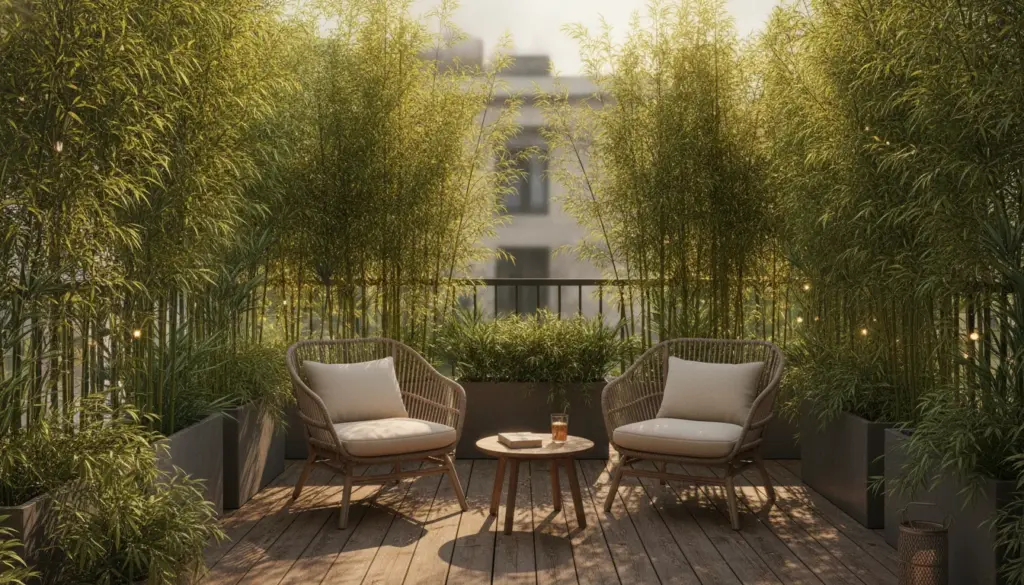
Evergreen, low-maintenance, and excellent at providing shade—bamboo serves as the ultimate privacy screen for terraces and balconies. Discover which specific varieties are best suited for your outdoor space, complete with a handy checklist to guide your choice.
Picture a warm summer evening on your patio, only to have the peaceful atmosphere interrupted by prying eyes from next door. What you really need is a living, vibrant barrier to block out the world! Cultivating this exotic plant offers an elegant solution that maintains its lush green foliage even through the freezing winter months. Beyond being a striking visual feature, this adaptable container plant requires surprisingly little effort to thrive. The only real challenges are selecting the right spot and picking the perfect botanical match for your home.
Location, Pots, and Upkeep: Essential Container Care
Potted specimens will never reach the towering heights they would achieve when planted directly in open garden soil. The container naturally restricts their vigorous root development, keeping their growth in check. However, selecting a spacious planter holding at least 60 liters is absolutely crucial for the plant’s long-term health. Heavy-duty mortar tubs work brilliantly for this purpose, provided you drill adequate holes in the bottom. Keep in mind that you might need to move this setup to a sheltered area during severe winter weather, so factor the final weight into your purchasing decision.
Preventing waterlogged soil is critical, meaning proper drainage holes are non-negotiable. It is highly recommended to add a foundational drainage layer of expanded clay pebbles or coarse gravel at the base. Top this off with a premium, well-aerated potting mix designed specifically for container gardening.
Most varieties thrive best in bright locations shielded from harsh winds. Choosing the right spot early on is vital, as certain commercial species simply cannot tolerate prolonged exposure to direct sunlight.
While these exotic grasses are remarkably resilient, they still demand specific attention to maintain vigorous growth. Because potted plants cannot draw moisture and nutrients from deep earth reserves like free-roaming varieties do, consistent watering and feeding routines are essential. You must never allow the soil to dry out completely. Additionally, ensure you apply a balanced fertilizer from early spring through the end of June to fuel their rapid seasonal development.
Pro Tip: When to Repot
Make it a habit to occasionally lift your planter and inspect the bottom for escaping roots. If you spot them protruding through the drainage holes, your green companion is desperately signaling a need for fresh soil and either repotting or root division. Typically, this maintenance task becomes necessary every two to three years. If you are short on time, a quick temporary fix involves slicing away a section of the root ball and replenishing the empty space with fresh potting mix.
6 Proven Bamboo Varieties for Your Balcony or Terrace
It is important to note that not every species will successfully adapt to life in a planter. Clump-forming Fargesia cultivars come highly recommended, primarily because they remain relatively compact and never produce invasive runner roots. Conversely, the Phyllostachys genus is notorious for aggressive spreading, though you can effectively manage this behavior by using planters with very small drainage holes measuring no more than five millimeters across. Keep in mind that the ultimate height of any chosen specimen will be naturally constrained by the volume of its container.
Here is an overview of excellent, winter-hardy choices for container cultivation:
- Umbrella Bamboo (Fargesia rufa): Thrives in full sun to partial shade. Known for its incredibly dense, bushy habit and exceptional tolerance to pruning. Reaches up to 3 meters in height.
- Zebra Bamboo ‘Campbell’ (Fargesia robusta): Requires a wind-sheltered spot in sun or partial shade. Features a sturdy, upright growth pattern with striking zebra-like stripes on young culm sheaths. Can grow up to 5 meters tall.
- ‘Asian Wonder’ Bamboo (Fargesia scabrida): Performs well in sunny to semi-shady locations. A highly robust plant prized for its colorful, bluish-tinted stems. Grows up to 4 meters.
- Black Bamboo ‘Black Pearl’ (Fargesia nitida): Handles windy environments well in sun or partial shade. Stems mature into a dramatic, near-black coloration. Reaches between 3 and 4 meters.
- Red-stemmed Umbrella Bamboo (Fargesia jiuzhaigou): Loves sun to partial shade. Develops gorgeous reddish to deep purple canes when exposed to ample sunlight. Typically grows 2 to 4 meters tall.
- Bisset’s Bamboo (Phyllostachys bissetii): Flourishes in sun or partial shade. Creates a powerful, impenetrable privacy screen but will produce runner roots. Can reach 3 to 5 meters in height.
Pre-Purchase Checklist: Essential Questions to Consider
- Do you have a sunny, deeply shaded, or highly exposed, windy location?
- Will your planter need to be relocated to a safer spot during the freezing months?
- What is the ideal mature height you want your privacy screen to reach?
Winter Hardiness and Cold Weather Protection
While numerous species boast impressive frost resistance—often surviving temperatures plummeting to around -25 °C—container-grown specimens demand extra precautions. Potting soil freezes much faster and significantly harder than natural garden earth, creating a severe risk of devastating root damage. To safeguard your investment, firmly wrap the planter in insulating materials like thick jute, horticultural fleece, or bubble wrap. Placing the entire container on top of a polystyrene block will effectively block freezing temperatures from seeping up through the cold ground.
Moving the container closer to a protective house wall offers excellent secondary insulation. Furthermore, remember to supply water on milder, frost-free days. Because the evergreen foliage continuously transpires moisture even in the dead of winter, the plant can easily succumb to dehydration if neglected.