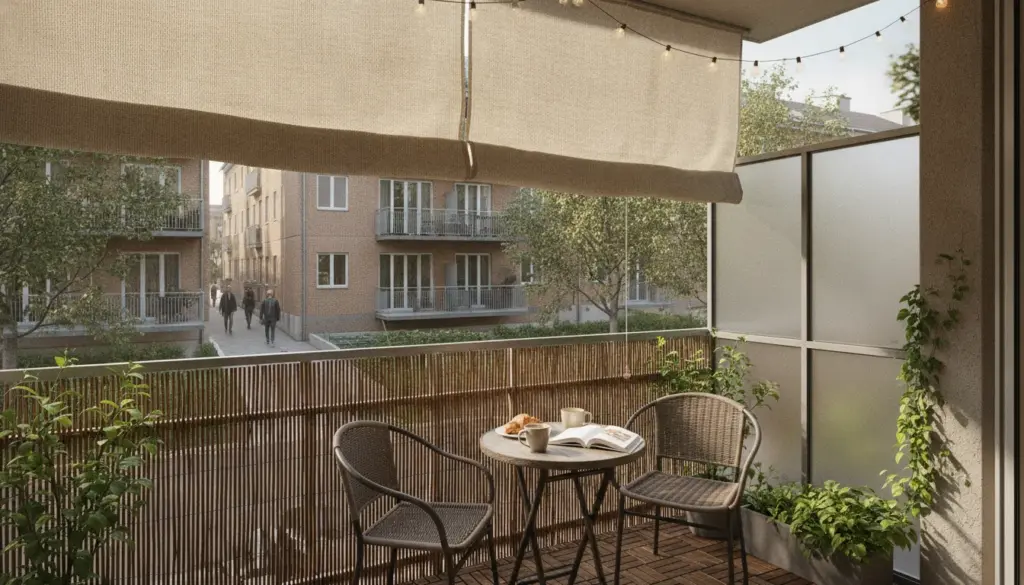
Do you often feel like you are sitting on a display stage rather than your private outdoor retreat? Trying to sip your morning coffee while awkwardly making eye contact with neighbors across the street is far from relaxing. Thankfully, creating a secluded oasis is entirely possible, even if you are renting a compact space. Transforming your outdoor area into a shielded sanctuary simply depends on choosing the right layout and materials.
Front-facing protection: Blocking views from the street and ground level
Whether you face a bustling road or share a ground-floor courtyard, outward visibility can easily ruin your downtime. The most straightforward defense mechanism is wrapping a weatherproof fabric cover around your railing. These materials typically feature built-in eyelets, allowing you to secure them quickly using sturdy cords or zip ties. Always opt for UV-resistant and weather-durable fabrics to ensure your screen does not degrade or fade after a single sunny season.
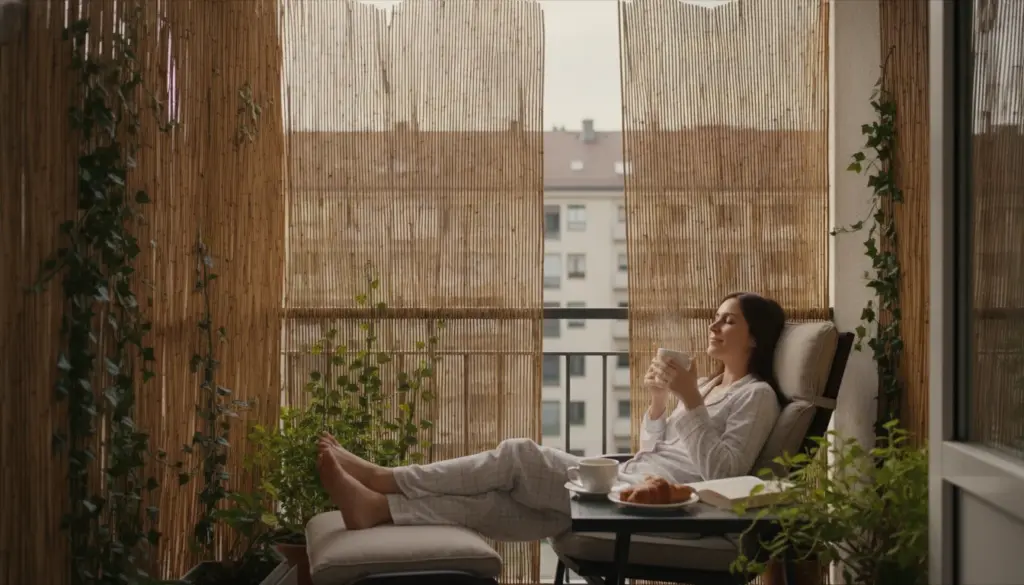
If you prefer a more botanical aesthetic, natural privacy mats made from willow, reed, or bamboo are excellent alternatives. Just like fabric covers, these can be rapidly attached with standard ties. However, as an experienced outdoor design rule of thumb, you must ensure the natural material hovers slightly above the floor. Continuous contact with standing moisture will cause the base to rot prematurely.
The greatest benefit of both railing methods is their complete renter-friendliness. You do not have to drill a single hole, and the entire setup can be dismantled without leaving a trace.
Lateral shielding: Creating boundaries with neighboring balconies
Many apartment buildings feature side-by-side outdoor layouts, offering an unobstructed, awkward view directly into the adjacent unit. Fortunately, cutting off these lateral sightlines can be achieved through several clever methods.
Using a freestanding folding screen (paravent) offers an instant, drill-free solution that renters love. Keep in mind, though, that these lightweight structures require extra stabilization to survive heavy wind gusts.
Alternatively, a solid privacy wall constructed from wood, WPC, or durable plastic delivers maximum opacity and remarkable stability. While plastic and WPC are virtually maintenance-free, real wood demands seasonal upkeep. More importantly, permanently mounting these solid panels usually requires explicit permission from your property manager.
Retractable side awnings provide a highly elegant, space-saving fix that is especially useful for narrow layouts. Similar to permanent walls, securing the awning cassette to the facade will necessitate landlord approval.
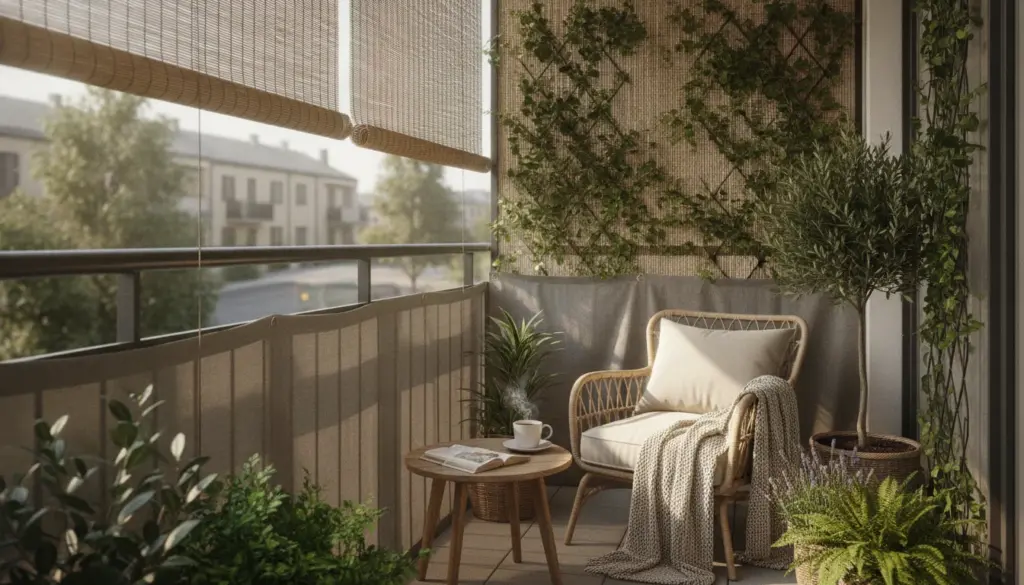
Finally, installing a trellis paired with climbing greenery creates a gorgeous, tenant-safe boundary when attached to existing railings with simple pipe clamps. Just remember that this living wall will lose its protective coverage during the leafless winter months.
Privacy screens in rental properties – What exactly is allowed?
As a general guideline, any installation that can be removed without leaving structural residue is perfectly fine to use. Potted plants and tied-on railing covers rarely require formal approval. However, anything that must be screwed or anchored into the masonry—such as heavy awnings or fixed partitions—mandates written consent from your landlord. Whenever you are unsure about your planned additions, it is always best to ask beforehand to avoid costly disputes upon moving out.
Vertical coverage: Deflecting views from above
Living in a multi-story building often means the residents above you have a direct line of sight downward. To solve this overhead exposure, you need a horizontal barrier that acts as a fabric roof.
The easiest and most flexible option for tenants is a classic parasol featuring a tilt joint. It can be angled precisely where needed, set up in minutes, and requires zero permanent fixtures. The downside is that the coverage area is highly localized, and even robust umbrellas will struggle during turbulent weather.
A tensioned sun sail stays securely in position while covering a much broader surface area. Furthermore, it acts as a fantastic shield to prevent delicate plants from getting scorched. The catch is that securing the taut ropes requires robust anchor points on walls, railings, or dedicated posts, which typically involves drilling.
For absolute premium comfort, motorized retractable awnings are unmatched. With a simple push of a button, you gain reliable defense against both peering eyes and harsh weather. Naturally, this high-end choice is the most expensive route and demands professional facade installation.
What is the optimal privacy solution for a tiny balcony?
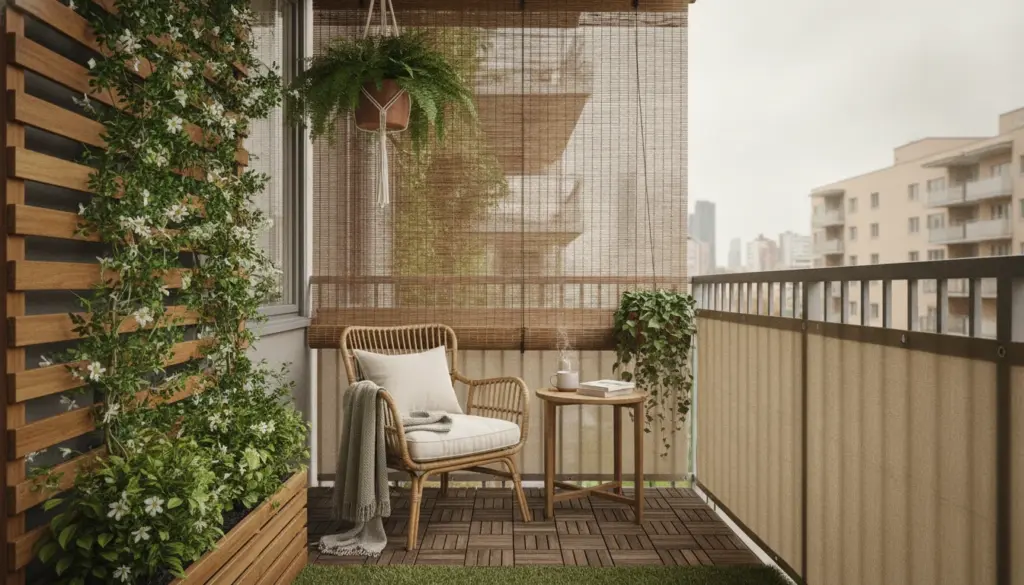
When working with very limited square footage, every single inch matters. The absolute best setups are those that consume zero floor space. Relying on railing covers and woven mats protects your frontal view without eating into your walking area. Hanging planters filled with tall grasses or vertical trellises encourage upward growth rather than outward sprawl. Retractable side awnings are also brilliant, as they neatly roll away when not in use. The ultimate golden rule here is to build vertically rather than horizontally.
Living privacy screens: The most picturesque approach
Constructing a barrier entirely out of lush vegetation is undeniably the most atmospheric way to secure your space. A dense wall of greenery not only blocks unwanted attention but also casts cooling shade and infuses urban environments with a relaxing, vacation-like vibe.
- Climbing plants trailing up a lattice remain a timeless favorite, offering species for every climate exposure. Ivy thrives beautifully in heavily shaded, north-facing spots. Meanwhile, jasmine and clematis flourish in partial sun, rewarding you with stunning blossoms and sweet fragrances. Fast-growing Virginia creeper adores full sunlight and transforms into brilliant crimson shades during the autumn. You can even combine privacy with a mini vegetable yield by training pole beans or climbing tomatoes up your grid. The only drawback is the necessary patience required while waiting for the foliage to thicken.
- Potted bamboo or towering ornamental grasses are excellent container growers. By grouping several tall planters closely together, you can instantly obscure the view onto your deck.
- Elevated raised beds serve as a phenomenal, dual-purpose barrier for wider balconies, giving you a convenient gardening station that doubles as a solid sightline blocker.
The primary compromise with botanical barriers is the seasonal shift. Throughout the winter, deciduous plants drop their foliage, stripping away your cozy seclusion. If you desire year-round concealment, the most effective strategy is layering your vegetation in front of a permanent fabric screen or bamboo mat.