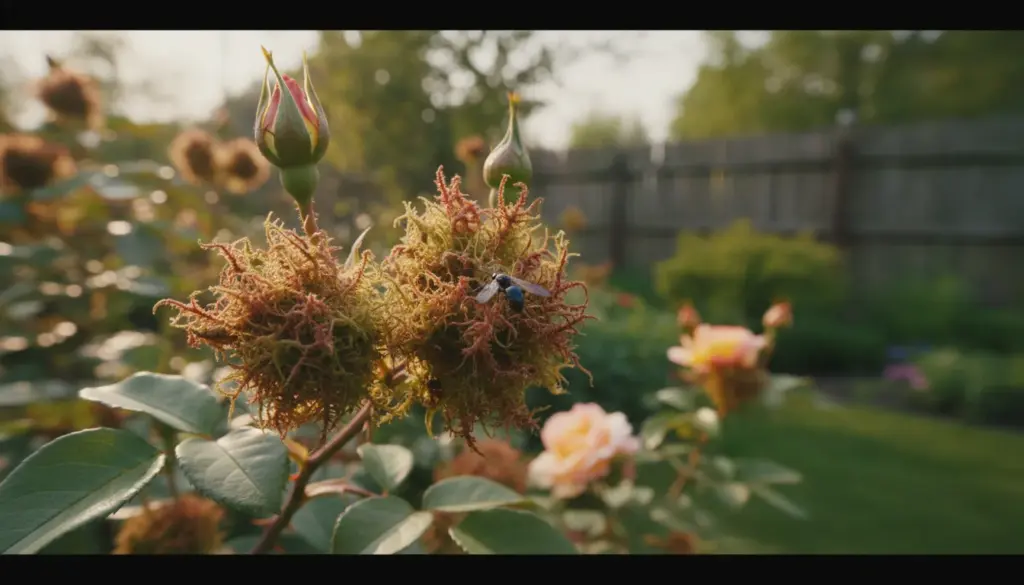
If you have suddenly spotted bizarre, shaggy masses clinging to your rose bushes, there is no need to panic immediately. While these peculiar structures might look like a serious threat to your garden, they actually represent a truly captivating natural phenomenon.
Starting around late spring, specifically in May and June, gardeners frequently notice unusual bushy tufts appearing on rose stems. This is the exact time when a tiny insect known as the rose bedeguar gall wasp (Diplolepis rosae) begins laying her eggs straight into the leaf buds of the host shrub. As soon as the microscopic larvae emerge, they start feeding on the surrounding plant tissue. In response to this internal activity, the shrub forms these distinct, moss-like swellings to isolate the area.
Wild roses are the primary target
These formations, scientifically known as galls, often appear somewhat unsettling but are entirely normal in nature. They are triggered not just by wasps, but also by various aphids, mites, or flies. Depending on the culprit, these outgrowths can take on radically different shapes and sizes, ranging from fuzzy tufts to bumpy, wart-like nodules.
When an insect stings or bites into the delicate stems, the shrub initiates a specialized healing process that arches outward, functioning very much like scar tissue. You will spot these peculiar bumps quite frequently on wild varieties like the dog rose, whereas carefully bred garden cultivars remain largely untouched.
Botanists and garden enthusiasts often refer to these specific rosy formations as bedeguars, rose apples, or even sleep apples. Centuries ago, traditional herbalists actually valued these fibrous lumps as a natural remedy to combat hair thinning and sleepless nights. Today, however, you probably wouldn’t want to keep one on your nightstand.
Tucked safely away inside the woody core of the gall are multiple protective breeding chambers housing the developing larvae. The fully mature wasps will finally emerge the following spring. Rest assured, the rose gall wasp is completely harmless to humans and does not possess a stinger.
There is rarely a need to intervene
From a botanical standpoint, eradicating these tiny insects or tearing off the affected branches is rarely necessary unless the infestation becomes massive. The host plant generally tolerates these cozy insect nurseries perfectly well without suffering any significant long-term damage.
However, if you simply dislike the visual impact they have on your flowerbeds, managing them is straightforward. Just carefully prune away the impacted stems with sharp shears and dispose of the clippings in your regular household trash or organic waste bin.