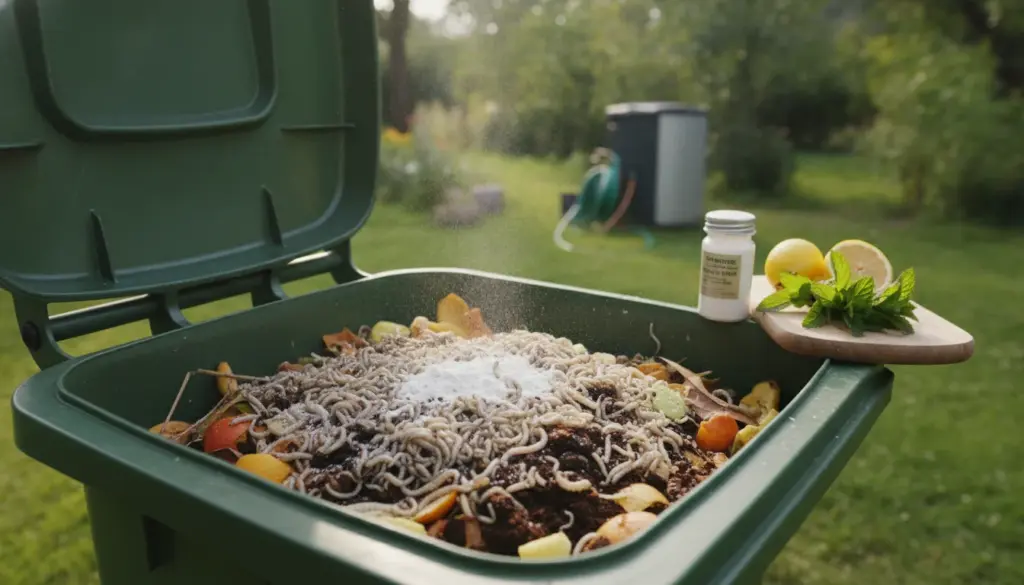
As soon as the weather warms up, those familiar, unwelcome guests return: white grubs squirming in your compost bin. Fortunately, there are highly effective ways to stop these pests from taking over and to address an active infestation.
Those wriggling pests are simply the larvae of common houseflies and blowflies. They are irresistibly drawn to the pungent odors and high moisture levels of rotting organic matter. As food breaks down, it releases specific compounds like butyric acid and hydrogen sulfide, which act as a powerful magnet for these insects. The dark, damp, and warm environment inside your garbage can provides the ultimate breeding ground, allowing a single fly to deposit up to 150 eggs every couple of days.
These eggs hatch into larvae almost immediately. Breaking this unhygienic cycle requires two main strategies: blocking insect access to the container and eliminating the conditions they need to survive. Above all else, moisture control is your strongest defense.
How to prevent maggots in your organic waste bin
- Ideal placement: Keep your bin in a shaded, cool area throughout the entire year, such as inside a garage. Placing the container in direct sunlight drastically accelerates both the rotting process and the resulting stench.
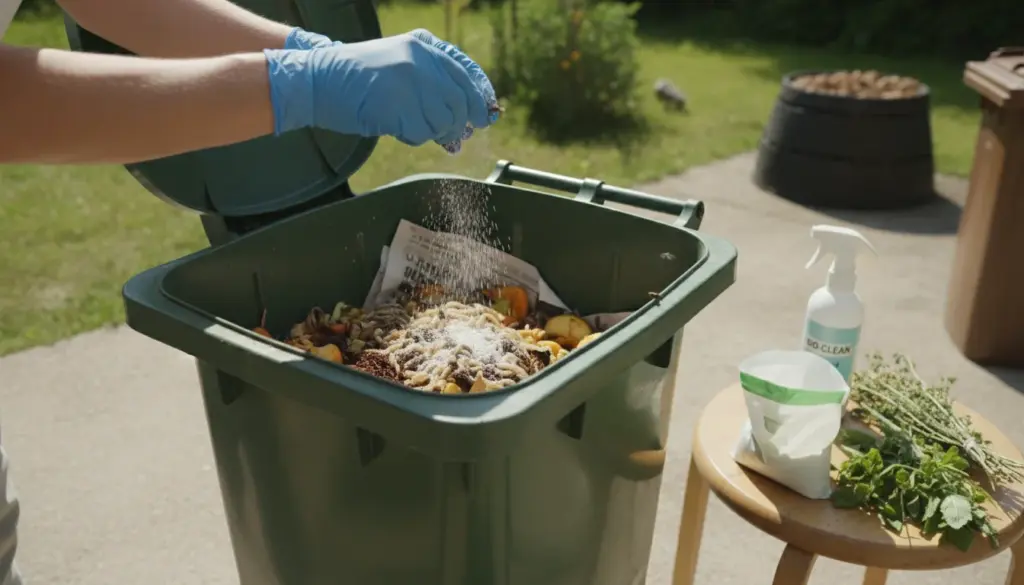
- Moisture control: Always wrap soggy food scraps in sheets of old newspaper before throwing them away. You can also line the base of the bin—and add layers between the garbage—using dry grass clippings, ripped egg cartons, or sawdust to soak up excess liquids. If you do not have sawdust on hand, basic natural pet bedding, like wood shavings, or even mature compost will do the trick perfectly. Remember that many of these vegetable scraps can alternatively be repurposed as nutrient-rich fertilizer for your garden.
- Correct sorting: Never discard animal-based items like cheese, leftover fish, sausage, or meat in the green bin. The proteins in these foods are massive fly attractants. Instead, seal these specific remnants securely and dispose of them in your regular household trash.
- Secure closure: Ensure the container’s lid shuts completely flush, ideally reinforced with a rubber weather seal. For an extra layer of protection, try wiping the rim of the container with a diluted solution of lavender or citrus oil, which acts as a natural insect repellent.
- Odor management: Every so often, dust a thin layer of rock flour over your discarded scraps. This fine powder is excellent at soaking up unwanted moisture while simultaneously neutralizing foul, decaying smells.
Regular cleaning routines for your garbage can
Make it a habit to wash out your organic bin frequently, preferably right after the garbage trucks empty it. Blast the interior with a strong jet of water using a garden hose or a pressure washer to remove stuck-on grime.
Next, scrub the inner walls and the underside of the lid with a mixture of water and vinegar. This acidic solution effectively neutralizes lingering smells while deterring returning flies. Finally, leave the lid wide open and let the container bake in the sun until it is completely bone-dry before you start filling it again.