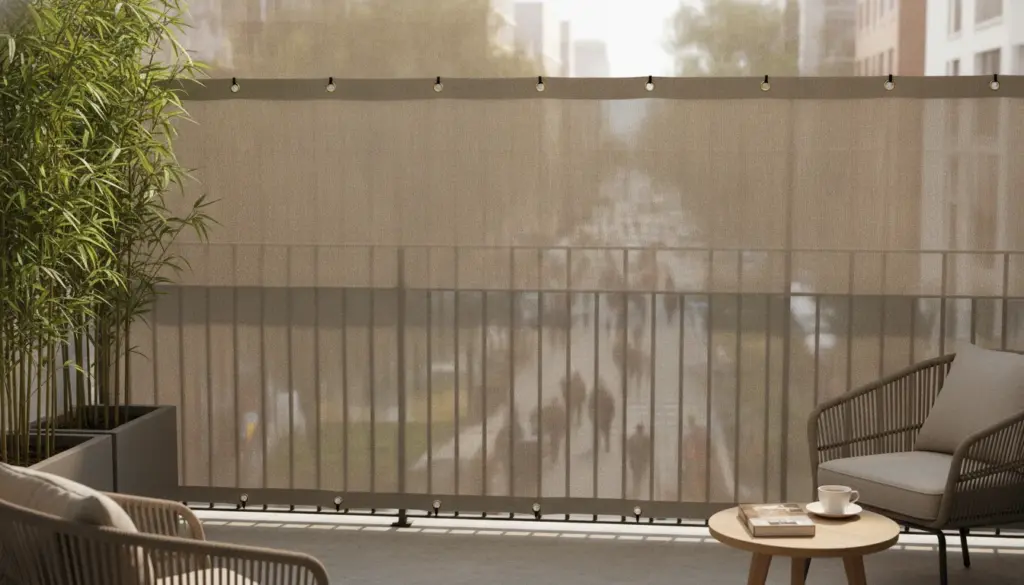
Shielding the Front: Blocking Views from the Street and Below
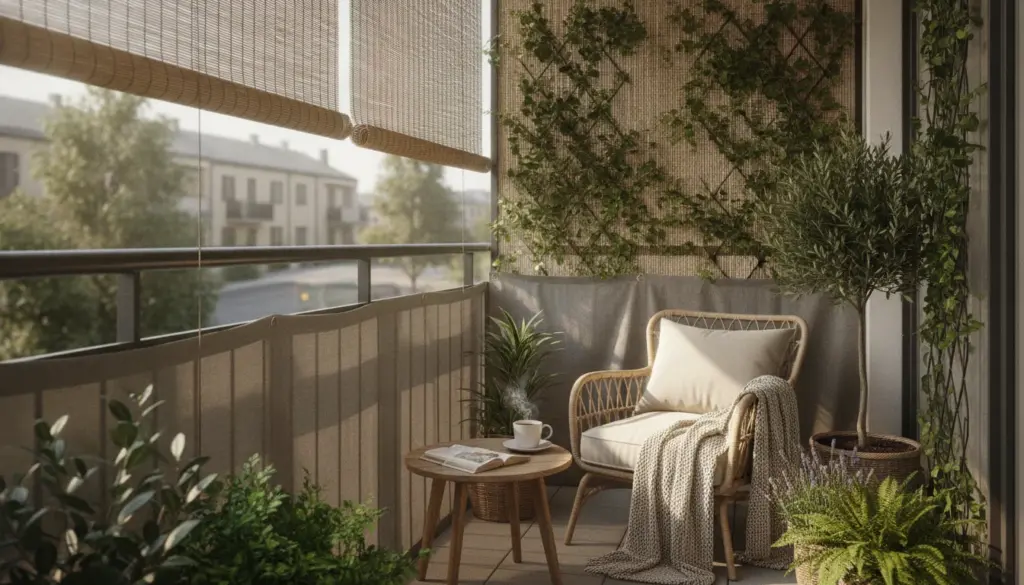
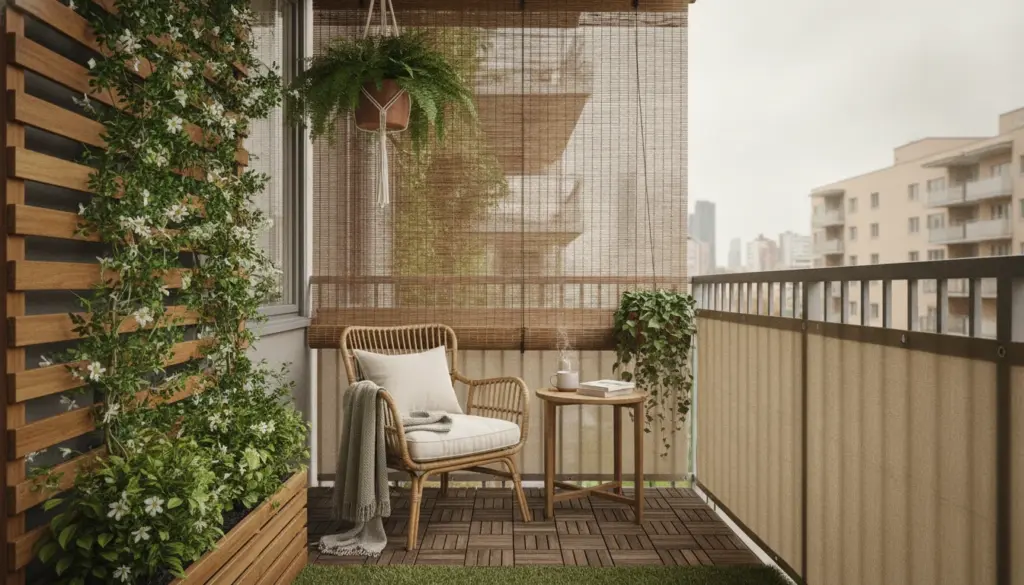
Relaxing is nearly impossible when pedestrians or ground-floor residents have a direct line of sight into your personal space. The most straightforward defense mechanism involves wrapping your railing in a robust, weather-resistant fabric cover. Balcony claddings typically feature built-in eyelets, allowing you to easily secure them with sturdy cords or simple zip ties. Choosing UV-resistant materials is crucial here, as standard fabrics will rapidly deteriorate and fade under direct sunlight.
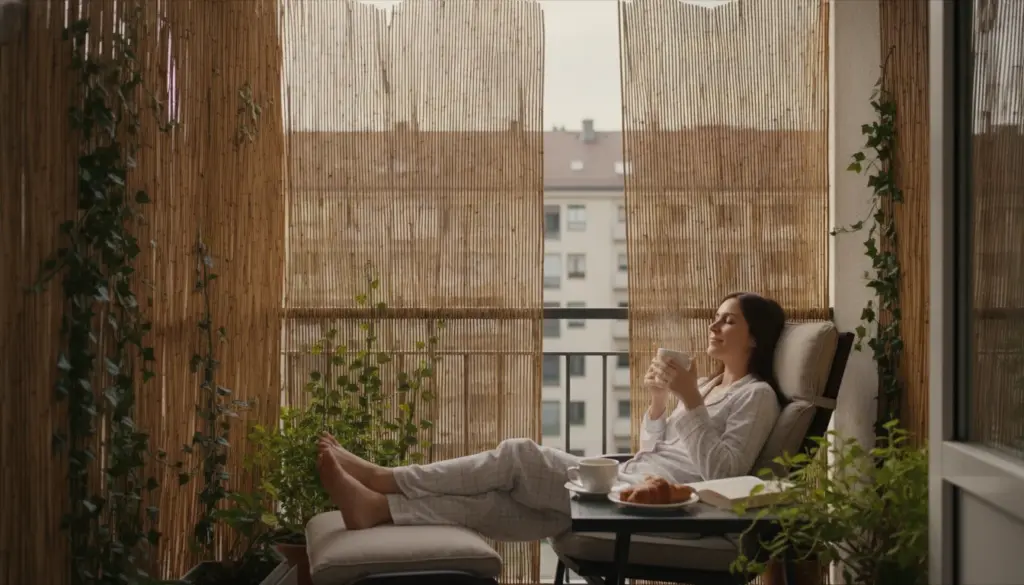
For a more organic aesthetic, privacy mats crafted from reed, willow, or bamboo offer an excellent alternative. These natural screens can also be swiftly attached to your existing metalwork. As a professional landscaping tip, ensure these natural mats hover slightly above the floor; constant contact with trapped moisture will inevitably cause the bottom edges to rot.
Both of these frontal solutions remain completely renter-friendly. They require absolutely no drilling and can be dismantled swiftly without leaving a single trace behind.
Securing the Sides: Blocking Neighboring Balcony Views
Modern apartment complexes often feature adjacent outdoor spaces that offer practically zero visual separation from your next-door neighbors. Fortunately, several effective methods exist to reclaim your lateral personal space and establish clear boundaries.
- Folding screens (Paravents): These offer an instant, drill-free fix that landlords love. However, their freestanding nature makes them highly susceptible to strong gusts, requiring additional anchoring.
- Solid panels (Wood, WPC, or Plastic): These deliver maximum opacity and incredible stability. While composite materials remain low-maintenance, natural wood demands seasonal upkeep, and permanent installation always requires official landlord consent.
- Retractable side awnings: Highly elegant and incredibly space-efficient, these pull-out screens are perfect for tighter areas. Keep in mind that securing the housing unit to the exterior wall will necessitate property management approval.
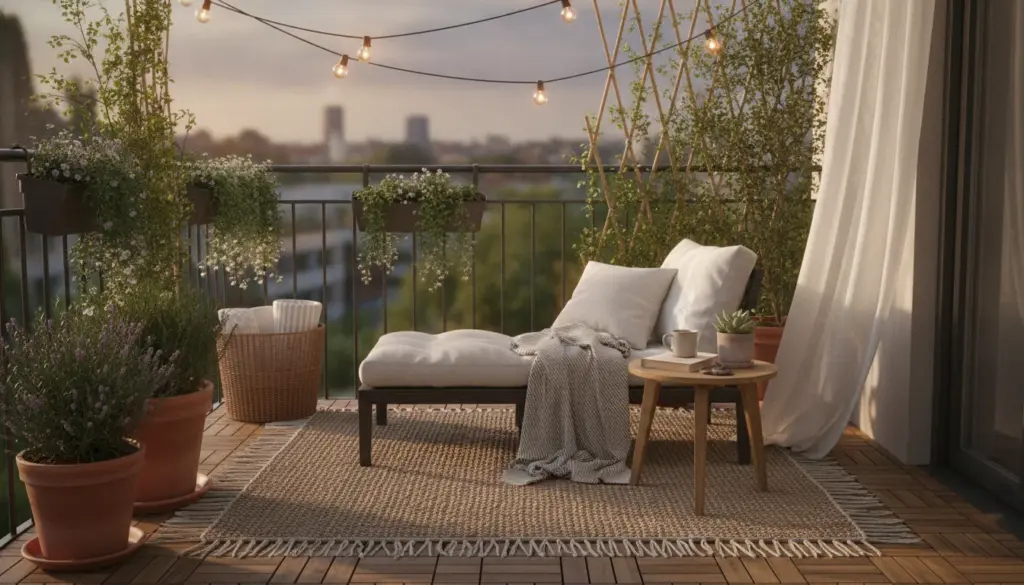
- Plant trellises: Securing a lightweight grid to your side railing with basic pipe clamps creates a lush, renter-safe divider. The only drawback is the lack of foliage—and therefore privacy—during the colder winter months.
Renter Regulations: What Are You Actually Allowed to Install?
As a general rule of thumb within residential leasing, any modification that can be completely reversed without a trace is usually permitted. Potted foliage and temporary railing screens rarely require a formal request. Conversely, anything demanding heavy screws or wall anchors—such as rigid partitions or permanent awning cassettes—mandates explicit written permission from the property owner. Reaching out for clarification beforehand is always the best practice to prevent costly deductions from your security deposit later on.
Overhead Protection: Deflecting Downward Glances
Living in a multi-story building frequently means the residents above you have an unobstructed bird’s-eye view of your seating area. Creating a horizontal barrier, essentially a fabric canopy, is the only way to establish true top-down seclusion.
A classic tilting parasol remains the most uncomplicated, flexible choice for temporary renters. It requires zero structural changes and can be angled precisely as needed. The downside is its localized coverage footprint and inherent instability during turbulent weather conditions.
Alternatively, a tensioned sun sail delivers expansive, steadfast coverage that also protects delicate potted greenery from harsh afternoon sunburns. This setup does require sturdy anchor points on walls or freestanding poles, which usually means drilling is involved.
For maximum luxury, motorized retractable awnings provide effortless, robust shelter at the push of a button. However, they represent the most expensive investment and mandate invasive facade mounting.
Maximizing Seclusion on Extremely Small Balconies
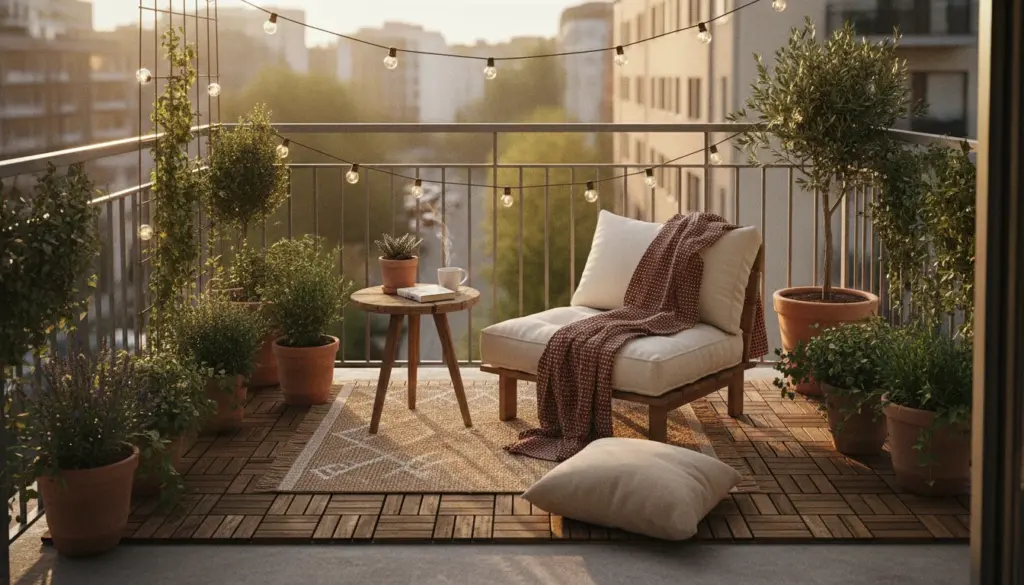
When every square inch matters, your best bet is utilizing vertical boundaries that consume zero floor space. Railing covers and woven privacy mats are ideal because they push the barrier outward. Similarly, hanging planters or climbing vines on flat trellises draw the eye upward without eating into your precious seating area. As a guiding principle for compact outdoor spaces, always build your privacy vertically rather than expanding horizontally.
Living Green Screens: The Most Aesthetically Pleasing Solution
Cultivating a dense wall of foliage provides unparalleled atmosphere while simultaneously cooling the surrounding air. Greenery not only blocks prying eyes but instantly infuses an urban concrete environment with a lush, vacation-like ambiance.
- Vigorous climbing vines: Training plants up a lattice is a timeless landscaping technique with options for every microclimate. Robust ivy thrives in darker northern exposures, whereas fragrant jasmine and flowering clematis flourish in sun-dappled environments. For full-sun areas, Virginia creeper grows aggressively and offers spectacular crimson foliage in autumn. You might even opt for climbing beans or indeterminate tomatoes for an edible privacy shield.
- Architectural grasses and bamboo: Planting towering ornamental tall grasses in deep, rectangular containers creates a spectacular contemporary look. Lining a few of these dense planters side-by-side forms a highly effective, rustling barrier.
- Elevated raised beds: If square footage allows, installing a tall planting box raises the soil level, meaning even shorter, bushy plants will sit right at eye level to successfully block sightlines.
The primary caveat to a botanical barricade is seasonal leaf drop. Deciduous species will leave you completely exposed by December. For unbroken, year-round seclusion, horticultural experts recommend layering lush seasonal greenery directly in front of a solid, neutral-colored privacy mat.