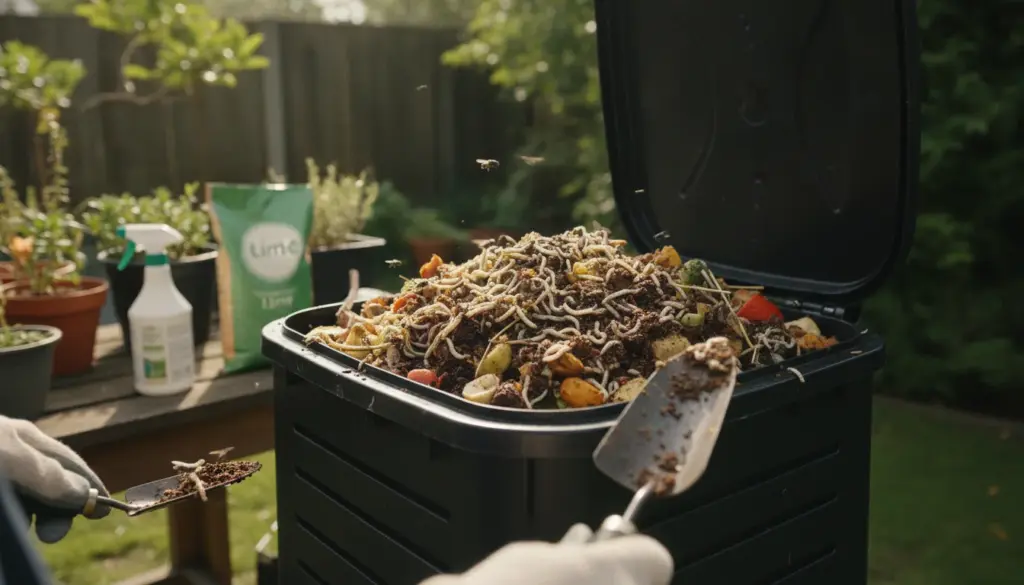
The moment summer heat kicks in, those unwelcome little wrigglers make their annual comeback in our organic waste. Fortunately, dealing with a maggot infestation doesn’t have to be a nightmare if you know how to stop them before they even start.
Those tiny white pests are actually fly larvae, usually from houseflies or blowflies. They are incredibly drawn to the pungent odors and high moisture levels of decomposing food scraps. Specifically, the gases released during decomposition—such as butyric acid and hydrogen sulfide—act like a magnet for these insects. Once inside the dark, damp, and warm environment of your bin, flies discover the ultimate breeding ground, often laying up to 150 eggs every couple of days.
These eggs transform into crawling larvae in almost no time at all. Breaking this unhygienic cycle requires two main strategies: cutting off the flies’ access and removing their ideal living conditions. If there is one golden rule to remember, it is that absolute dryness is your ultimate weapon.
How to effectively prevent maggots in your organic waste
- Choose the right location: Keep your compost bin in a cool, fully shaded area throughout the entire year, such as inside a garage. Direct sunlight heats up the plastic, dramatically speeding up both the rotting process and the resulting stench.
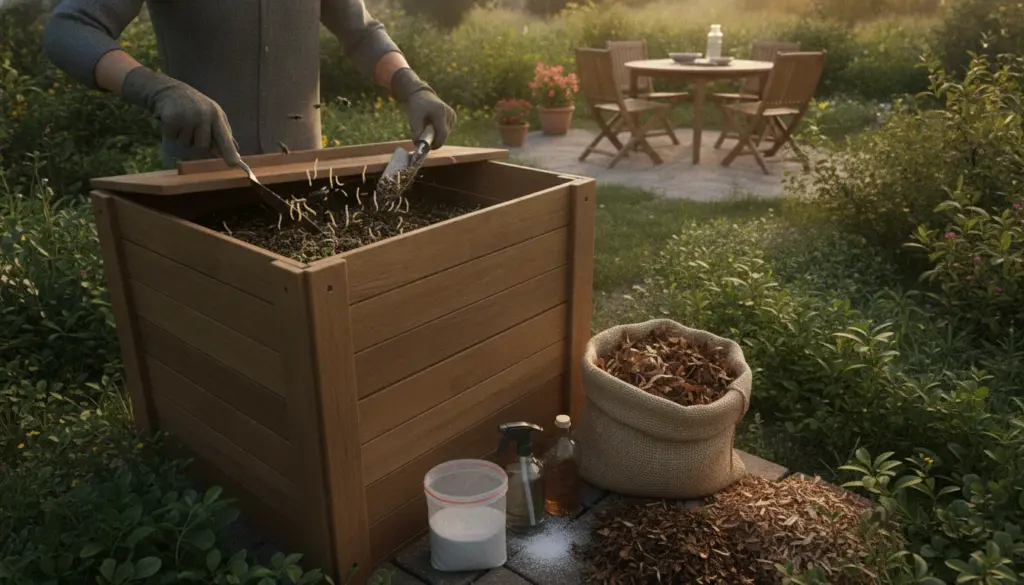
- Focus on moisture control: Always wrap soggy kitchen scraps in ordinary newspaper before throwing them away. You can easily absorb excess liquids by placing ripped egg cartons, dry grass clippings, or a layer of newspaper at the very bottom of the container and between the food layers. If you don’t have sawdust on hand, affordable pet store wood shavings or simple garden compost are excellent alternatives for soaking up wetness.
- Watch what you throw in: Never toss animal-based products like meat, fish, cold cuts, or dairy leftovers into your green bin. The proteins in these specific foods are highly attractive to breeding flies. Instead, wrap these items securely and dispose of them in your general residual household trash.
- Seal it tight: Your container’s lid must always be completely closed, preferably secured with a tight rubber gasket. As an extra line of defense, try wiping the rim of the bin with a diluted mixture of lavender or citrus oil, which naturally repels hovering insects.
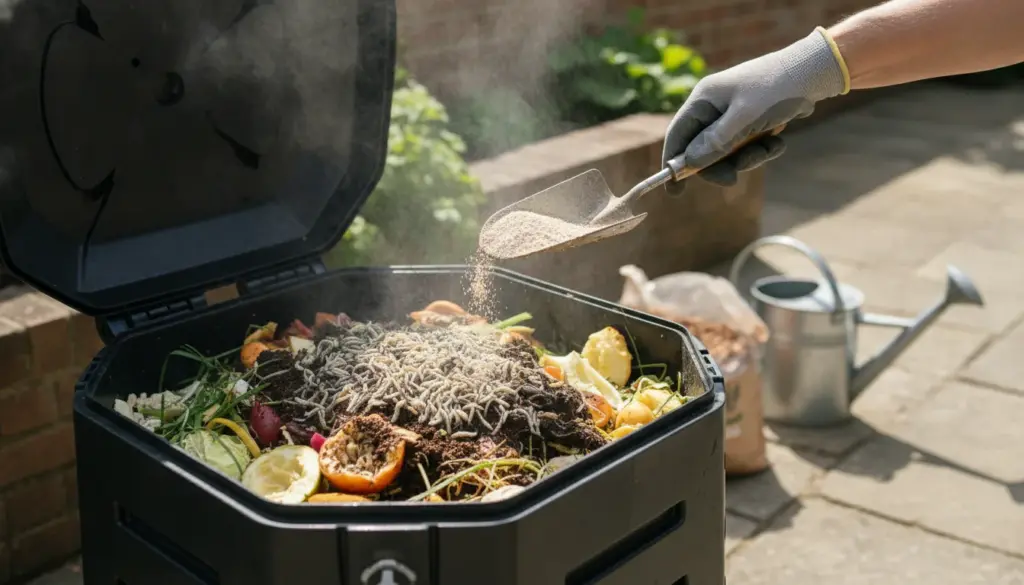
- Neutralize bad smells: Every so often, sprinkle a generous dusting of rock flour over your discarded scraps. This fine mineral powder works wonders by binding excess humidity while instantly masking the foul smells of decay.
Maintain a spotless bin year-round
Thoroughly washing your waste receptacle is just as critical, and doing so right after the garbage truck empties it is the perfect timing. Blast the inside with a high-pressure cleaner or a strong jet of water from your garden hose to dislodge stuck debris.
Afterward, scrub the interior walls and the underside of the lid using a simple vinegar and water solution. This natural DIY cleaner neutralizes lingering odors while creating an acidic environment that flies absolutely detest. Finally, leave the lid wide open and let the container bake in direct sunlight until it is entirely bone-dry before you start filling it up again.