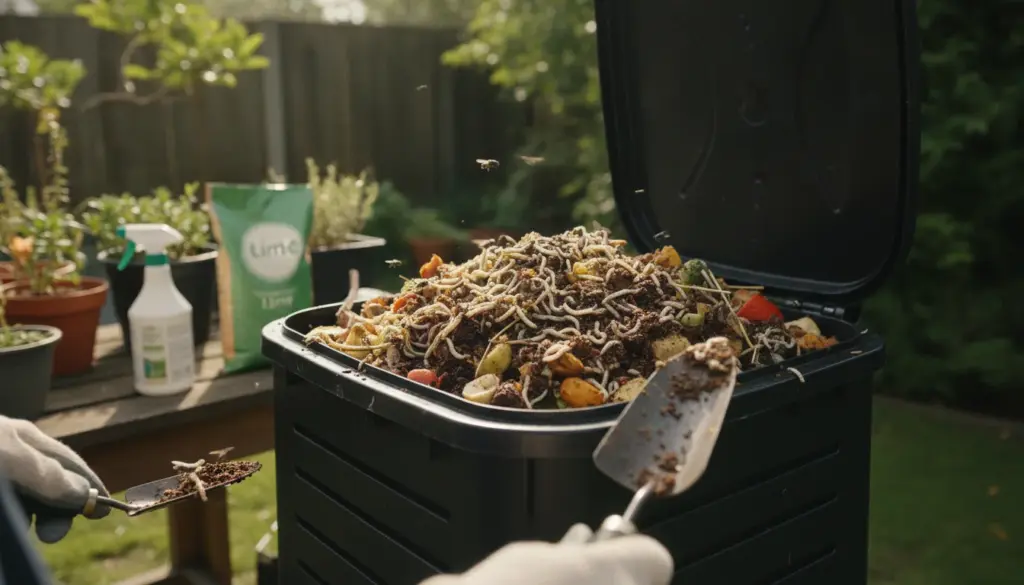
As soon as the warm summer weather hits, that dreaded sight returns: wriggling white larvae taking over your organic waste. Fortunately, dealing with these unwelcome guests isn’t as difficult as it seems, provided you know exactly what draws them in and how to break their lifecycle.
Those tiny invaders are actually the offspring of common houseflies and blowflies. These flying insects are heavily drawn to the high moisture levels and pungent odors of decaying organic matter. During decomposition, gases like hydrogen sulfide and butyric acid are naturally released, acting as an irresistible magnet for passing pests. Once inside that dark, humid, and warm environment, a single female fly finds the perfect nursery, comfortably laying up to 150 eggs every few days.
It only takes a very short amount of time for those eggs to hatch into a full-blown infestation. To stop this extremely unhygienic cycle in its tracks, you must cut off the insects’ access to the container and make the environment entirely hostile to them. The ultimate secret weapon in this battle is maintaining strict dryness.
Preventing Maggots in Your Organic Waste
- Strategic placement: Keep your bin in a cool, heavily shaded spot throughout the entire year, such as inside a garage or under a dense tree. Placing the container in direct sunlight drastically speeds up the rotting process and intensifies nasty smells.
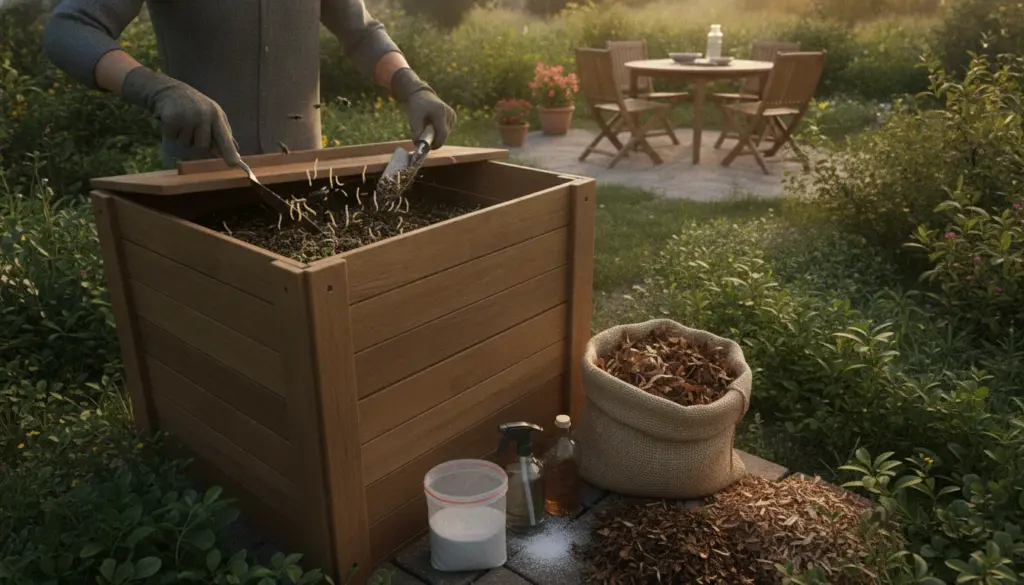
- Maintain extreme dryness: Always wrap soggy kitchen scraps thoroughly in old newspaper before tossing them out. Creating layers using crumpled paper, cardboard egg cartons, dried grass clippings, or sawdust between your compostable materials works wonders for absorbing excess liquid. If you don’t have wood shavings handy, inexpensive natural pet bedding or dry compost are excellent alternatives for soaking up moisture. It is also worth noting that many kitchen scraps can be upcycled directly as valuable garden fertilizer instead of being thrown away.
- Strict sorting rules: Never throw animal-based products like leftover meat, sausages, fish, or dairy into your green bin. The proteins in these specific foods are incredibly attractive to egg-laying flies and should always be securely wrapped and placed in your general household trash instead.
- Seal it tightly: Make sure your bin’s lid shuts completely flush against the rim, ideally utilizing a rubber seal to block all entry points. For an added layer of defense, wiping the upper edges with a diluted solution of citrus extract or lavender oil acts as a fantastic natural repellent.
- Neutralize foul odors: Adding a light dusting of rock dust over the rotting material from time to time is highly beneficial. This natural mineral powder is incredibly effective at soaking up dampness while simultaneously trapping the foul-smelling putrid gases that draw bugs near.
Maintain a Strict Cleaning Routine
Washing out the container on a regular basis, ideally right after the garbage trucks have emptied it, is a vital maintenance step. Use a garden hose with a strong nozzle or a high-pressure cleaner to thoroughly blast away lingering grime from the bottom and sides.
Afterward, scrubbing the interior walls and the underside of the lid with a simple mixture of water and vinegar does double duty. This acidic wash neutralizes deeply embedded odors and leaves behind a scent that flying insects absolutely despise. Finally, always leave the freshly washed container sitting open in direct sunlight until it is bone dry before throwing in any new scraps.