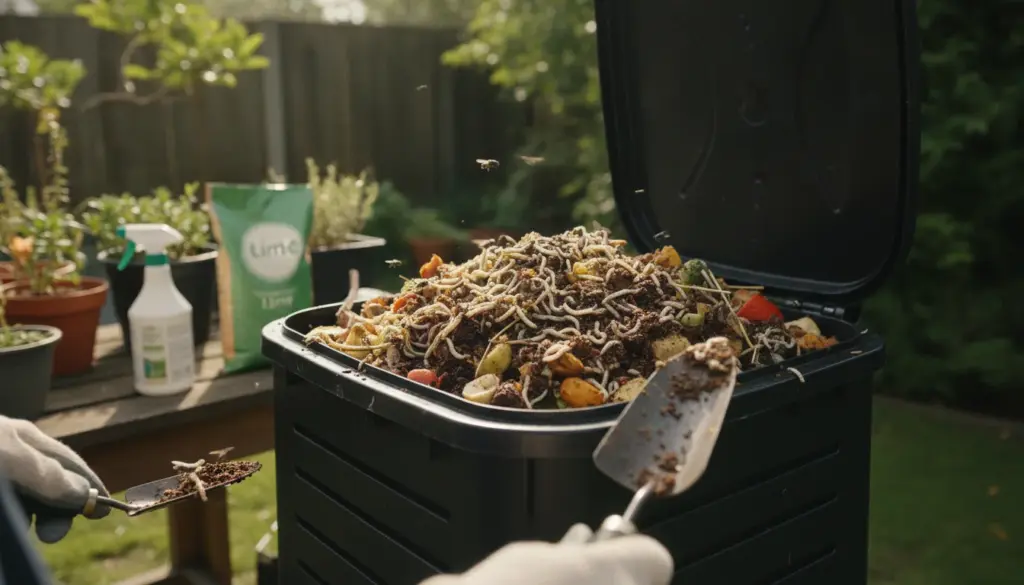
As soon as the weather warms up, those familiar white larvae often make an unwelcome return to our organic waste containers. Fortunately, you can effectively tackle these pests and stop them from coming back with a few straightforward techniques.
The wriggling pests invading your food waste are typically the offspring of houseflies or blowflies. These insects are heavily drawn to the moisture and pungent odors released by decomposing organic matter. Specifically, the gases produced during rot, such as butyric acid and hydrogen sulfide, act like a powerful magnet for these bugs. Inside that dark, humid, and warm container, flies discover the ultimate breeding ground, laying up to 150 eggs every couple of days.
Those eggs transform into writhing larvae at an astonishing speed. If you want to break this unsanitary cycle, the main goal is to block the adult insects from entering while eliminating the environment they need to thrive. The single most crucial element in this battle is keeping things as dry as possible.
How to prevent maggots in your organic waste
- Choose the right location: Position your container in a shaded, cool spot throughout the entire year, such as inside a well-ventilated garage. When direct sunlight hits the plastic, it dramatically speeds up the rotting process and intensifies the foul smells.
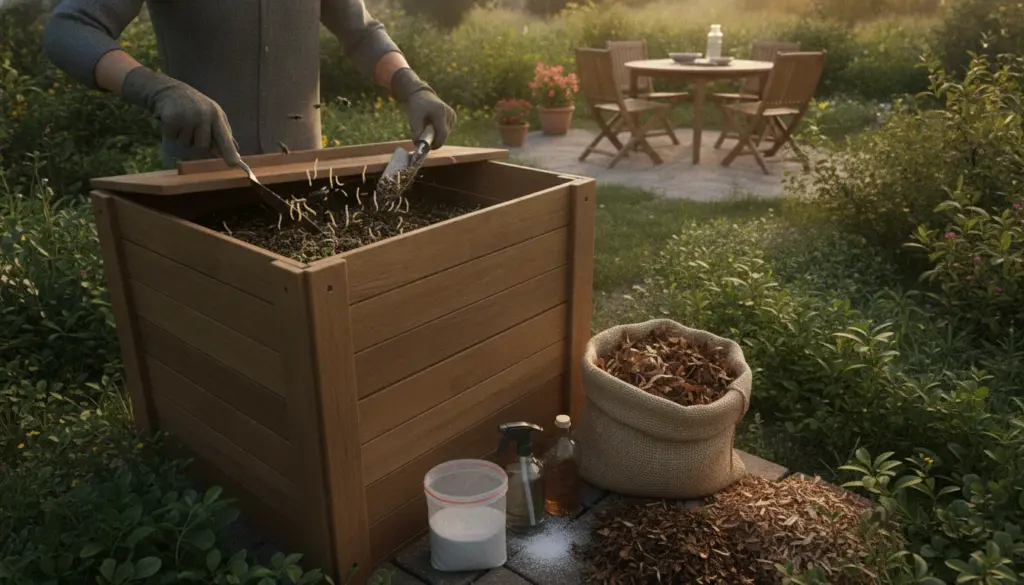
- Keep the contents dry: Always wrap damp food scraps tightly in old newspaper before tossing them out. Creating distinct layers using newspaper pages, torn egg cartons, dry sawdust, or withered grass clippings between the organic trash does wonders for soaking up excess liquids. If you do not have wood dust handy, inexpensive natural pet bedding, like basic wood shavings, or dry garden compost will do the trick perfectly. Remember that many household food scraps can alternatively be repurposed as nutrient-rich fertilizer for your plants.
- Mind what you throw away: Never place animal-derived items like dairy, fish, sausages, or raw meat scraps into the organic collection. The specific proteins in these foods are highly attractive to breeding insects. Instead, wrap these items securely and dispose of them in your general household trash.
- Secure a tight seal: Ensure the container’s cover shuts completely flush, with a rubber gasket providing the best barrier. To add an extra layer of deterrence, try wiping the rim of the bin with a diluted solution of lavender or citrus essential oil.
- Neutralize strong smells: Lightly dust the surface of your discarded food with rock dust from time to time. This mineral powder is fantastic at absorbing trapped moisture while simultaneously locking away those nasty putrid aromas.
Clean the container thoroughly and regularly
Routine washing is essential, and doing this right after the municipal collection is your best bet. Blast the interior with a strong spray from a garden hose or utilize a pressure washer to remove stuck-on grime. Afterward, scrubbing the inner walls and the underside of the lid with a simple vinegar and water solution will naturally neutralize lingering scents and deter returning flies.
Finally, leave the freshly washed bin sitting open in direct sunlight until it is absolutely bone dry before adding any new organic waste.