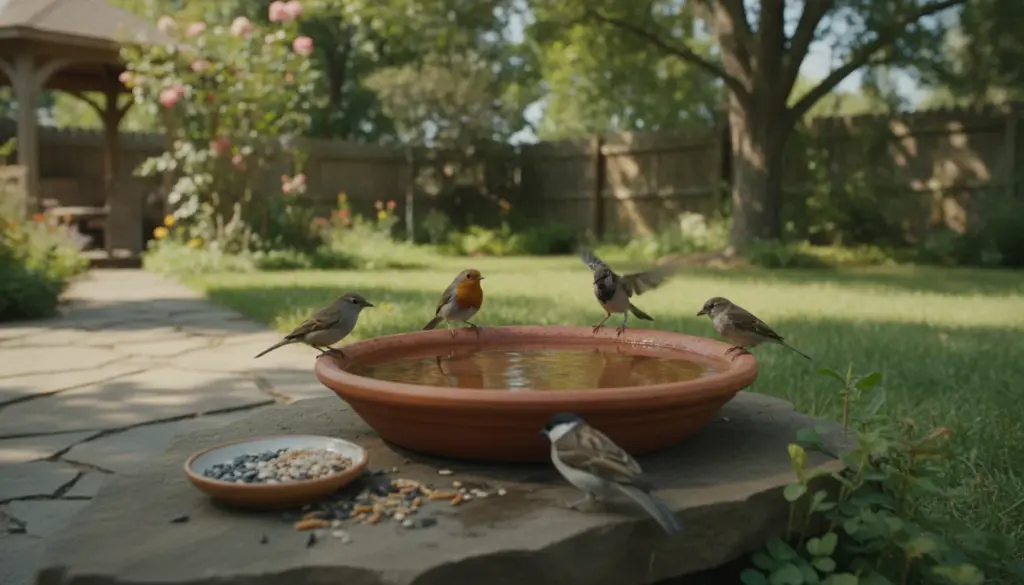
As scorching temperatures sweep through, a simple backyard water feature transforms into a crucial lifeline. However, placing it incorrectly might actually keep our feathered neighbors away rather than inviting them in.
The hotter months often turn into a harsh survival test for local wildlife. Natural puddles evaporate, and the sun-baked earth makes foraging for daily nourishment incredibly difficult. By setting up a dedicated watering station and offering appropriate snacks, you can provide vital relief to these struggling animals.
Creating a Hygienic and Well-Placed Bird Oasis
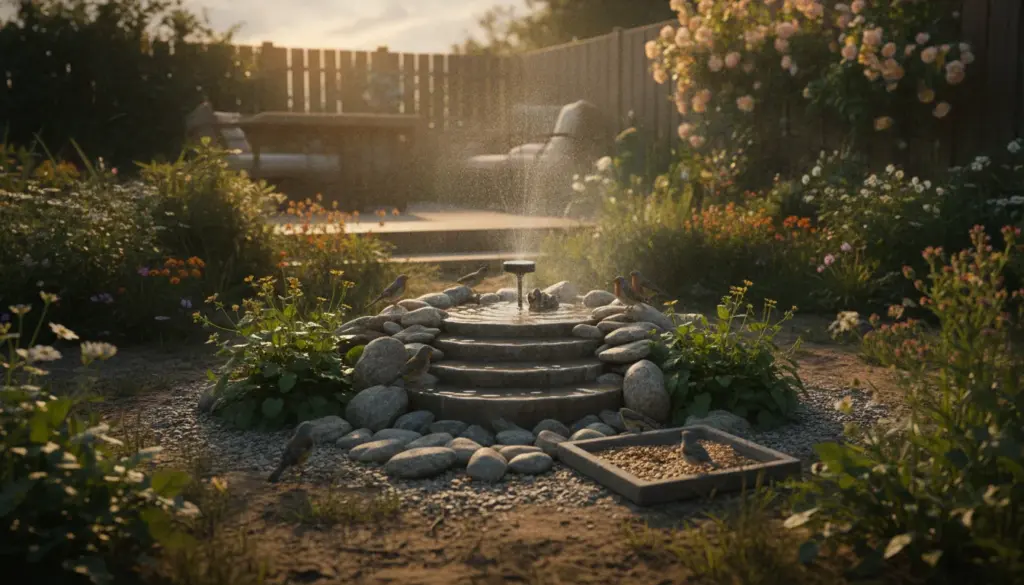
You do not need fancy equipment to make a difference; a basic shallow container, such as a repurposed terra-cotta plant saucer, works perfectly. To ensure it doubles as a comfortable bathing spot, maintain a water depth of between 2.5 and 10 centimeters. This specific measurement allows small flyers to safely wash their feathers and bring down their body temperatures during heatwaves.
Finding the right spot in your yard is arguably even more important than the vessel itself:
Wildlife will only utilize a drinking station if they perceive the environment as completely secure. Splashing around requires significant attention, leaving these tiny creatures vulnerable to stealthy predators like neighborhood cats.
Always position your water source near protective shrubs or tree branches, giving robins, blackbirds, and other visitors an immediate escape route. To prevent the spread of harmful pathogens, maintaining pristine water conditions is absolutely mandatory. Scrub the basin daily using a sturdy brush and boiling water. An expert trick is to maintain two interchangeable bowls, leaving the unused one out in the direct sunlight to naturally sanitize.
Whether you use a classic basin or a miniature patio pond, local flocks will quickly discover the refreshing retreat. This creates an excellent opportunity for backyard observation:
Watering stations offer a fantastic chance to watch nature unfold, whether you spot a great tit or chaffinch darting in for a quick sip, or lively groups of house sparrows and starlings gathering for an enthusiastic group splash.
Best Practices for Summer Bird Feeding
When severe droughts harden the ground, pulling up earthworms becomes nearly impossible for foraging parents. Supplying the correct provisions can massively relieve their stress during the exhausting breeding season. Opt for high-protein options to support their energy needs:
- Dried insects
- Small, high-fat seeds
Pay close attention to the physical size of the food you offer, as fledglings face a severe choking hazard if presented with whole peanuts or large nuts. Furthermore, human leftovers, especially baked goods like bread or salted foods, are highly dangerous and should never be scattered outside.
To stop avian illnesses from spreading through your flock, enclosed tube feeders generally provide a much safer alternative to open platform trays or traditional wooden houses. These vertical dispensers stop droppings from contaminating the seed supply. Always scrub your feeding equipment routinely and only put out modest portions that will be consumed rapidly before spoiling.
Further Considerations for Avian Care
- Catering to seed-eaters: Tailoring your seed mix is the best way to attract specific species like finches, sparrows, and bullfinches to your yard during harsh conditions.
- Troubleshooting empty birdhouses: If your nesting boxes remain unoccupied, factors like incorrect placement, lack of territorial privacy, or poor entrance sizing are often to blame.
- Preventing window collisions: Window strikes happen far more often than homeowners realize; applying specialized decals or breaking up glass reflections can save countless tiny lives.