That familiar laundry scent is pleasant enough, yet the stiff fibers still feel like sandpaper against your skin. Running another cycle, pouring in extra soap, or cranking up the temperature simply doesn’t work. While some folks swear by white vinegar, nobody really wants to dry off with something that smells like salad dressing. Surprisingly, the true culprit behind scratchy fabric usually isn’t the specific brand you use, but rather a far less glamorous detail.
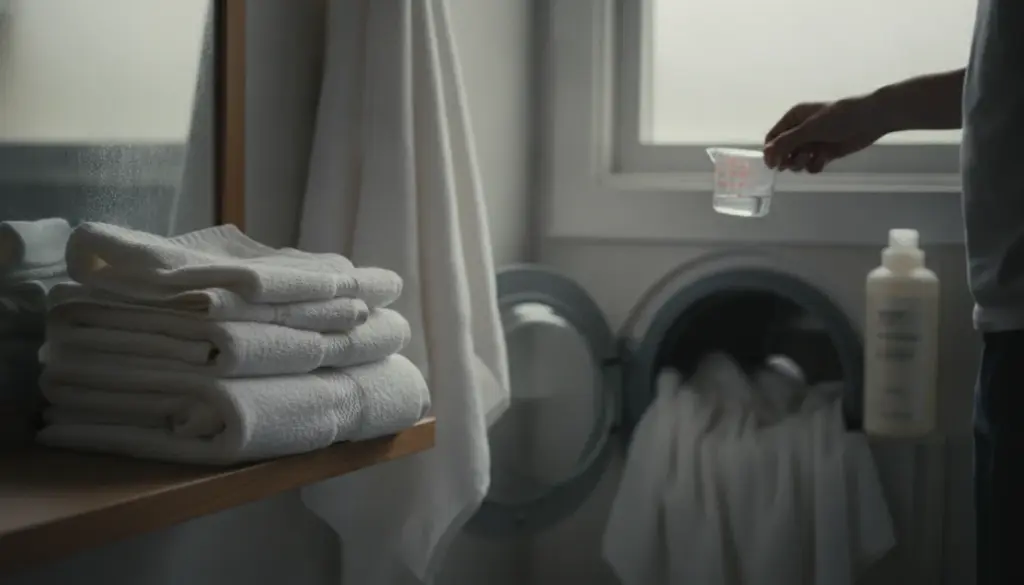
Picture a standard weekday evening: the bathroom mirrors are steamed up, and hanging on the hook is a stack of linens that used to be incredibly plush. You probably remember that initial luxury-hotel feeling they had right after you bought them. Now, you can practically hear a crunching sound when folding them. Looking at your washing machine with a mix of frustration and despair, you realize you’ve tested every trick in the book. Shorter drying times, longer tumbling, switching conditioners, or skipping them entirely—nothing brings back that fluffiness. Eventually, your attention shifts to the one everyday item causing all the trouble: the measuring cup.
Why your towels turn stiff (and why vinegar isn’t the answer)
High-quality cotton rarely degrades on its own; instead, the delicate fibers slowly suffocate beneath a microscopic layer of leftover grime. Laundry soap, fabric conditioners, and mineral deposits from tap water all leave behind a tiny trace. With every single wash, another thin film is added to the pile. After dozens of trips through the drum, an invisible armor forms around the threads, preventing them from bending naturally or absorbing moisture effectively. This leaves the material feeling incredibly harsh, even though it is technically completely clean. The most frustrating part? Our natural instinct is to toss in an extra splash of detergent for maximum freshness, which is exactly what exacerbates the stiffness.
A typical household easily runs the washing machine four to eight times weekly. Throughout these cycles, bath sheets act as silent workhorses—they endure hotter temperatures, heavier usage, and much rougher treatment than our delicate garments. One mother based in Utrecht shared how she mistakenly believed her recently purchased towel set was simply poor quality because they felt like cardboard after just three months. To fix it, she had started overdosing her soap and pouring in heavy liquid conditioners to force some softness back into the fabric. Once she finally slashed her usual measurement in half, that stubborn stiffness vanished completely within three cycles. She didn’t buy a miracle formula or resort to vinegar; she just gave the cotton less chemical residue to rinse away. You can quite literally feel that difference with your eyes closed.
From a purely logical standpoint, the mechanism is straightforward: whatever chemicals you pour into the dispenser drawer must be thoroughly flushed out again. In reality, complete rinsing rarely happens, especially when drums are stuffed to the brim or rapid cycles are selected. Residual soap clings stubbornly to the fabric, along with softening agents that masquerade as a plush coating but actually seal the material completely shut. Combine this chemical cling with hard tap water, and you get a calcium-soap buildup that transforms fluffy cotton into rigid cardboard. The amount of liquid you pour becomes the quiet breaking point. Just a few excess milliliters, repeated week after week, turns a soft cloud into a rigid board—not because you lack cleaning supplies, but because you are drowning the fabric in them.
The secret lies in the dosage (and daring to use less)
Achieving incredibly plush bathroom linens without resorting to pungent home remedies or expensive new detergents is shockingly simple: cut your current soap usage in half. Check the manufacturer’s recommended amount on the bottle, and purposely pour only fifty percent of that into the drawer. Furthermore, banish fabric softeners from your towel loads entirely, regardless of how aggressively the packaging advertises “ultimate softness.” Allow the machine’s mechanical tumbling and fresh water to do the heavy lifting. If your linens need a complete reset, run a dedicated hot cycle using only towels and a minuscule drop of soap to strip away years of built-up gunk. Dialing back on products often feels deeply counterintuitive, yet it is exactly what gives those suffocated fibers room to breathe again.
Many of us simply eyeball the little plastic measuring cap, splashing a bit here and dolloping a bit there. We happily cram the drum full of laundry because maximizing the load feels like the most efficient way to do chores. Unfortunately, this creates a chaotic mix of heavy textiles, trapped dirt, excessive suds, and nowhere near enough clean water to flush the lather away. We have grown accustomed to chemical abundance rather than a balanced wash. A highly effective rule of thumb is to fill the machine, but never pack it tight. You should easily be able to rest your hand on top of the dry laundry without pushing down. If you’ve been pouring the exact same large capful of soap for years, it’s almost certainly a sign of chronic overdosing.
Persistent laundry myths still dominate our routines, particularly the false belief that heavy conditioners create lasting fluffiness. In truth, these liquids leave textiles feeling slightly sticky and significantly diminish their ability to absorb moisture. That initial silky texture you feel right out of the dryer is merely a temporary chemical mask hiding the rough edges underneath. Over time, that very coating accumulates into a waterproof shell. As one seasoned laundry expert noted:
“Every single drop of conditioner you apply to a bath sheet ultimately costs you a fraction of its long-term softness.”
Their professional guidance was brilliantly straightforward and practical:
- Always use significantly less laundry soap than you think is necessary for the load size.
- Completely eliminate liquid fabric conditioners from your heavy cotton cycles.
- Prioritize an additional water rinse over adding extra cleaning chemicals.
- Vigorously shake out each individual piece right after washing, before hanging them up or tossing them into the tumble dryer.
These are incredibly minor, almost boring household tweaks. Yet, time and again, it is precisely these mundane adjustments that become true game-changers for your home’s comfort.
How to maintain plush towels (without obsessing over laundry)
Once you successfully reduce your product usage, the next step is establishing a lightweight, sustainable routine. Adopt this single habit: run your bath sheets at 40 or 60 degrees Celsius with a small, strictly measured dose of soap, and leave it at that. Resist the urge to add a splash more “just to be safe.” Occasionally activate the extra rinse button on your machine, which is particularly beneficial if you reside in a region with hard tap water. Finally, give every single piece a firm snap as you pull it from the damp pile. This vigorous shaking forces the matted loops to separate, allowing warm air to circulate deeply between the threads. It demands literally ten seconds of effort but drastically improves drying efficiency.
A surprising amount of domestic frustration stems from a quiet sense of embarrassment; we often feel like we are failing at basic tasks because everyone else seemingly manages perfectly. That is complete nonsense. Every single home hides a stack of scratchy washcloths, a faded dish towel, or a mysterious stain that refuses to vanish. Let’s be completely honest: nobody executes household chores flawlessly every single day. This reality applies just as much to perfectly sorting colors as it does to scientifically measuring soap. The true secret to domestic success isn’t achieving daily perfection, but rather adopting a few tiny habits that are so effortless you maintain them on autopilot. Slashing your detergent dependency is exactly that kind of foolproof habit.
A prominent contributor on a popular laundry advice forum recently shared their experience:
“I honestly believed manufacturers were exaggerating when they suggested those tiny measurements. It wasn’t until I ran out of soap and was forced to stretch the last few drops that I realized the truth. My linens emerged softer than they had ever been in years.”
This particular realization is almost universally relatable. That is why it helps to keep a tiny, mental cheat sheet in your utility room.
- The baseline: Always halve the recommended soap amount for heavy cottons.
- The absolute rule: Never pour softening liquids into these specific loads.
- The occasional fix: Trigger an extra rinse cycle if the drum is heavily packed or the material is exceptionally thick.
- The mandatory finish: Vigorously snap fabrics before drying them, ideally leaving plenty of breathing room between items on the rack.
By sticking to these guidelines, you stop relying on sudden bursts of cleaning motivation. You simply follow a calm, realistic rhythm, and your skin immediately notices the remarkable difference.
Maintaining luxurious textiles isn’t about spending a fortune; it’s about making small, deliberate choices that make daily routines slightly more pleasant. The neatly folded stack sitting in your linen closet reveals how you handle chores: either rushing blindly on autopilot, or utilizing a few mindful strategies that actively work in your favor. Cutting back on chemicals feels like a risky gamble at first. You might worry your clothes won’t actually get clean. However, that doubt vanishes once you realize the fabrics smell naturally fresh, their vibrant colors remain intact, and the cotton no longer crunches when folded. We all experience that distinct moment where a minor revelation completely overturns years of ingrained habits.
Perhaps the first sign of success will be a houseguest emerging from the shower with a smile, asking where you bought such incredibly luxurious bath sheets. You’ll likely just smirk, knowing the secret is entirely unglamorous. There is no magical proprietary spray or expensive boutique treatment involved—just a standard bottle of soap that now lasts twice as long. That is the hidden joy of mastering your washing machine’s chemistry: you win on multiple fronts. Your linens survive years longer, and you spend significantly less money on household supplies. There is something deeply reassuring about discovering that true luxury doesn’t require adding another fragrance or artificial layer, but rather focusing on what you can strip away. That is exactly where the motivation begins to experiment, share your findings, and gently reinvent your own laundry rituals.
Frequently Asked Questions
- Does reducing my soap genuinely leave my heavily used textiles completely clean?
Absolutely. As long as you avoid cramming the drum too full and select an appropriate temperature cycle, a significantly lower dose provides more than enough cleaning power. Excess lather never rinses out completely anyway, which ironically leaves fabrics feeling dirtier and significantly stiffer. - Can I genuinely skip the conditioning liquids entirely for my bath linens?
Yes, and it is highly recommended that you do. These specific liquids deposit a waxy film over the cotton threads. While this coating mimics a silky texture initially, it ultimately causes long-term rigidity and completely destroys the fabric’s ability to absorb moisture. - So, does white vinegar actually do anything helpful?
While mild acids can temporarily dissolve trapped calcium deposits, the pungent scent and the hassle of adding an extra step are off-putting for many people. By simply measuring correctly and ensuring a thorough fresh-water rinse, you can achieve the exact same fluffy results without turning your laundry room into a salad bar. - Does utilizing a tumble dryer negatively impact the overall texture?
It certainly can. A brief tumbling session helps fluff up the flattened loops, but exposing cotton to extreme heat for prolonged periods bakes the fibers dry. The most effective approach is often a hybrid method: tumbling them briefly for volume, then letting them finish drying on a rack. - How quickly will I notice an improvement once I alter my routine?
Most people experience a drastic transformation within just two to three cycles using the modified approach. As the deeply embedded chemical residues gradually wash away, the tightly bound threads relax, leaving the material noticeably more pliable and significantly fluffier.