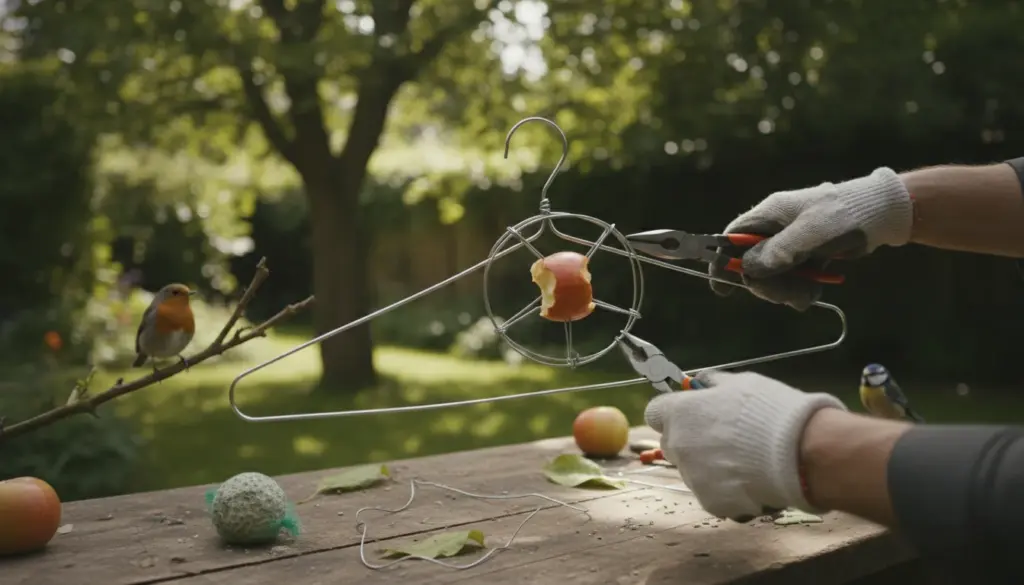
More people want to support local wildlife, but the steep prices at pet supply stores can quickly become a barrier. Luckily, transforming a simple metal coat hanger into a sturdy, cost-free feeding station takes almost no effort. Armed with just two pairs of pliers and an apple or suet ball, you can craft an inviting hotspot that robins, tits, and blackbirds will discover in no time.
From Closet Clutter to Minimalist Feeding Station
Wire coat hangers often sit forgotten in wardrobes, yet they offer the perfect raw material for this backyard project. The steel is surprisingly pliable, allowing you to mold a sleek, functional holder that suspends effortlessly from a branch. Investing just three minutes of manual work lets you support local fauna without spending a single dime.
Providing supplementary nourishment is absolutely vital for backyard birds during chilly spells and early spring. These feathered visitors burn immense amounts of energy securing territories, constructing nests, and rearing their young. A reliable, well-stocked feeding area gives them the crucial nutritional boost needed to thrive during the demanding breeding season.
Essential Tools for Your DIY Wire Feeder
You likely already own everything required for this quick craft. There is no need for complicated blueprints or trips to the hardware store.
- 1 thin metal coat hanger (the flexible wire type from dry cleaners works best)
- 1 pair of wire cutters or combination pliers
- 1 pair of flat-nose pliers for precision bending
- 1 whole apple or a bird-friendly fat ball
Despite being wonderfully easy to bend, dry cleaner wire possesses remarkable tensile strength. It easily supports the weight of standard bird food while remaining highly workable by hand. Always prioritize safety while crafting: work methodically, avoid pinching your skin, and slip on a pair of thick work gloves if necessary.
Step-by-Step Shaping Guide
1. Reinforcing the Hook and Base
Place your wire hanger flat on a sturdy workbench. Using your flat-nose pliers, carefully untwist the coiled section sitting just below the main top hook. Gently pull this twisted segment straight down until you are left with a single, elongated piece of wire hanging below the intact hook.
It is crucial to leave that large, rounded hook exactly as it is, since you will use it to hang the finished piece from a tree branch. To prevent your new feeder from spinning wildly in the wind, clamp the base of the hook tightly together with your pliers. A tightly crimped top section ensures a much more stable, sway-resistant construction.
2. Crafting the Food Holder
Now you can get creative by shaping the long, straightened wire into a custom food receptacle. Your bending technique will depend entirely on the type of snack you plan to serve.
Option A: Designing an Apple Skewer
If you want to serve fresh fruit, a simple spike or an open U-shape yields excellent results.
- Using the flat-nose pliers, bend the bottom 10 to 15 centimeters of wire into a distinct, sharp point.
- Pinch the tip slightly backward to create a subtle secondary hook; this internal catch prevents the fruit from sliding off.
- Firmly push the apple upward over the point until it rests securely against the bent elbow of the wire.
Alternatively, you can craft a wide U-shape by curving both ends slightly inward. You then wedge the apple tightly between these metal arches, cradling it as if it were sitting in a minimalist metal spoon.
Option B: Creating a Suet Ball Basket
For serving fat balls, twisting the metal into a tight spiral or miniature basket is the most effective approach.
- Coil the bottom 15 to 20 centimeters of wire into a firm, continuous spiral, much like twisting a giant corkscrew.
- Ensure the individual loops sit close enough together so the suet ball cannot slip through the gaps.
- Leave a slightly wider opening at the very top of the spiral to pop the fat ball inside, then gently squeeze the rim closed to secure the food.
Crucial safety step: Always bend any sharp wire tips completely inward. Crimp them into tiny, smooth loops so that landing birds never risk slicing their delicate feet or wings as they flutter around for a meal.
Selecting the Safest Location in Your Yard
Keeping Distance from Predators
Finding the right spot is just as important as the feeder itself. Select a sturdy branch sitting roughly two to three meters above the ground, making it incredibly difficult for neighborhood cats to ambush your flying visitors. Ensure the hanging wire is far away from fences, low rooflines, or shed tops that predators might use as a launching pad.
Keep these golden placement rules in mind:
- Hang the wire a minimum of 2 meters high.
- Maintain at least a 3-meter buffer zone from feline climbing routes.
- Position the station near dense shrubbery so small birds can quickly dive for cover if threatened.
Window Safety and Weather Protection
Never dangle your new feeding station directly in front of large glass panes. Maintaining a distance of around ten meters drastically reduces the risk of fatal window collisions if a flock suddenly startles and scatters.
Seek out a reasonably sheltered area to stop the wire from swinging violently during heavy gusts. However, the spot still needs decent air circulation so damp food can dry out quickly after a rainstorm. Tucking the wire just under a light leafy canopy or near the edge of a tree’s crown is an ideal compromise.
Why Small Songbirds Prefer This Clever Setup
A slender, dangling wire arrangement offers significant advantages over bulky, traditional wooden bird tables. Nimble, lightweight species like blue tits, great tits, finches, and robins can easily cling to the thin metal and grab quick bites. Meanwhile, heavier, clumsier birds find it difficult to balance on the swinging wire and typically abandon the effort. This naturally reserves the precious calories for the smaller species that truly need them.
Beyond helping agile songbirds, this upcycled metal holder is highly weather-resistant. Unlike wood, it will never rot away, nor will it crack during severe winter frosts, allowing it to function flawlessly across multiple seasons. By repurposing household clutter, you actively reduce plastic waste while permanently increasing the wildlife value of your garden.
Maintaining Avian Hygiene and Menu Variety
Anyone providing supplementary food must take backyard hygiene seriously. Stale, rotting leftovers quickly breed harmful bacteria and fungal spores that can devastate local bird populations.
- Replace fresh fruit regularly and immediately discard any apple segments showing signs of mold.
- Never leave fat balls hanging during unseasonably warm weather, as the grease can quickly turn rancid and cause digestive issues.
- Rinse the metal wire frame thoroughly with hot water every few weeks and let it air-dry completely before refilling.
Offering a varied menu will naturally attract a wider diversity of winged guests. While apples and pears are irresistible to starlings and blackbirds, suet is highly prized by sparrows and tits. Throwing unsalted peanuts and black oil sunflower seeds into the mix will draw in an entirely different crowd. By periodically rotating your offerings, you can observe exactly which species frequent your specific neighborhood.
More Creative Upcycling Ideas for Nature Lovers
Once you master the wire hanger method, you might feel inspired to expand your backyard buffet. Stringing multiple hanging stations together creates a bustling, lively feeding corridor in your garden. Beyond closet organizers, plenty of other everyday items can be repurposed into charming wildlife projects:
- Transforming mismatched vintage teacups and saucers into elegant, suspended seed trays.
- Filling washed glass jars with unsalted peanuts and hanging them securely with weather-resistant twine.
- Attaching an old broom handle or sturdy twig just below a feeding zone to act as a convenient perching post.
Always keep three core principles in mind when designing DIY feeders: ensure the layout is safe, incredibly easy to sanitize, and completely free of sharp edges. With these basic guidelines, almost any ceramic or metal object can enjoy a highly productive second life outdoors.
For families, shaping wire and skewering apples serves as a wonderful, hands-on weekend activity. Crafting feeding stations together teaches children valuable lessons about seasonal changes, animal behavior, and wildlife conservation right in their own backyard. Once a vibrant flock of robins and tits becomes a daily spectacle outside your window, you will never view a flimsy metal hanger as useless junk again.