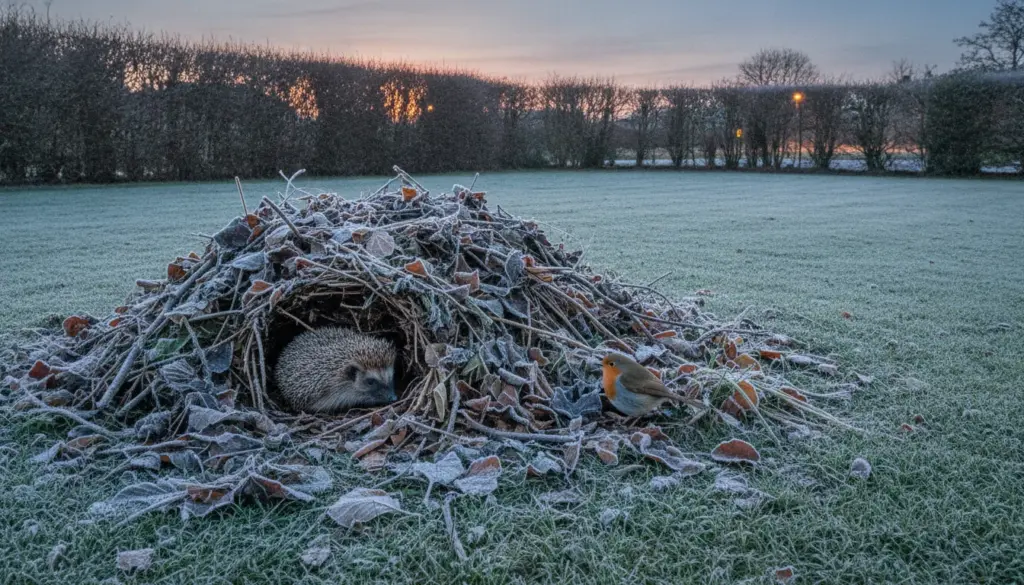
The hidden winter secret of a thriving wildlife garden
Once the initial frost coats the grass, outdoor spaces suddenly fall silent. Gone are the buzzing pollinators and humming lawnmowers, replaced by the crisp sound of footsteps on frozen turf and distant street noise. Glancing around your freshly raked, perfectly cleared yard, it might seem ready for the season. However, this immaculate surface masks a harsh reality for the tiny creatures lingering out of sight.
A robin searching through the hedgerows or a spiky hedgehog appearing at twilight will find survival incredibly difficult in a sterile environment. If you prefer avoiding complicated birdseed recipes, expensive wildlife hotels, or complex feeding setups, there is exactly one effortless strategy that makes a genuine difference.
Take a stroll through any typical suburban neighborhood during late autumn, and you will notice identical landscapes. Clipped grass, bare flowerbeds, and countless trash bags stuffed full of organic debris heading for the local dump. While this pristine aesthetic looks fabulous in photographs, it effectively transforms a vibrant habitat into a barren wasteland for local fauna.
That meticulously manicured layout strips away vital resources exactly when creatures need them most.
Picture yourself as a hungry, exhausted hedgehog on a freezing November night desperately trying to construct a nest. One property offers nothing but exposed dirt and chilling wooden fences. The adjacent yard, however, features a seemingly neglected nook overflowing with fallen foliage, snapped twigs, upright plant stalks, and crevices beneath the bushes. Humans might view this as untidy, but for local wildlife, it represents a luxury resort offering unlimited room and board.
Avian visitors face the identical struggle. Patches of property brimming with decomposing leaves, withered stems, and dried seed pods serve as crucial hunting grounds. A single square meter of untamed vegetation harbors a surprising abundance of hidden seeds and hibernating bugs.
The absolute best method to support these cold-weather survivors involves designating a modest, semi-wild sanctuary where organic yard waste remains untouched. Rather than installing intricate wooden palaces or premium silos, simply halt your urge to rigorously tidy every inch of soil. This approach flawlessly mimics natural woodland environments, utilizing dropped foliage as thermal blankets, hollow stalks as insect nurseries, and tangled branch heaps as protective vaults.
Creating the vital sanctuary where wildlife beats the cold
Select just a single location on your property and mentally declare it your dedicated wildlife zone. It requires minimal space. Devoting merely one or two square meters tucked behind a storage shed, beside a compost bin, or underneath an established shrub works absolute wonders.
Instead of cramming dead foliage into lawn bags, casually sweep it into this designated area. Create a relaxed mound by overlapping a handful of snapped branches or fresh prunings. Ensure you preserve several upright flower stalks, particularly those belonging to ornamental grasses, sedums, sunflowers, and echinacea. Remember, you are not neglecting your yard duties; you are actively constructing a microscopic nature reserve.
Driven by good intentions, homeowners frequently do the exact opposite. Terrified of property decay, potential slug invasions, or judgmental neighbors, they trim, blow, and sweep until the landscape becomes completely sterile. Many of us know that satisfying feeling of admiring a pristine flowerbed, completely unaware that we just canceled nature’s crucial winter buffet.
Naturally, practical boundaries apply. Prevent moisture damage by keeping damp organic matter away from exterior house walls. Avoid allowing thick, slippery debris to accumulate on walkways, and gently disperse heavy, soaking foliage so it doesn’t suffocate the underlying soil. Should you genuinely dislike the rugged appearance, simply conceal your untamed habitat behind a privacy screen or evergreen hedge.
As experienced garden experts often point out, most folks assume they require massive feeding tables or premium hedgehog enclosures. Yet, the most effective guidance is typically to simply shut off the leaf blower, step back, and leave one specific patch entirely alone.
Five steps to establishing a hands-off haven
- Determine the ideal location: Seek out a secluded or north-facing spot, preferably adjacent to a sturdy hedge or dense shrubs.
- Construct a foliage bed: Sweep gathered leaves into a layer roughly 10 to 20 centimeters deep, tossing in several small sticks to ensure adequate airflow within the mound.
- Assemble a scattered timber pile: Zero architectural skills are necessary. Simply cross-stack random garden trimmings and pruned wood into a loose formation.
- Preserve withered stalks: Never chop down spent plants carrying prominent seed heads. Foraging birds will aggressively extract both dormant insects and nutritious seeds from them.
- Enforce a strict restriction zone: From the fading days of autumn straight through to early spring, entirely avoid digging, turning, or tidying this specific territory.
Why this natural gesture outperforms artificial feeding stations
This deliberately unkempt territory accomplishes something standard bird feeders simply cannot achieve: it simultaneously supplies nutrition, secure lodging, and a stable microclimate. Hanging seed dispensers operate much like fast-food drive-thrus—they are highly convenient and entertaining to observe, yet they do absolutely nothing to restore the local ecosystem. A dedicated brush sanctuary genuinely heals the environment.
Beneath that protective blanket of decaying matter, underground ecosystems thrive. Grubs, beetles, and earthworms avoid freezing and remain highly active significantly longer into the season. This dynamic, crawling pantry provides exactly what wrens, blackbirds, and robins tirelessly scratch the earth to find. Simultaneously, wandering hedgehogs discover insulated, moisture-free cavities within the tangled twigs, allowing them to hibernate securely hidden from roaming domestic pets and human foot traffic.
Realistically, very few enthusiasts thoroughly sanitize their seed dispensers every single afternoon, which frequently leads to rampant avian diseases. Soiled perches, accumulating droppings, and damp grain create a breeding ground for illness. Your undisturbed thicket completely bypasses these hazards. By encouraging natural, dispersed foraging throughout the daylight hours, creatures avoid overcrowded, unsanitary contact.
Furthermore, this strategy prevents unhealthy dietary reliance. Wildlife accustomed strictly to human handouts frequently face starvation if a homeowner travels or forgets a refill. By maintaining organic ground cover, local fauna practice their innate survival skills. You transition from a simple food provider to the manager of a sustainable, premium habitat—a vastly superior ecological role.
Gradually, you will sense a distinct shift in your outdoor space’s atmosphere. Frosty mornings will feature increased avian chatter and subtle movements catching your eye. Perhaps a tiny wren darts from the decaying branches, or a distinct, narrow hedgehog trail materializes across the frosted grass. You might feel inspired to leave climbing ivy unclipped or coordinate with neighbors to carve a small wildlife corridor through the fencing.
Ultimately, transforming a barren property into an interconnected corridor of survival requires virtually zero effort. You literally just have to stop sweeping one small area.
Frequently Asked Questions
Is an artificial seed dispenser still necessary if I maintain an untamed zone?
Not essentially. Your rugged sanctuary yields adequate organic sustenance and protection. Should you personally enjoy watching feathered visitors at a hanging silo, treat it purely as a supplementary treat rather than their primary diet, and sanitize it rigorously.
Will accumulating yard waste permanently damage my turf or delicate plants?
Heavy, sodden organic matter can definitely suffocate pristine grass. To prevent this, simply rake the debris off the open lawn and relocate it into your designated wild corner or directly onto garden borders, where it will eventually transform into beneficial, nutrient-rich humus.
Does retaining twigs and foliage invite severe slug infestations?
While a few mollusks might seek refuge there, the structure simultaneously attracts their natural adversaries, including hedgehogs, ground beetles, and foraging birds. Over an extended period, the ecological equilibrium generally drastically improves rather than deteriorates.
What are the clearest indicators that spiky mammals are actively utilizing my property?
Keep a close eye out for slender pathways pressed into the grass, distinct dark droppings, and rustling noises during twilight hours. Setting up a motion-activated trail camera adjacent to your brush pile frequently captures undeniable proof within merely a few evenings.
At what point during the year is it safe to clean out the temporary sanctuary?
Hold off until late spring arrives. Once overnight temperatures remain reliably above the freezing mark and hibernating mammals are fully awake and mobile, you can carefully thin out the debris. However, retaining a fraction of the structural wood all year will encourage permanent wildlife residency.