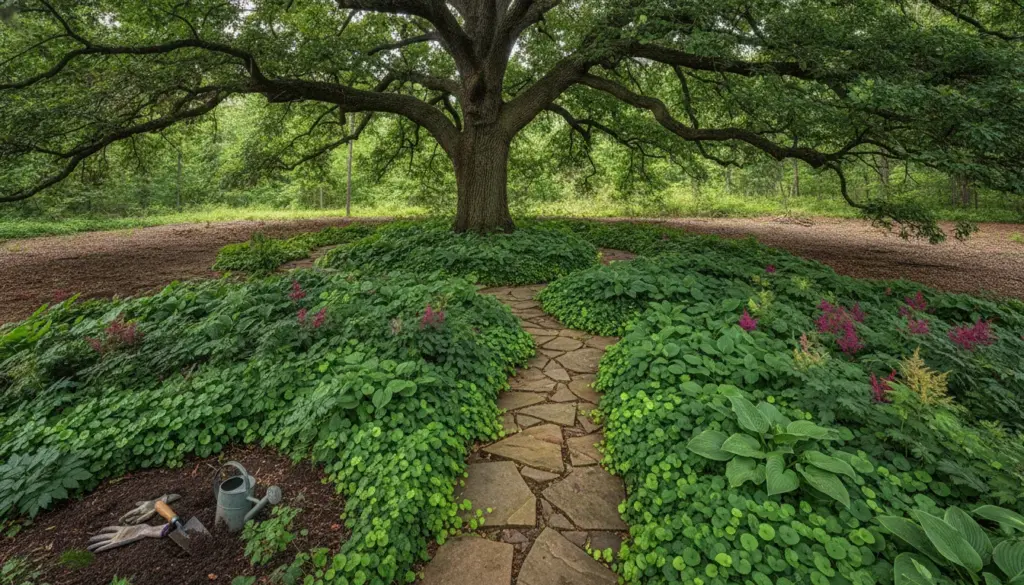
Transforming that gloomy, lifeless patch under a mature oak or pine might seem impossible. However, you can actually cultivate a surprisingly vibrant green carpet in these challenging spots, provided you select the right perennial and follow a strategic approach.
Why Everything Dries Out Under Large Trees
Gardeners often struggle with bare, dusty zones beneath large evergreens, mature oaks, or thick hedges. Grass turns yellow, standard perennials wither away, and thick roots break through the surface. This isn’t a sign of poor gardening skills, but rather a natural consequence of the microclimate.
A mature tree’s root system aggressively absorbs almost all available moisture and nutrients from the earth. Simultaneously, the dense canopy overhead blocks out crucial rainfall and sunlight. Horticulturists refer to this challenging combination as “dry shade”—a frustrating mix of low light, parched earth, and intense root competition.
Scientific research into plant behavior reveals that certain trees actually take their survival tactics a step further. Through a process known as allelopathy, their roots release specific chemical compounds that actively suppress the growth of competing vegetation. When you combine this chemical warfare with less than two hours of direct daily sunlight, it becomes completely clear why a traditional lawn simply cannot survive here.
The Problem with Classic Shade Favorites
Many homeowners attempt to fix these dark patches with popular shade-loving varieties like hostas, astilbes, or delicate ferns. While they look stunning in woodland photography, their actual growing requirements tell a different story.
- Hostas demand consistently moist, nutrient-dense earth to thrive.
- Astilbes require incredibly rich, humus-heavy soil that stays cool and damp.
- Ferns generally despise conditions where the ground completely dries out.
Beneath a massive tree canopy, these conditions simply do not exist. Thirsty tree roots drain the moisture, rainwater runs off the trunk, and the soil temperature spikes during mid-summer. The fallout is visible within a few months: scorched leaf edges, collapsing stems, nonexistent blooms, and ultimately, a return to bare dirt. To truly conquer this space, you need a robust survivor capable of handling drought, deep shade, and aggressive root rivalry all at once.
Meet Epimedium: The Unsung Hero of Difficult Spaces
This ultimate problem-solver already exists, though it often sits unnoticed in the quiet corners of garden centers. Known botanically as epimedium, and commonly called barrenwort or bishop’s hat, it lacks flashy, oversized blooms. Instead, it offers an unparalleled list of resilient traits that very few other perennials can match.
Barrenwort naturally develops into a low-growing, impenetrable carpet of foliage. Delicate, intricate flowers emerge in early spring, showcasing tones of crisp white, soft yellow, blushing pink, or fiery copper. Certain cultivated varieties even feature striking bicolored petals. The foliage remains evergreen or semi-evergreen in most climates, often taking on stunning bronze or rich red hues when temperatures drop.
The true magic of this perennial lies in its underground architecture. Spreading via short, creeping rhizomes, it steadily expands to form a dense groundcover that actively chokes out invading weeds. Once properly established, it tolerates extreme drought in deep shade with astonishing ease. Right at the exact point where thirsty hostas surrender, epimedium is just getting comfortable.
A Step-by-Step Guide to Planting in Dry Shade
While barrenwort appreciates loose, humus-rich soil in a perfect scenario, it consistently outperforms classic shade divas even in highly compromised environments. Success entirely depends on how you introduce it to the ground.
Choose the Ideal Season
Timing your planting makes a massive difference. Avoid putting young plants in the ground during a scorching summer. The absolute best window opens during early autumn, right as the seasonal rains begin. The earth remains warm enough for rapid root growth, while cooler air temperatures reduce transplant shock, allowing nature to handle the watering for you.
Prepare the Ground Carefully
Aggressively digging under an established tree is a terrible idea that will damage essential feeder roots. Instead, take a gentle, surface-level approach.
- Lightly scratch and loosen the top two to four inches of soil.
- Never chop through thick tree roots; always work your way around them.
- Apply a thin layer of rich leaf mold or composted leaves to replicate a natural forest floor.
Mimicking a woodland environment is the secret to long-term success. Decomposing leaves retain crucial moisture, stimulate beneficial microbial life, and slowly break down into the exact type of humus that epimedium desperately craves.
Proper Planting Technique
Before placing anything in the dirt, thoroughly hydrate your nursery pots. Submerge the root ball in a bucket of water for roughly fifteen minutes until the air bubbles stop rising, then let it drain. Space the young plants in a staggered, zigzag formation, keeping them about twelve inches apart. This spacing strategy ensures a seamless, gap-free carpet within a year or two.
Water generously immediately after planting. First-year hydration is non-negotiable: during dry spells, provide deep, soaking waterings so the young rhizomes can anchor themselves securely among the tree roots. Finish with a light mulch of shredded leaves or fine wood chips to trap moisture, but keep the material pulled back slightly from the plant’s crown to prevent fungal rot.
Low Maintenance for Maximum Impact
Once barrenwort settles into its new home, it demands shockingly little effort. In late winter, simply snip away any tattered or browned foliage before the fresh spring growth emerges. Supplemental fertilizer is almost never required, particularly if you allow autumn leaves to naturally decompose in the bed.
Perfect Companion Plants for Epimedium
If you want to elevate a drab corner into a dynamic display, pair barrenwort with other tough-as-nails species that tolerate dry shade.
Alchemilla mollis, widely known as lady’s mantle, creates velvety, scalloped cushions of foliage that catch morning dew. By early summer, it produces frothy clouds of chartreuse flowers that act like botanical light reflectors in dim spaces. Because it prefers slightly more sunlight, position it toward the outer edges of the canopy where the sun peeks through.
Vinca minor, or lesser periwinkle, serves as an excellent trailing partner. This vigorous groundcover quickly scrambles over poor soil, producing charming purple-blue or crisp white blooms from spring through late autumn. Use periwinkle to weave through the outer borders, while letting the epimedium dominate the driest zones right up against the tree trunk.
Real-World Example: Transforming a Pine Tree Base
Imagine the dusty, barren earth right at the base of an old pine. The dirt is baked hard, roots are exposed, and turf grass gave up years ago. With a minor afternoon intervention, you can completely flip the narrative.
Gently break up the compacted surface with a hand cultivator, lay down a generous blanket of leaf compost, and nestle your barrenworts into the earth at twelve-inch intervals. Soften the harsh transition zones with pockets of lady’s mantle and periwinkle. By the following spring, the lifeless zone will be lush and green. Within a year, you will have cultivated a dense, woodland-inspired tapestry that totally disguises the once-problematic root zone.
Final Expert Tips for Resilient Shade Gardens
To permanently conquer dry shade, you must focus on soil health as much as plant selection. Stop raking away autumn leaves under large trees; they are free, high-quality mulch. Avoid synthetic chemical fertilizers entirely, as they wash away quickly and do nothing to improve soil structure. Natural organic matter keeps the ground airy and holds onto passing rain, which directly benefits your new plants.
When intense summer droughts hit, skip the daily light sprinkles. Instead, give the area one deep, heavy soaking every week. Deep watering forces plant roots to dive further into the soil searching for moisture. Paired with a thick living groundcover, this strategy ensures your shady garden corner remains a lush oasis, rather than reverting to cracked, lifeless dirt.