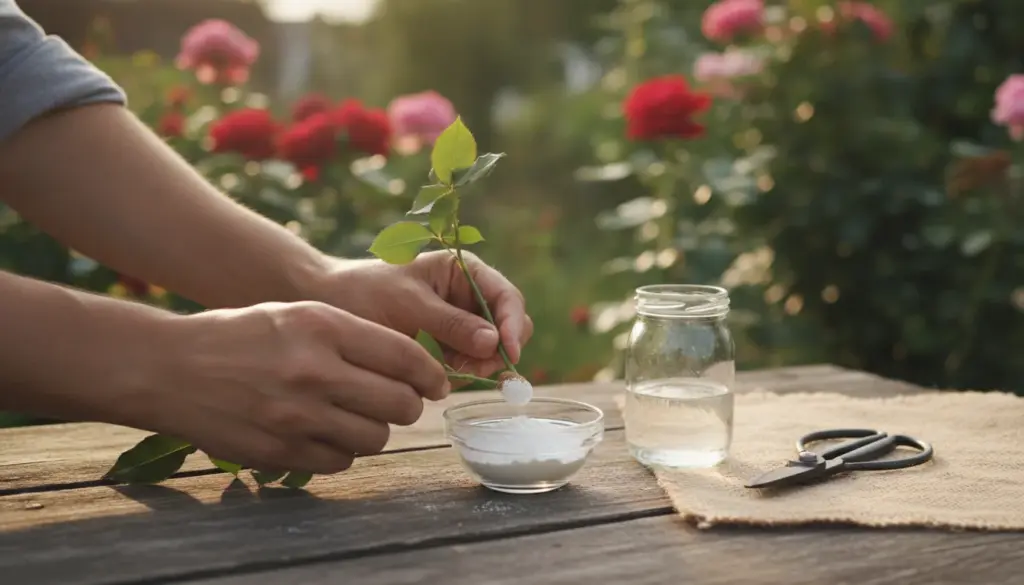
Propagating rose stems can often feel like an endless waiting game. Fortunately, an incredibly simple pantry ingredient can dramatically speed up this timeline while simultaneously shielding the delicate plant wound from harmful fungi and bacteria.
The hidden challenges of rose propagation
If you are planning on multiplying your favorite rose, utilizing stem cuttings remains one of the most reliable horticultural techniques. The absolute best window for this gardening task stretches from late May through August. During these warmer months, the shoots of the rose have developed enough strength but remain flexible rather than completely woody.
While the basic concept seems wonderfully straightforward—snip off a healthy stem, push it directly into moist garden soil, and wait—the reality is often an exercise in extreme patience. Gardeners frequently find themselves waiting for several weeks without seeing a single sign of underground growth.
Rose stems refusing to grow roots? Try this genius trick
This is exactly where an astonishing household item steps in, serving as a well-kept secret among professional landscapers and botanists: raw honey. This golden kitchen staple boasts remarkable natural benefits, packed with powerful enzymes and flavonoids that deliver potent antibacterial and fungicidal effects.
When a cutting is treated with a diluted honey-water mixture prior to planting, it creates an impenetrable protective barrier over the fresh cut. This crucial defense mechanism wards off soil-borne pathogens. Instead of wasting valuable energy fighting off microscopic invaders, your young shoot can channel its entire biological focus into establishing a robust new root system.
Getting the application exactly right
Implementing this botanical trick is remarkably simple and requires nothing more than everyday pantry items you likely already own. However, precision is absolutely critical when it comes to the mixture’s concentration. If you apply the sticky substance too thickly, you run the risk of completely clogging the plant’s tissue, which suffocates the stem and halts root development entirely. To ensure absolute success, the precise step-by-step instructions and potential alternatives are demonstrated in the video above.
More essential advice for thriving roses:
- Expert gardener reveals: Four typical rose care mistakes everyone should avoid
- The Forsythia method: How to know the exact perfect moment to prune your roses
- Rescue your blooms right now: Identifying, understanding, and properly treating rose diseases and pests