The Secret to a Zero-Effort, Evergreen Border
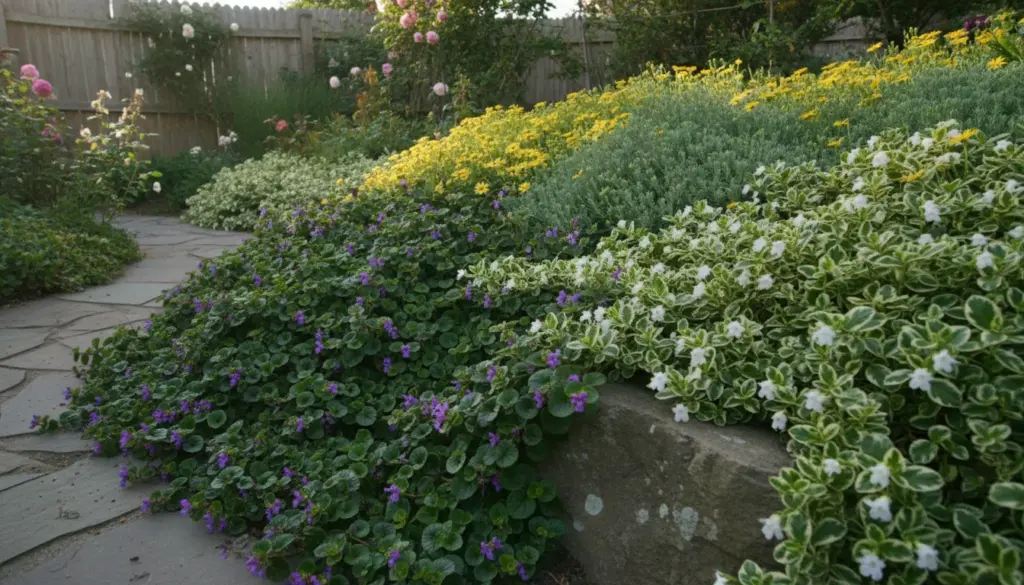
As a landscape designer, I often see homeowners struggling with bare soil and endless weeding sessions. However, by strategically combining three specific perennial ground covers, you can transform a steep slope or an empty front yard into a lush, weed-resistant tapestry. This highly effective planting strategy requires absolutely no complex landscaping knowledge, making it the perfect weekend project for casual gardeners.
Why Trailing Plants Are a Gardener’s Best Friend
Ground covers occasionally get a bad reputation for acting like aggressive bullies that choke out delicate flowers. In reality, this usually only happens when a single dominant variety takes over, or when competing plants share the exact same seasonal growth rhythms. When curated properly, trailing varieties offer incredible practical benefits.
- Natural weed suppression: They shade the soil surface, preventing unwanted seeds from germinating.
- Climate control: A thick living mulch protects the delicate topsoil from severe frost and summer dehydration.
- Instant maturity: They quickly fill in visual gaps, making a new flowerbed look fully established.
- Wildlife support: Low-growing foliage offers crucial shelter and nectar for beneficial insects.
The true magic does not lie in purchasing expensive exotics, but rather in selecting a specific trio of plants that stagger their bloom times and utilize different root depths.
A 365-Day Succession Planting Formula
Professional growers frequently rely on a robust, highly accessible combination of three resilient species. Because they easily survive harsh freezing temperatures and are widely available at local nurseries, they form the ultimate botanical relay team.
1. Winter Heath (Erica carnea): Vibrancy in the Dead of Winter
When the rest of the landscape looks bleak and dormant, winter heath acts as the ultimate mood booster. This compact, evergreen shrub bursts into thousands of tiny, bell-shaped flowers ranging from crisp white to vibrant magenta.
- Peak season: January through April.
- Average height: 10 to 20 centimeters.
- Expert advantage: It provides vital early nectar for waking bumblebees while beautifully masking bare earth.
Thriving in sunny spots with excellent drainage, winter heath instantly banishes winter gloom by forming a cheerful, dense mat across the soil.
2. Creeping Phlox (Phlox subulata): The Springtime Showstopper
As the heath fades, creeping phlox eagerly takes the baton in late spring. This low-profile perennial transforms ordinary dirt patches into a breathtaking, solid carpet of star-shaped pink, purple, blue, or white blossoms.
- Peak season: May through August.
- Average height: 5 to 15 centimeters.
- Expert advantage: Exceptionally brilliant for draping over retaining walls, rocky edges, and steep inclines.
Long after the striking flowers disappear, its fine, needle-like foliage remains highly decorative. Most importantly, creeping phlox relies on a very shallow root system, allowing it to coexist peacefully alongside its seasonal companions.
3. Leadwort (Ceratostigma plumbaginoides): Autumn Fire and Blue Sapphires
Just as most summer perennials begin to look exhausted, this underutilized trailing gem steps into the spotlight. Leadwort produces mesmerizing, brilliant blue flowers during the late summer transition.
- Peak season: September through December.
- Average height: 20 to 30 centimeters.
- Expert advantage: As temperatures drop, the green foliage ignites into spectacular shades of fiery orange and crimson red.
Because leadwort pushes its roots significantly deeper into the earth than creeping phlox, the two share underground real estate flawlessly. Together, these three varieties create a continuous relay of color: winter heath handles the frost, phlox rules the spring and early summer, while leadwort dominates the autumn months.
The Golden Planting Rule: Five Pots per Square Meter
The mathematics behind this botanical matrix are delightfully straightforward. You simply need exactly five small nursery plants per square meter. This specific density encourages the foliage to knit together rapidly, usually forming a completely closed canopy within one to two growing seasons, while still offering each variety enough personal space to thrive.
Why Triangles Outperform Straight Lines
Human instinct often dictates planting in perfectly straight, rigid rows. While this looks organized on day one, it emphasizes bare soil and creates harsh, awkward visual transitions as the seasons change. Instead, arranging your pots in staggered triangular patterns mimics natural meadow growth.
By utilizing a randomized triangle layout, the transitions between blooming phases become virtually invisible. As one species retreats into dormancy, its neighboring plant visually expands to absorb the empty space.
Understanding the Underground Harmony
Novice gardeners often worry that combining creeping plants will result in a chaotic, tangled turf war. Fortunately, these three specific plants boast uniquely adapted root systems that prevent them from suffocating each other.
- Winter heath prefers an aerated top layer for its somewhat shallow root structure.
- Creeping phlox spins a remarkably tight, fine web just millimeters below the soil surface.
- Leadwort plunges its primary roots much further down into the subsoil.
Furthermore, because their active blooming periods are completely staggered, they never aggressively compete for heavy water or nutrient uptake at the exact same moment. One rests while the other feasts.
Timing Your Planting and Seasonal Care
To give this evergreen trio the best chance at success, aim for one of two optimal planting windows. Mid-October is excellent because the soil retains late-summer warmth, encouraging gentle root establishment before the heavy freezes arrive. Alternatively, early spring works beautifully, provided the ground is no longer frozen solid or completely waterlogged.
Once established, the maintenance is incredibly minimal. Because the dense foliage blocks out sunlight, opportunistic weeds simply cannot germinate. A brisk walk-through to pull out a few stray invaders a couple of times a year is generally all the upkeep required. You will rarely need to replant, as the varieties will naturally self-regulate and expand to fill their designated zones.
Ideal Locations for Your Three-Season Carpet
This dynamic trio flourishes beautifully in full sun to dappled shade, provided the soil allows for decent drainage. As a design professional, I frequently utilize this concept in several tricky landscape areas:
- Awkwardly sloped driveways or terraces where pushing a lawnmower is dangerous.
- Skinny planting strips squeezed between paved walkways and boundary fences.
- Front yards that demand a manicured appearance but receive zero daily maintenance.
- Garden path borders that require continuous visual interest year-round.
If you are battling heavy, compacted clay, be sure to deeply amend the top layer with generous amounts of coarse sand and rich compost to boost oxygen flow. For highly exposed, sun-baked environments, you must provide supplemental watering during their first establishing year.
Design Variations and Common Pitfalls
If you are blessed with a sprawling landscape, simply repeat this triangular matrix across larger zones. You can easily punch taller structural elements directly through the low-growing carpet. Consider planting dwarf crabapple trees, fragrant lavender, or ornamental sage in the mid-ground, utilizing the trailing trio as a vibrant, living mulch beneath them.
To ensure absolute success, avoid these frequent mistakes:
- Skimping on density: Planting fewer than five per square meter guarantees prolonged, weed-infested bare spots.
- Overcomplicating the mix: Tossing a random fourth or fifth trailing species into the recipe will quickly shatter the delicate root balance.
- Planting in solid blocks: Grouping each species into its own segregated square completely defeats the purpose, leaving you with massive, unappealing seasonal gaps.
Taking a single mild afternoon to carefully install this staggered, three-plant formula will reward you with decades of effortless garden beauty. It remains an incredibly accessible project for beginners eager to experiment with succession design, and a beloved foundation technique for advanced horticulturalists looking to inject life into the darkest winter months.