Summer brings relentless sunshine and minimal rainfall, putting immense stress on your backyard. With a few targeted maintenance steps, you can guide your greens safely through the hottest months of the year.
Once July arrives, the peak of the hot season officially begins, regardless of what the daily forecast claims. Aside from occasional weather anomalies like heavy downpours, you can generally expect scorching temperatures right through the end of August. This extreme weather is absolute torture for traditional, closely cropped backyard grass.
Even when a brief thunderstorm rolls through, the moisture usually vanishes instantly because the parched, baked soil simply cannot absorb water quickly enough. So, how exactly can you maintain a vibrant, healthy yard during this challenging period?
Mowing, Fertilizing, and Watering: Proven Tips for Midsummer Lawn Survival
If the preceding spring and early summer already delivered excessive heat, your yard might be looking quite dreadful by the time July rolls around. However, if there is still a hint of green left, you should dedicate your efforts to preserving it. Implementing the right strategies will give your grass the best possible chance to endure the brutal heat.
Follow these essential guidelines to help your yard survive the midsummer peak:
- Smart Mowing Techniques: Trim your grass once a week to a height of three to five centimeters, with four centimeters being the absolute sweet spot. This consistent cutting routine encourages a dense turf and makes the ground much more resistant to invasive weeds. Once temperatures climb above 30 degrees Celsius, grass growth naturally halts, meaning you can temporarily pause your mowing chores. Never drastically chop down tall grass, such as right after returning from a long vacation. Instead, take a gradual approach and only remove one-third of the total height per session.
- Proper Fertilization: If your last nutrient boost happened back in March, it is crucial to apply a potassium-rich, slow-release fertilizer during July or August. When using mineral-based products, pay very close attention to the exact dosage, as over-fertilizing will severely damage the roots. Opting for an organic fertilizer completely eliminates this burning risk. Crucially, you must soak the area thoroughly immediately after application—preferably during the evening—to stop the blades from scorching.
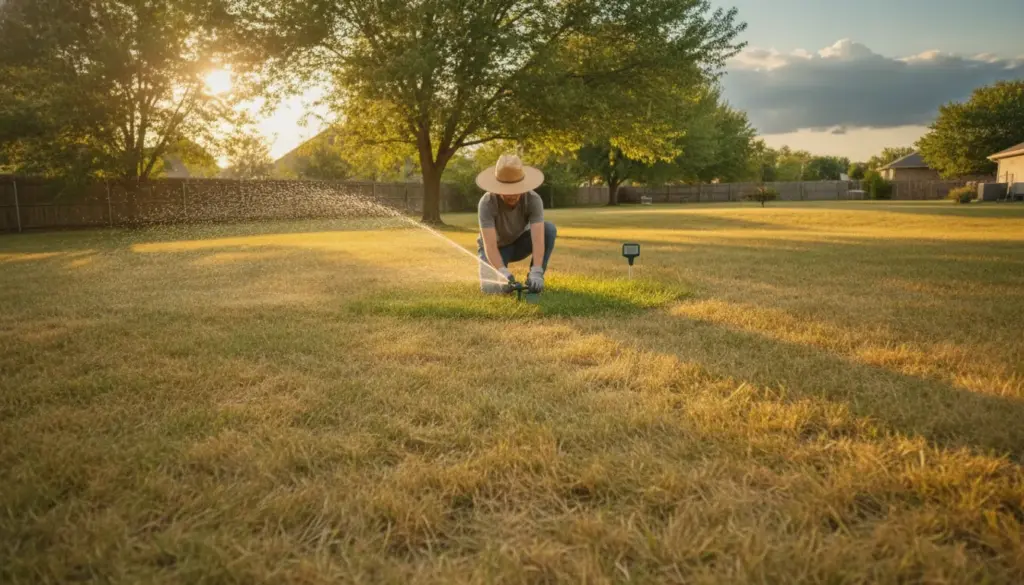
- Strategic Watering: Plan to deliver approximately 15 liters of water per square meter every four to seven days, verifying the amount with a simple rain gauge. Yards with sandy compositions might require slightly less moisture. Conversely, clay-heavy earth demands up to 20 liters per square meter, but only needs a deep soaking once a week. The optimal windows for running your sprinklers are always early in the morning or late in the evening.
Why You Should Wait Until September for Lawn Repairs
Attempting to fix bare patches during the peak of summer is rarely successful. Restoration projects are much more effective starting in September, as newly treated areas require consistent moisture and intense care—conditions that are incredibly difficult to maintain during scorching heat waves.
Once the late summer cool-down arrives, you can comfortably repair damaged spots, scatter fresh seeds, or lay down brand-new sod exactly as you desire.