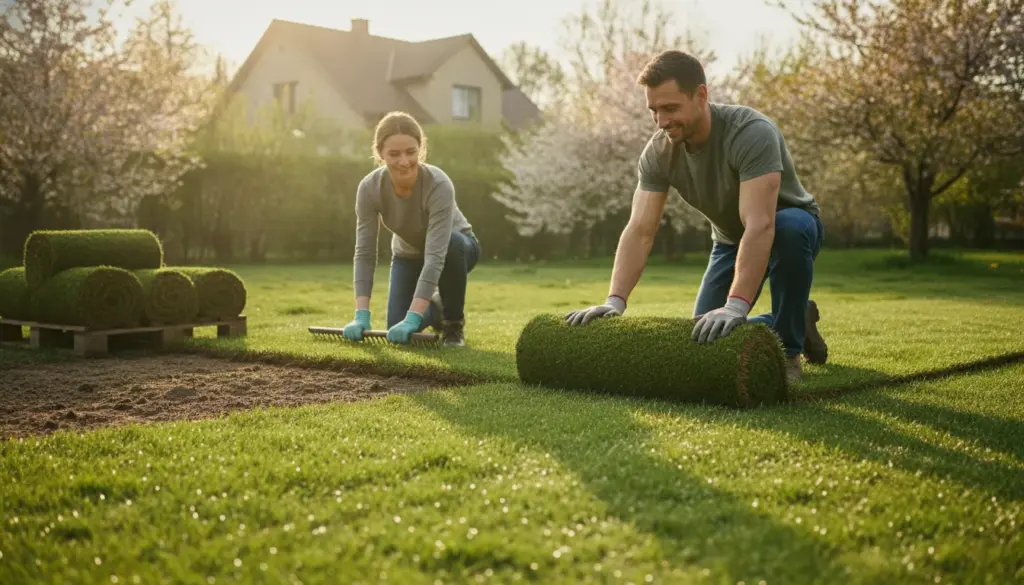
Springtime provides the absolute best window for establishing a brand-new lawn using pre-grown turf. Thanks to a combination of gentle weather and natural rainfall, these early months create the ultimate foundation for a lush backyard oasis later in the year.
Many homeowners prefer rolling out mature grass rather than dealing with the unpredictable nature of traditional seeding. Because the grass is already dense and healthy, it offers an instant visual transformation for your landscape. However, timing is everything, and tackling this project early in the year yields by far the best long-term results.
Why spring weather creates perfect growing conditions
During the early months of the year, the weather strikes a perfect balance of warming sunshine and moderate air temperatures. This natural climate, combined with frequent springtime rain showers, ensures the fresh sod receives exactly the moisture it needs to root successfully. Consequently, March, April, and May stand out as the optimal months for upgrading your garden.
While it might be tempting to tackle a landscaping project during your summer vacation, the scorching heat places immense stress on unestablished grass. Installing a lawn during the hottest part of the year demands an exhausting, constant watering schedule just to keep the new turf alive.
The step-by-step process for a flawless lawn installation
Installing pre-grown turf is surprisingly straightforward, provided you put enough effort into the initial ground preparation. Following a logical sequence ensures the roots take hold and the grass thrives from day one.
- Preparing the ground: Start by meticulously clearing the area of any existing weeds, hidden stones, and old roots. Once clear, rake the surface until it is completely smooth. Because the earth is usually still damp from winter, digging and leveling will be much easier on your back. If you are starting entirely from scratch, spread a 15 to 20-centimeter layer of high-quality topsoil over the area.
- Measuring and shaping: Roll out the grass and cut it carefully to fit the dimensions of your yard. It is highly recommended to stagger the pieces exactly like brickwork, which prevents long, noticeable seams from forming across your garden.
- Proper installation: Unroll the sections methodically, making sure the edges touch tightly without overlapping. Afterward, run a heavy lawn roller over the entire surface to guarantee the roots make firm, direct contact with the soil beneath.
- Consistent hydration: The first fortnight is absolutely critical for root development. You must water the area deeply and consistently for two weeks, never allowing the underlying soil to dry out while the grass establishes itself.
- Initial maintenance: Over the following weeks, regular watering and gentle mowing are essential to encourage a thick, resilient sward. Keep foot traffic to an absolute minimum initially. After roughly four weeks, the roots will be strong enough to handle normal, everyday use.
Giving roots the necessary time to anchor
Once the grass is down, the root system immediately begins the hard work of anchoring into the native soil. The cool but active spring growing season provides the exact timeframe needed for these roots to stretch deep and multiply.
By the time the harsh summer sun arrives, the lawn will be incredibly robust, dense, and ready to handle the heat. This proactive approach prevents the dry patches and wilting commonly seen with late installations.
Final thoughts on timing your turf project
Ultimately, completing your lawn installation before the summer heat hits is a smart landscaping decision. The combination of gentle weather, manageable soil conditions, and natural moisture makes the entire process smoother and far more successful.
By putting in the effort while the weather is still mild, you give the grass ample time to toughen up. When the hotter months finally roll around, you will be rewarded with a resilient, vibrant green space ready for outdoor living.