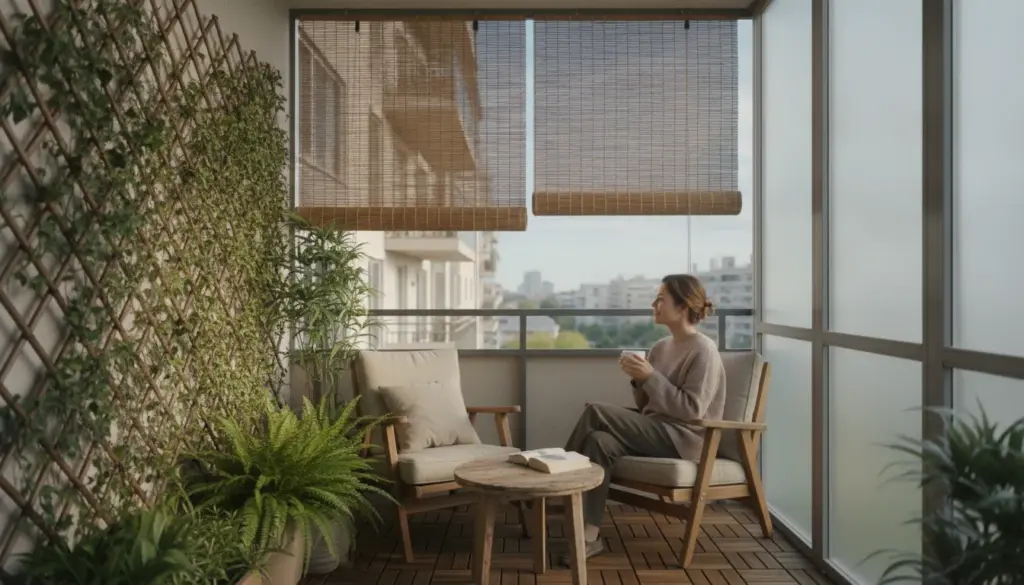
Do you feel completely exposed while relaxing on your balcony? These clever solutions provide immediate relief and work perfectly for compact rented apartments.
You step outside to enjoy your morning coffee, but end up making awkward eye contact with the neighbor across the way. Sitting on a balcony can sometimes feel like being featured in a shop window. However, you can easily transform your outdoor space back into a peaceful retreat. Securing your personal balcony oasis just requires selecting the right screening method for your specific layout.
Frontal Screening: Blocking Views from the Street Below
Dealing with bustling roads or overly curious ground-floor neighbors rarely makes for a relaxing afternoon outside. The most straightforward defense mechanism is a classic fabric balcony screen. Weatherproof fabric coverings typically feature integrated metal eyelets, allowing you to easily zip-tie or tie them directly to your railing. Just make sure you invest in UV-resistant and weatherproof materials so your screen doesn’t become brittle and unsightly after a single season.
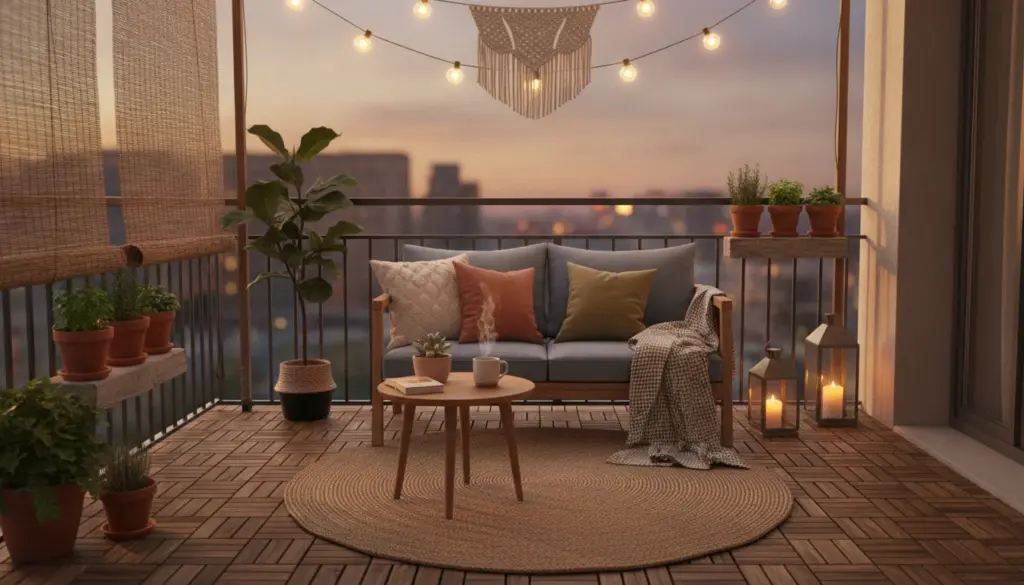
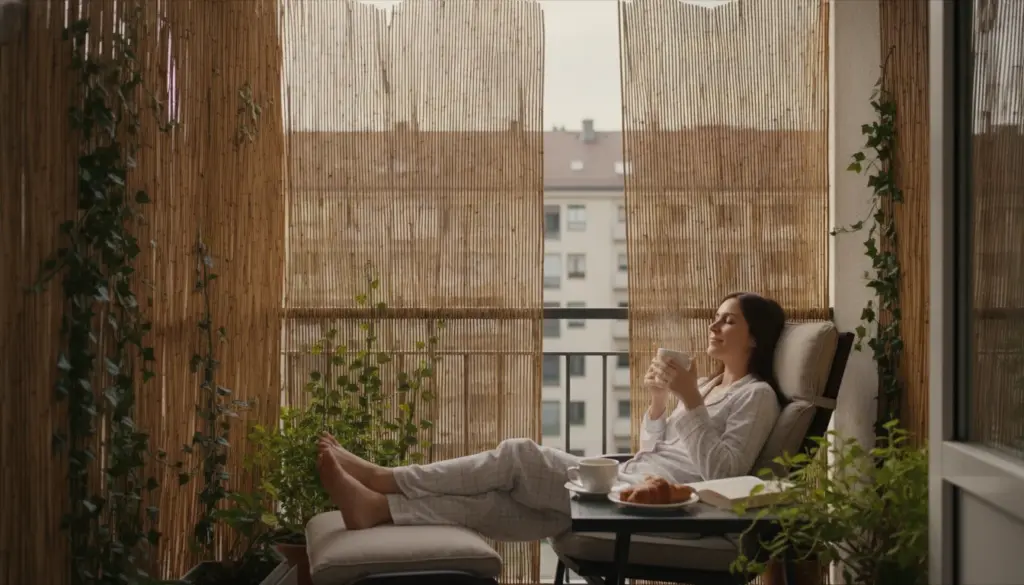
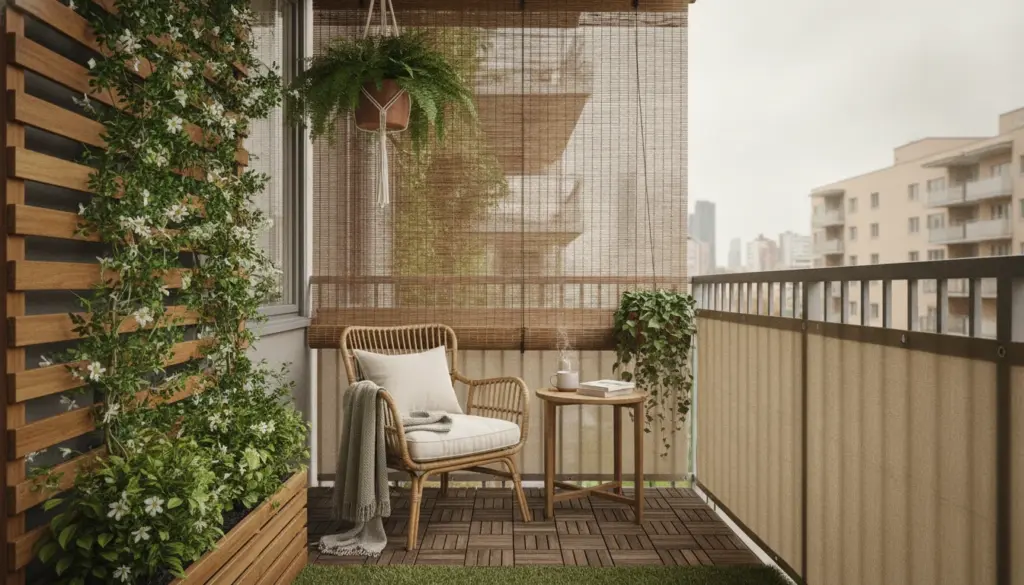
If you prefer a more organic aesthetic, consider privacy mats crafted from bamboo, willow, or reed. These natural barriers also attach seamlessly with simple cable ties. As an expert tip, always ensure these natural mats hover slightly above the balcony floor; sustained moisture contact will cause the bottom edges to rot prematurely.
Both of these solutions are incredibly renter-friendly because they require absolutely zero drilling and can be removed without leaving a single trace behind.
Side Protection: Shielding Against Neighboring Balconies
Many apartment buildings feature densely packed balconies, resulting in a completely unobstructed view into your neighbor’s outdoor living room. Fortunately, you have several reliable methods to block out those lateral sightlines.
- Freestanding folding screens (Paravents): A remarkably fast, drill-free option that renters love. Keep in mind, however, that they struggle against strong wind gusts and demand additional stabilization.
- Solid panels (Wood, WPC, or Plastic): These deliver maximum opacity and stability. While synthetic materials are virtually maintenance-free, wooden partitions require routine oiling. Note that permanent installation usually demands your landlord’s consent.
- Retractable side awnings: Exceptionally elegant and perfect for saving space on tighter balconies. Similar to solid walls, mounting the cassette will likely require official permission.
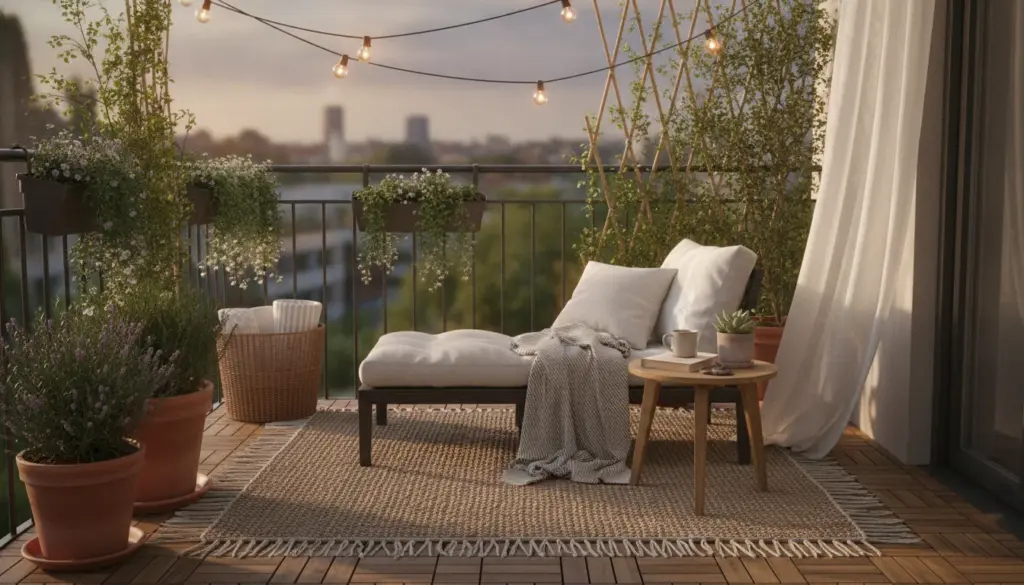
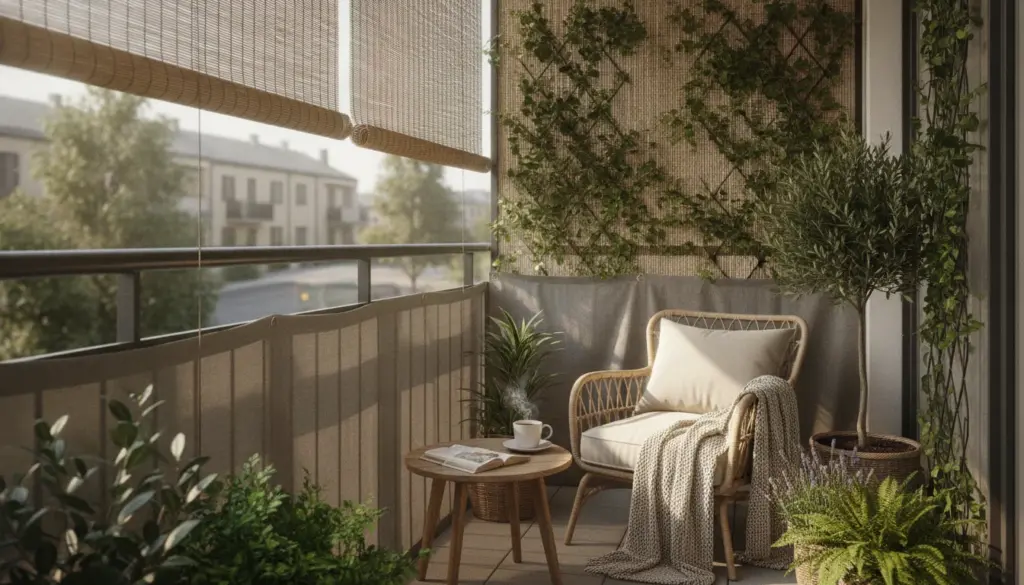
- Trellises with climbing vines: Visually stunning and renter-friendly, as you can easily secure them to existing railings using basic pipe clamps. The only drawback is the lack of foliage coverage during the colder months.
Renting Regulations: What Can You Legally Install?
As a general rule of thumb, anything that can be removed without leaving a mark is typically permissible. Potted plants and tied-on fabrics rarely require a green light from the property owner. Conversely, anything involving drilling anchors or driving screws into the building’s facade—like heavy awnings or permanent wooden dividers—absolutely requires explicit written permission. When in doubt, always consult your landlord beforehand to prevent costly disputes when your lease ends.
Overhead Privacy: Blocking Views from Above
Residents in multi-story complexes often face a unique challenge: the neighbors directly above peering down. To counter this, you need an effective horizontal barrier acting as a fabric roof.
A tilting patio umbrella stands out as the most flexible, drill-free solution for tenants. It deploys in seconds and angles exactly where you need it. However, the coverage area is fairly localized, and severe weather will easily overpower even the sturdiest umbrella stand.
Alternatively, a tensioned sun sail delivers expansive, reliable coverage that stays put. This option requires structural mounting points on walls, railings, or dedicated posts, meaning drilling is almost guaranteed. Beyond shielding you from upstairs neighbors, tensioned sails provide excellent protection against sunburn for your delicate potted plants.
For the ultimate in outdoor luxury, motorized retractable awnings are unbeatable. Operating with a simple button press, they offer heavy-duty protection regardless of the weather. The catch? They are the most expensive route and require professional facade installation.
Maximizing Privacy on Small Balconies
Every square inch matters on a tiny balcony. The smartest privacy strategies are those that consume zero floor space. Railing-mounted fabric screens and natural mats block frontal views while leaving your walkable area completely untouched. Consider hanging planter boxes filled with tall ornamental grasses, or utilize flat wall trellises to train climbing greenery upward. Retractable side awnings are also brilliant, as they tuck neatly away into their housing when not in use. The golden rule here is to build vertically, never horizontally.
Living Screens: Creating Privacy with Balcony Plants
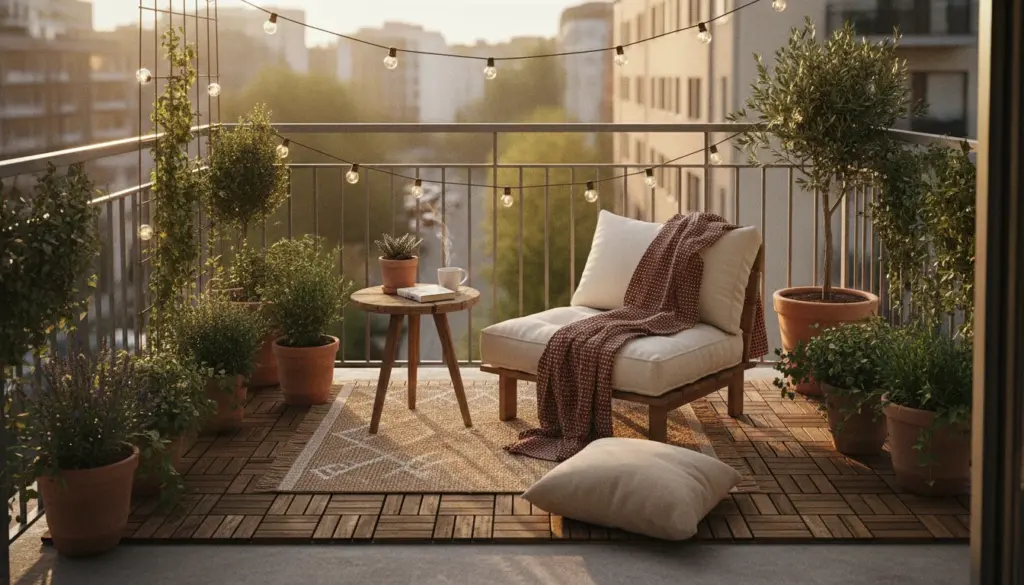
Cultivating a lush wall of foliage is arguably the most atmospheric way to secure your privacy. Not only does vibrant greenery shield you from prying eyes, but it also casts cooling shade and injects a distinct vacation vibe into urban settings.
- Climbing plants: Training vines up a trellis is a timeless strategy with an option for every light condition. Ivy thrives on heavily shaded north-facing balconies. Sun-loving Clematis and Jasmine reward you with intoxicating scents and brilliant blooms. If you have full southern exposure, Virginia Creeper grows astonishingly fast and transitions to fiery red hues in the fall. You can even combine privacy with a mini vegetable garden by growing tall runner beans or indeterminate tomatoes. Just be prepared to wait a few weeks for the foliage to fill in completely.
- Tall grasses and bamboo: These robust growers flourish remarkably well in large containers. By lining up several rectangular planters back-to-back, you instantly create a dense, modern sight barrier.
- Raised planter beds: If your square footage allows, incorporating an elevated planting trough provides instant architectural height, making it an excellent dual-purpose screening tactic.
The one notable downside to living walls is seasonal leaf drop. Once winter arrives, many deciduous plants lose their foliage, taking your privacy shield with them. For year-round seclusion, seasoned balcony gardeners often back their seasonal plant displays with a subtle, permanent fabric or bamboo mat.