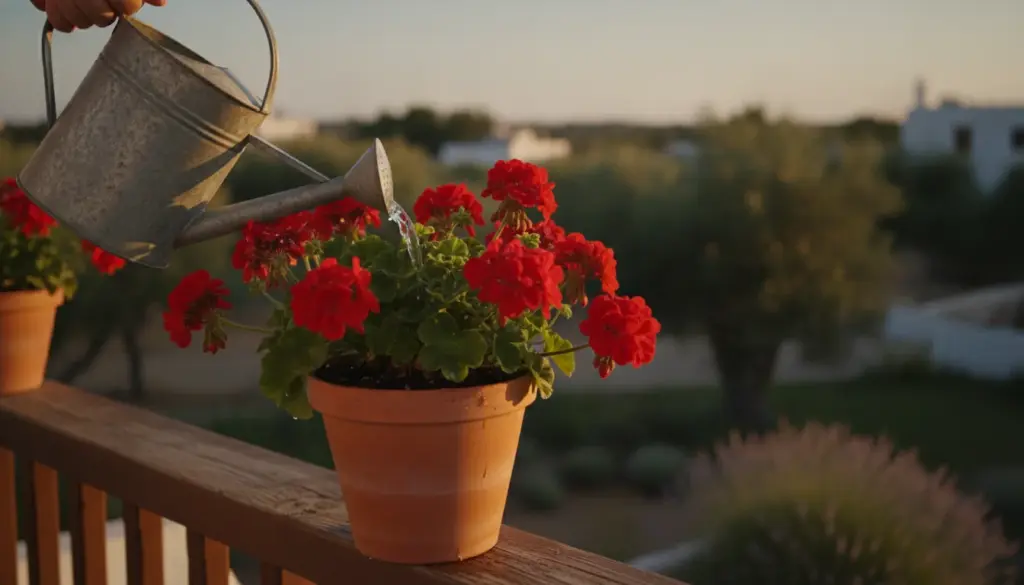
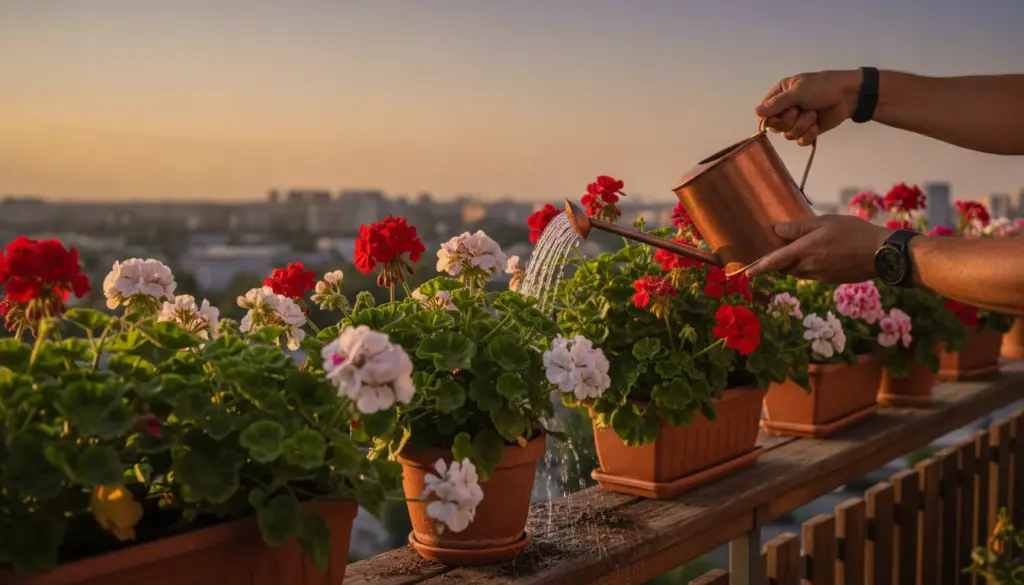
Keeping pelargoniums blooming brightly during summer scorchers doesn’t have to be a daunting chore. Originally from the sun-drenched regions of South Africa, these resilient balcony favorites are built to handle soaring temperatures far better than most other delicate container plants. To keep their vibrant floral display going strong, they just need the right hydration strategy at the precise moment.
Watering geraniums during a heatwave: A highly effective 1-minute routine
Thanks to their thick, fleshy foliage that acts as a natural reservoir, these plants easily tolerate brief dry spells. This built-in drought resistance gives them a massive advantage over thirstier summer blooms. However, extended periods of extreme heat will inevitably stall their blooming cycle. Instead of trying to rescue completely wilted foliage, consistent preventative watering is essential.
The golden rule for scorching weather is to provide moisture only during the cooler morning hours or late in the evening. When ambient temperatures are lower, the root system is much better equipped to absorb and utilize the hydration without the immediate threat of evaporation.
Bringing your balcony display into peak condition requires barely any time out of your busy schedule. Simply run through this quick diagnostic checklist before grabbing the watering can:
- 👉 The finger test: Feel the top inch of the soil. If it feels completely dry to the touch, it is time to water.
- 👉 The lifting method: Lift the container slightly. A surprisingly light pot usually indicates severe moisture depletion.
- 👉 Foliage inspection: Are the leaves and stems looking limp, soft, and lacking their usual shine? The plant needs a drink.
- 👉 Soil temperature check: If the potting mix is baking hot during the mid-afternoon, hold off and evaluate the moisture levels again once the sun goes down.
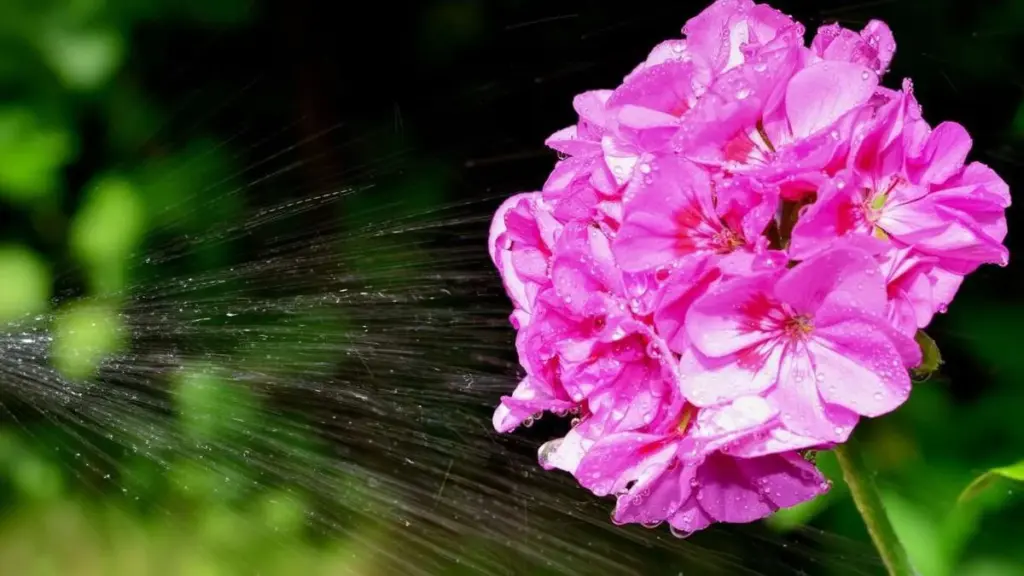
When you do water, soak the container thoroughly until a small stream trickles out of the bottom drainage holes. This deep soaking ensures moisture actually reaches the lowest root zones. Providing just tiny splashes of liquid daily only wets the top layer of dirt, leaving the actual plant completely parched.
The exact hydration formula for prolific blooms
A reliable horticultural rule of thumb is to offer at least one large glass of water per individual plant. The ultimate goal is complete soil saturation. Generally, achieving this requires adding liquid equal to roughly ten percent of the container’s total volume. For example, a standard 80-centimeter window box will absorb around 2.5 liters of water to become properly saturated.
Always pour slowly and in small increments. Bone-dry potting mix actually repels liquid at first and needs a few moments to swell and absorb the moisture properly. Flooding the top of the soil will just cause the water to run down the inside walls of the pot without hydrating the roots.
Selecting the right potting mix and container
These sun-loving beauties thrive in a structurally stable potting medium that retains moisture while still allowing vital oxygen to circulate around the root base. This exact balance guarantees a steady, even supply of nutrients. Self-watering planters featuring built-in reservoirs are incredibly practical solutions if you are unable to monitor your outdoor displays throughout the hottest parts of the day.
Never forget the importance of proper drainage. Always ensure the bottom holes remain completely unobstructed and never allow your pots to sit in stagnant water for extended periods. Persistent waterlogging remains the absolute fastest way to induce severe root rot.
Common hydration mistakes during summer heat
Beautiful summer flower displays often fail due to a few easily avoidable missteps:
- Watering at high noon: The intense midday sun causes immediate evaporation before roots can adequately drink.
- Shallow hydration: Frequent, tiny sips encourage weak, surface-level root systems that dry out quickly.
- Flooded saucers: Leaving stagnant moisture at the base essentially drowns the root system.
- Compacted dirt: Hardened, degraded soil either lets liquid run straight out or turns into a dense, soggy mess.
- Blocked drainage: A saturated pot with nowhere to drain will quickly destroy the plant, even if your watering schedule is otherwise perfect.
Managing container plants after heavy thunderstorms
While managing extreme heat is one challenge, sudden summer downpours present another entirely. After a severe storm, act quickly to ensure any excess rainwater drains away rapidly. Take a moment to gently pinch off any battered, brown, or broken flower heads to prevent fungal issues.
Providing a light dose of liquid fertilizer can also help them recover their vigor after a heavy wash. Usually, just a few days of returning sunshine is enough to restore their gorgeous appearance. If strong winds are forecast, moving voluminous, top-heavy containers closer to a protective wall or behind a solid balcony railing will keep them safe, stable, and ready to bloom again.