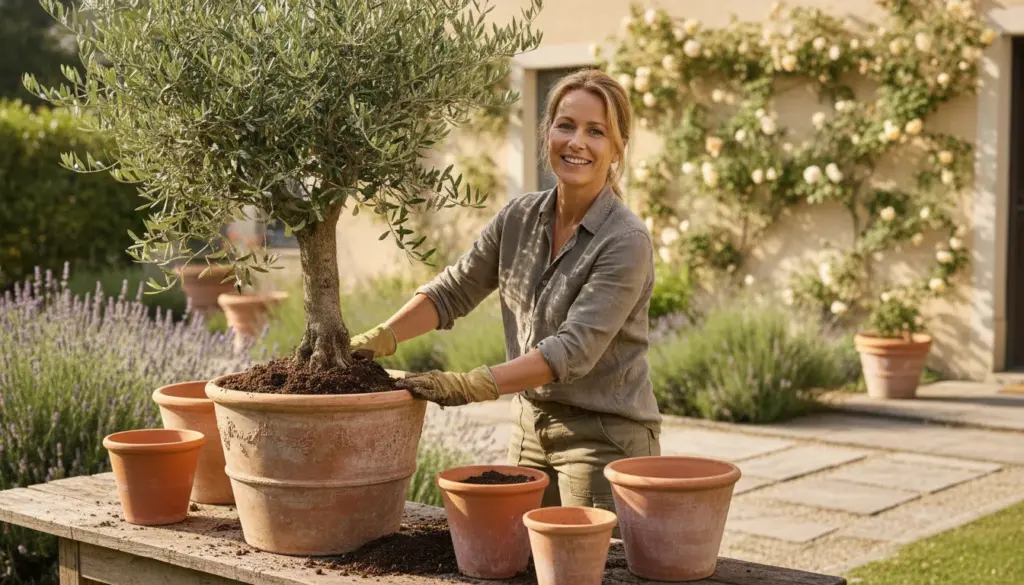
Giving your Mediterranean plant a new home might feel daunting, but it certainly doesn’t have to be. “It is actually quite simple to repot an olive tree, provided you keep a few basic rules in mind,” reassures gardening specialist Tina Ullmann. Many plant enthusiasts hesitate to tackle this task, fearing they might accidentally harm their beloved tree.
However, long-term success ultimately comes down to just two crucial factors: choosing the perfect moment and selecting the right container size. The bestselling author shares exactly how to avoid common pitfalls and help your evergreen thrive.
The Perfect Time to Repot Your Olive Tree
Choosing the wrong season is the most frequent mistake plant owners make. Spring is undoubtedly the optimal time for this essential gardening task. You should absolutely avoid moving the plant to a new container after July.
Attempting a soil change in late summer or autumn creates significant problems. The tree simply won’t have enough time to establish its root system before winter arrives, which is when it should ideally remain outdoors. During the colder months, the plant naturally winds down its activity. In contrast, a spring repotting allows the olive tree to go full throttle and firmly root itself in the fresh earth.
Why Olive Trees Prefer a Tight Fit
Selecting the correct container size is the second secret to success. While you might be tempted to treat your tree to a massive new pot, providing too much space is highly counterproductive. These Mediterranean beauties actually thrive in cramped conditions, behaving very much like an Agapanthus plant.
There is a strict golden rule to follow: the new container must be no more than four to six centimeters wider in diameter than the previous one. If the pot is overly spacious, the plant will pour all its energy into expanding its root network to fill the dark void. Consequently, it will neglect its above-ground growth, which often leads to sudden leaf drop.
Instead of rushing to transplant newly purchased specimens, it is often better to simply top them up with a little fresh soil. Because they are notably slow growers, they can happily stay in their original nursery pots for quite some time.
Drainage and Spotting the Right Moment
So, how do you know your plant is truly ready for an upgrade? The most obvious indicator is when roots begin to push out of the drainage holes at the bottom or surface at the top of the root ball.
When preparing the new home, excellent drainage is absolutely non-negotiable to prevent fatal waterlogging. Ensure the container has plenty of holes at the base. It is highly recommended to layer expanded clay at the bottom, covered by a piece of horticultural fleece to stop the dirt from washing out during watering.
Fill the remaining space with a peat-free, Mediterranean potting mix. This specific type of soil generally comes packed with sufficient nutrients, meaning you won’t need to add any additional fertilizer for the first few weeks.
About the Expert
With nearly two decades of hands-on experience, gardening authority Tina Ullmann has cultivated a deep passion for Mediterranean flora. She shares her extensive knowledge on container gardening and terrace design through her popular social media presence, @tinas_homeandgarden.
Her dedication to horticultural education earned her the prestigious German Garden Book Prize in 2024. In June 2025, she published her comprehensive guide, “Olivenbaum – ganz einfach.” Furthermore, she actively serves as a brand ambassador for Ager Oliva, an initiative dedicated to preserving ancient olive groves in Tuscany.
Frequently Asked Questions
Why is my olive tree suddenly losing its leaves?
A rapid loss of foliage typically signals a shock response to drastic environmental changes. Severe dehydration or an unsuitable location—whether too dark or excessively warm—are the most common culprits. The plant sheds its leaves as a survival mechanism to conserve energy, but rest assured, it is rarely completely dead.
How frequently should a potted olive tree be watered?
Potted specimens require a consistent watering schedule, especially throughout the hot summer months. During heatwaves, you may even need to provide water daily, as significant moisture evaporates through the foliage. Allow the top layer of soil to dry out slightly between watering sessions, but never let the root ball become bone dry. Always ensure excess water can drain away completely.
What is the ideal location for these plants?
For optimal health, place your pot in a sun-drenched, warm, and wind-sheltered area. A balcony facing south or southwest is absolutely perfect. Because they are evergreen and continuously photosynthesize, maintaining a bright spot is equally crucial during their winter dormancy.