It can be incredibly frustrating when a newly installed bug shelter remains noticeably empty. In most cases, the wrong nesting material is the main culprit, though your drilling technique and the final location heavily influence whether wild bees and other visitors decide to move in.
Calling these structures a “hotel” is actually slightly misleading. Rather than stopping by for a quick overnight stay, many beneficial bugs use these wooden shelters as their primary homes and nesting sites. Some tenants will even stick around for more than a year, actively modifying and renovating their designated chambers.
Different types of insect shelters
While most of us immediately picture wild bees, these garden structures offer crucial refuge to a much wider variety of wildlife. Ladybugs, lacewings, wasps, butterflies, and earwigs are just as happy to settle in. Depending on the exact design, these habitats might cater to a single specific species or host a highly diverse community. Common variations of these shelters include:
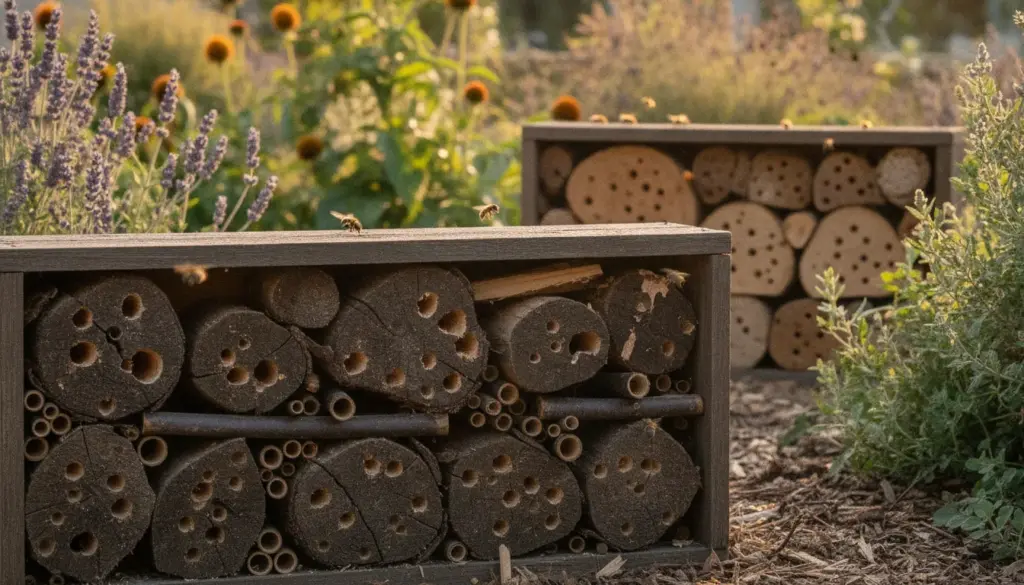
- Wooden structures packed with elderberry twigs, old broom handles, and custom-cut logs
- Solid clay blocks housed within a sturdy wooden casing
- Nesting tubes created from hollowed-out bamboo sections
- Perforated lattice bricks packed tightly with natural loam
- Various plant stems containing soft, natural pith
- Dedicated wooden boxes designed specifically for wintering lacewings
- Specialized Münden hornet nesting boxes
Building it yourself: Selecting the perfect wood
Because a classic wooden house attracts multiple species, it serves as an excellent foundational piece for any wildlife-friendly garden. If you are taking the DIY route, carefully choosing the timber for both the outer frame and the internal wooden blocks is an incredibly important step. Keep these expert building tips in mind:
- Always opt for well-seasoned hardwoods like ash, oak, or beech, which are much less prone to dangerous splintering and cracking. Coniferous softwoods are strictly off-limits because their rough fibers tend to swell up and block the entrances after being drilled.
- Drilling into the end grain is a frequent and highly damaging mistake. You should never drill into the side where the tree’s growth rings are clearly visible. Doing so leads to severe moisture cracks that invite fungal growth, causing wild bees to actively avoid the chambers. Instead, always drill your holes into the side of the wood, running parallel to the natural grain.
- Aim for hole diameters ranging from three to six millimeters to comfortably accommodate differently sized insects. Furthermore, ensure the space between each individual hole is roughly three times the hole’s own diameter, keeping the entrances completely smooth and free of sharp splinters.
Inspecting the tubes and filling materials
Alongside solid logs, smaller hollow tubes make fantastic additions to any habitat. You can successfully utilize elderberry trimmings, dried blackberry stems, mature bamboo shoots, or even repurposed wooden handles from old brooms. It is crucial that these little tubes are placed horizontally inside the frame. They must be completely hollowed out with the pith removed, sanded perfectly smooth at the front entrances, and firmly sealed at the back end using either clay or plaster. The ideal tube length spans between ten and fifteen centimeters. Finally, no drilled hole within the entire structure should exceed nine millimeters in diameter.
Certain resilient species actually prefer to excavate their own tunnels through soft plant material. To properly accommodate them, you should place intact, pith-filled stems vertically inside a specific chamber rather than laying them flat.
According to entomologist Bernhard Klausnitzer (80) from Bautzen, gardeners should skip adding loose organic waste like pine cones, bark scales, or scattered wood chips. Despite popular belief, these specific materials simply are not accepted or utilized by insects as viable hiding spots.
Choosing the ideal location for your nesting aid
If you specifically want to support wild bees, consider picking up a 15 by 30-centimeter block of pottery clay from a local craft store. Fit this solid clay block into a custom wooden frame coated with environmentally friendly, weather-resistant paint. Using nails or needles of various thicknesses, carefully poke multiple nesting holes directly into the block. It is highly recommended to re-pierce these holes a few days later as the material settles.
Generally speaking, the absolute best spot to hang your habitat is a dry, wind-protected area that receives partial shade. Proximity to a reliable food source is equally critical. Having blooming herbs, vegetables, and fruit nearby will drastically increase your occupancy rates. The more diverse the surrounding floral buffet, the larger and more vibrant your community of crawling residents will be.
Should you buy or build your insect habitat?
If you prefer to purchase a ready-made nesting aid rather than building one from scratch, most large hardware stores now stock an excellent variety of appropriate options. You can easily find everything from basic, compact models to massive, elaborately filled stations, with retail prices ranging from 20 to well over 100 euros.
On the other hand, the DIY approach is incredibly budget-friendly for motivated gardeners. Your own backyard often supplies the vast majority of the necessary components, meaning a homemade project will typically set you back no more than 20 euros in total material costs.