Many gardening enthusiasts mistakenly assume that Mediterranean greenery thrives strictly in arid, sun-baked conditions. However, treating your fig tree to a constant drought is a massive error that will ultimately cost you your delicious harvest. Depending on whether your green companion lives in a container or is planted directly in the soil, its hydration requirements vary wildly. Professional growers warn that while the watering can might be your best friend during the warmer months, overdoing it can quickly destroy your hopes of picking sweet, juicy fruits.
Mastering Hydration for Potted Fig Trees
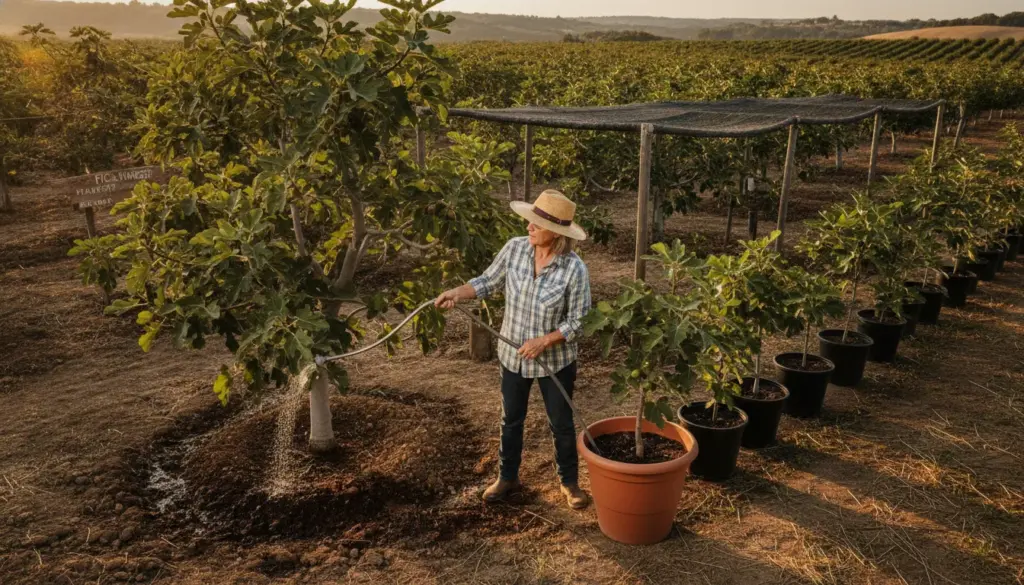
Caring for container-grown specimens demands a delicate touch, particularly at the height of summer. During extreme heatwaves and the crucial fruit-ripening phase, these potted beauties demand a generous and consistent supply of moisture. Yet, when temperatures drop slightly, their thirst decreases significantly.
To get this balance perfectly right, horticultural experts rely on the clever 10 percent surplus rule. The math is beautifully simple: if you pour in one liter of moisture, exactly 100 milliliters should drain out of the bottom. This proven technique guarantees thorough root saturation while simultaneously flushing out harmful salt buildups, such as sulfates and sodium compounds. Morning is the ideal time for this task, though setting up a reliable drip irrigation system works wonders, too.
As the seasons shift into spring and autumn, drastically reduce your watering frequency. During colder stretches, provide only moderate hydration and never let stagnant puddles sit in the drainage tray. For overwintering in an unheated greenhouse, the soil should remain quite dry. In fact, dormant, deciduous greenery usually only needs a drink every three to five weeks in winter storage.
Essential Guidelines for Flawless Fig Watering
- Embrace hard water: These robust Mediterranean plants actually prefer alkaline, calcium-rich moisture, making standard tap water an excellent choice.
- Watch for warning signs: Inspect your foliage weekly throughout the summer. If the leaves start drooping, it is time to hydrate immediately!
- Banish soggy roots: Always empty excess moisture from saucers and ensure garden beds have superior drainage to prevent fatal root rot.
Watering Garden Figs: Why Less Can Be More
Once a specimen is permanently rooted in your backyard landscape, the care strategy completely flips. Throughout arid summer months, the secret lies in infrequent but incredibly deep irrigation intervals. During the crucial first two years after planting, you must intentionally expose the sapling to slightly longer dry spells. This controlled stress tricks the plant into developing an extensive, deep-reaching root network.
If your garden features sandy soil, aim for a thorough soaking once or twice a week. For heavier clay or loamy terrain, stretching the interval to every one or two weeks is perfectly sufficient. By forcing the roots to hunt for moisture in the deeper earth layers, your tree becomes exceptionally resilient against future droughts.
When heavy downpours deliver more than 15 millimeters of rain per square meter, you can skip your manual watering duties entirely. The golden rule for outdoor planting is creating flawless drainage using coarse gravel or crushed stone. If puddles linger long after a rainstorm, you have a dangerous waterlogging issue. In densely compacted clay soils, stagnant moisture suffocates the roots, blocking essential oxygen uptake and potentially killing the plant.
Hydration Needs by Age and Season
Understanding how to adapt your care routine across different growth stages and seasons is vital for a thriving garden.
- Young Saplings (Years 1-2): Container plants need heavy, regular moisture during heatwaves and fruiting. Outdoor beds require weekly or bi-weekly deep soaking depending on soil composition.
- Mature Trees: Potted specimens still crave high moisture during peak heat. Established outdoor plants rarely need manual watering, requiring deep soaks only during severe droughts or early fruit development.
- Winter Care: For containers, perform a finger test and water roughly every three weeks. Outdoor trees should receive a generous drink on mild, frost-free days to prevent devastating winter dehydration.
Targeting Heatwaves and the Ripening Phase
Whether your plant graces a sunny patio pot or anchors your garden bed, its thirst will skyrocket during two highly specific windows: intense midsummer heatwaves and the exact moment the fruits start maturing. Creating large, succulent figs requires an immense amount of botanical energy and hydration. During these high-demand periods, you must adjust your daily routine and provide abundant moisture, always being careful to avoid dreaded waterlogging.