Many passionate gardeners mistakenly assume that Mediterranean beauties automatically thrive in bone-dry, scorching conditions. However, treating your fig tree like a desert plant is a massive misconception that could easily cost you your entire harvest. Whether you cultivate your green companion in a container on the patio or directly in the garden soil, its hydration needs fluctuate significantly depending on the environment. A seasoned professional who operates an organic fig farm in Vienna explains exactly why reaching for the watering can during midsummer is crucial, but also how overdoing it might destroy your chances of plucking sweet fruits.
Mastering Hydration for Potted Fig Trees
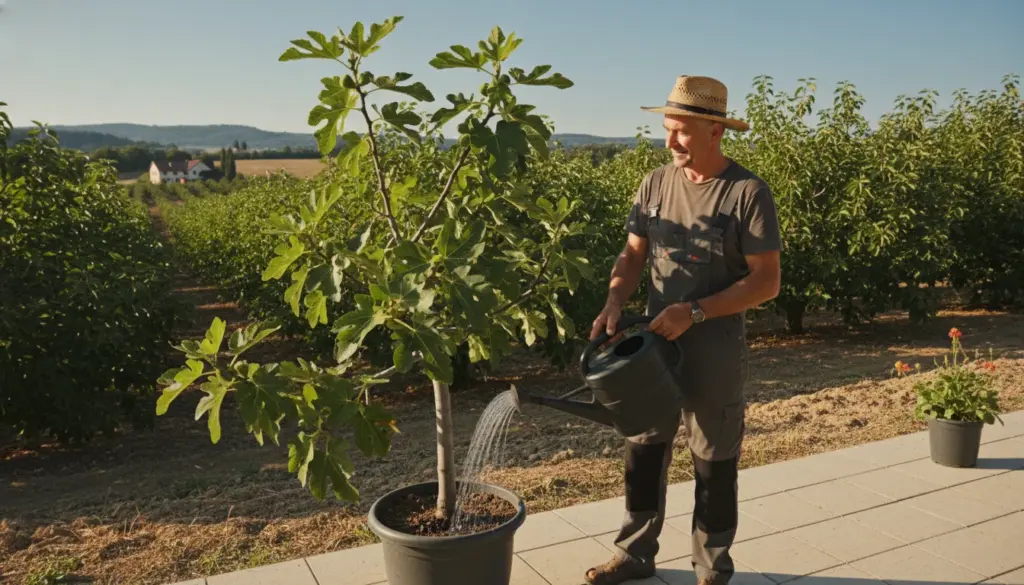
Cultivating a fig tree in a container requires a bit of intuition, especially when the summer sun beats down. During intense heatwaves and the critical fruit-ripening phase, your plant demands a generous and consistent moisture supply. Conversely, when the weather cools down slightly mid-summer, you must scale back the liquid intake dramatically to maintain root health.
To avoid guesswork, the expert recommends utilizing the highly effective 10-percent surplus rule. For instance, if you pour one liter of water into the pot, exactly 100 milliliters should drain out of the bottom. This clever technique guarantees that the root ball is thoroughly soaked while simultaneously flushing out harmful excess salts, such as sodium and sulfate compounds. Supplying moisture in the morning yields the best results, though setting up a drip irrigation system is also a fantastic alternative.
As spring transitions into autumn, the overall moisture requirement naturally drops. During cooler stretches, keep watering to a moderate minimum and never let stagnant puddles linger in the saucer. When relocating the container to its winter quarters, the soil should remain largely on the dry side. For deciduous specimens resting in an unheated greenhouse, offering a drink merely once every three to five weeks is perfectly sufficient.
Golden Rules for Thriving Figs
- Embrace tap water: These Mediterranean favorites actually prefer alkaline, chalky water, making standard tap water an ideal choice.
- Watch the foliage: Inspect your potted companion weekly throughout the warmer months. If the leaves start drooping, it requires immediate hydration.
- Banish waterlogging: Always empty the drainage saucer promptly and ensure your garden beds feature excellent soil drainage.
Watering Garden-Planted Figs: Less is Often More
Once your fig tree is permanently anchored in the garden landscape, your entire care strategy must pivot. Throughout arid summer spells, the secret lies in infrequent but incredibly deep watering intervals. Particularly during the first two establishment years, you should deliberately expose the young tree to longer dry stretches to stimulate robust root development.
If your property features sandy soil, aim for a thorough soaking once or twice a week. For heavier, loamy ground, stretching the interval to every one or two weeks is highly recommended. By training the roots to seek out deeper subterranean moisture reserves, your plant will naturally develop superior drought resilience over time.
Mother Nature occasionally takes over the job entirely. If a heavy downpour delivers more than 15 millimeters of rain per square meter, you can safely skip your scheduled watering session. A high-quality drainage base utilizing gravel or coarse crushed stone is absolutely essential to prevent suffocating waterlogging. You can easily spot poor drainage if puddles stubbornly remain long after a rainstorm. In heavily compacted, clay-heavy soils, the roots risk losing access to crucial oxygen, which can ultimately cause the tree to die off.
Quick Reference Guide by Growth Stage
Young Trees (Years 1-2): Container-grown saplings need regular, heavy soakings during heatwaves and fruit development. Outdoor saplings thrive on weekly or bi-weekly deep watering sessions, depending entirely on your specific soil type.
Mature Trees: Potted adults still crave abundant moisture during hot spikes. Established outdoor trees rarely need manual watering, requiring deep soaks only during extreme droughts or early fruit expansion.
Winter Care: Check indoor pots every three weeks using a quick finger test. Outdoor trees might actually need a generous drink on mild winter days during prolonged dry spells to prevent frost-induced dehydration.
Crucial Watering Phases: Heatwaves and Fruit Ripening
Whether nestled in a cozy planter or stretching its roots across an open garden bed, your fig tree experiences two massive spikes in thirst. The highest moisture demand consistently hits during scorching summer heatwaves and the exact moment the fruits begin their ripening process.
Throughout these demanding windows, the tree expends an enormous amount of energy to produce those large, famously juicy figs you are eagerly waiting for. By carefully adapting your routine during these peak phases—offering generous amounts of moisture while strictly preventing soggy roots—you lay the perfect foundation for an abundant, mouthwatering harvest.