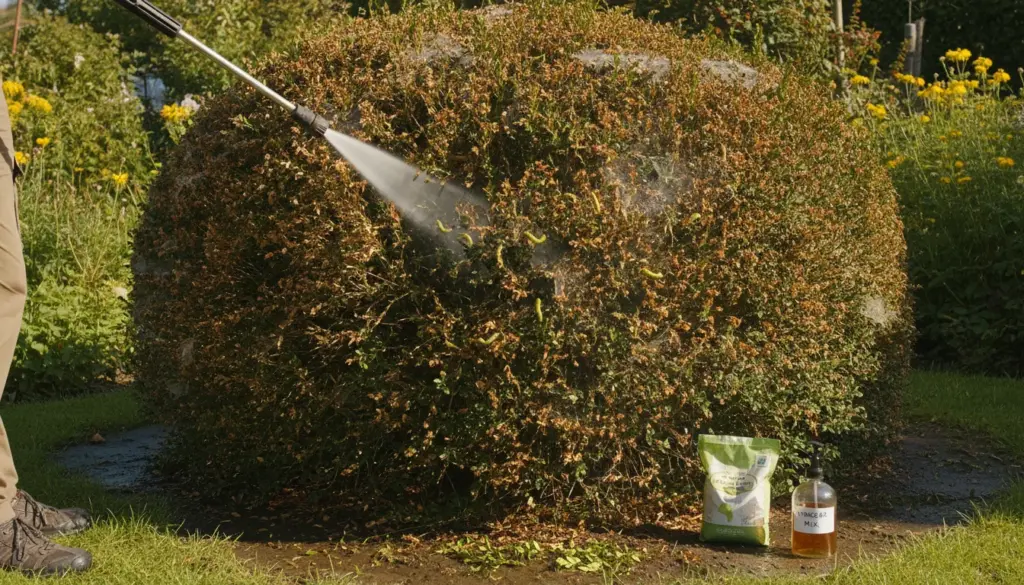
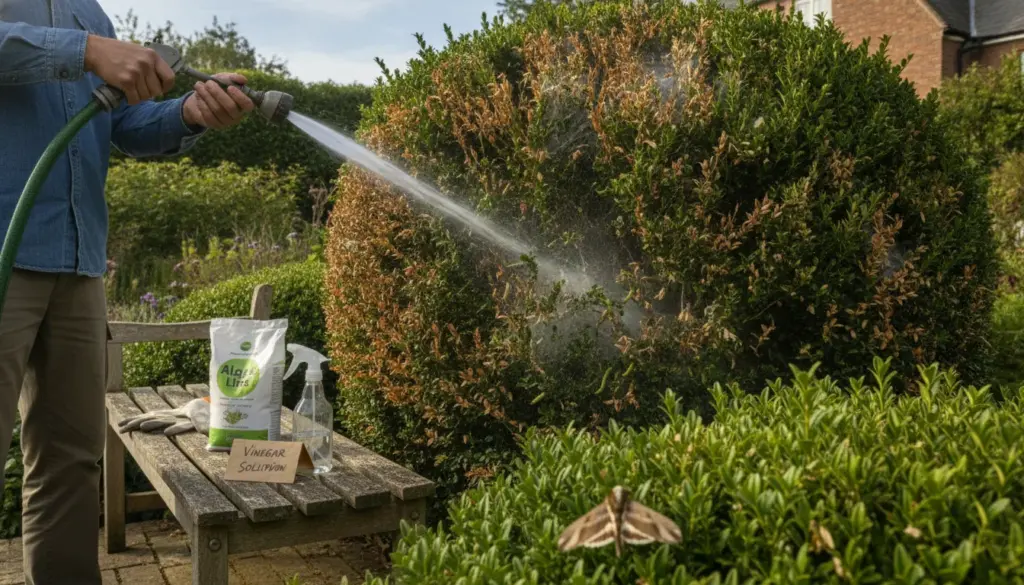
Spotting dying foliage and delicate webbing in your prized shrubs is a major red flag. Fortunately, utilizing common household items like a high-pressure washer, algae lime, and a simple vinegar solution can effectively drive away the destructive box tree moth.
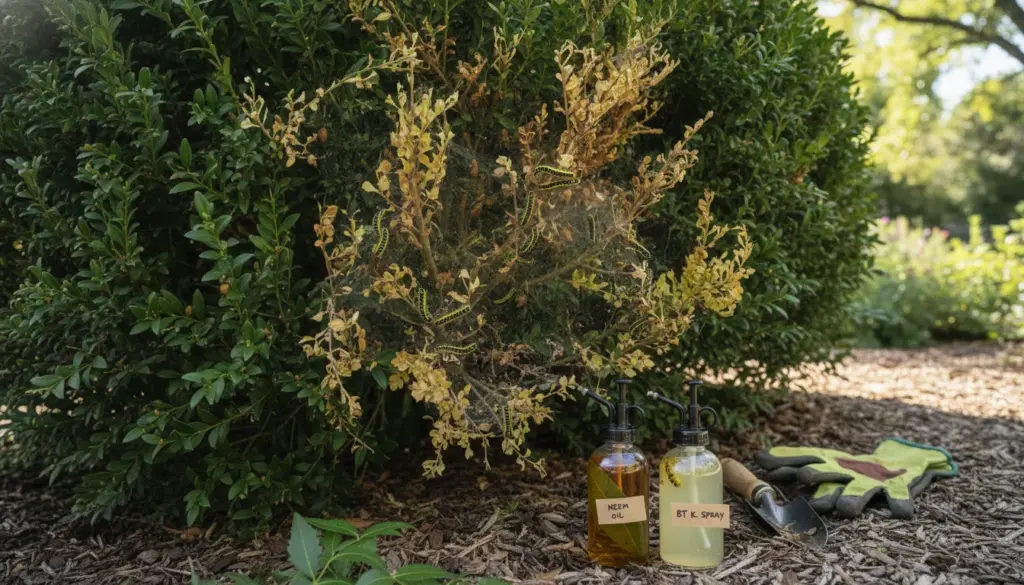
This notoriously stealthy garden pest feeds aggressively and frequently stays hidden until an infestation becomes severe. Originally introduced from Asia, the box tree caterpillar has evolved into a formidable threat to local greenery, systematically devouring plants from the inner branches outward. By the time you start noticing brown, dead patches, the shrub has likely sustained considerable damage. Pay close attention to early indicators, such as pale, almost translucent leaves and tiny, intricate webs spun deep within the plant’s core.
Proven Eco-Friendly Solutions for Pest Control
Instead of immediately resorting to harsh synthetic pesticides, you can deploy a couple of highly effective, natural strategies to eliminate this voracious insect. If you are managing expansive hedges, a thorough mechanical removal approach is highly recommended. A secondary organic treatment tackles the root of the issue by neutralizing the laid eggs, successfully halting the next generation of pests before they ever have the chance to hatch.
It is equally crucial to recognize which popular DIY fixes fall completely short. While baking powder is frequently touted as a miracle cure for fungal issues and aphids, it proves entirely useless against the box tree moth. To successfully reclaim your yard, you need to understand exactly when and how to apply the correct techniques, which are fully demonstrated in the accompanying video guide.
Essential Strategies for Healthy, Resilient Shrubs
Staying vigilant and proactive is the absolute best defense against returning yard pests. Keep these core maintenance principles in mind to protect your landscape:
- Early Detection: Regularly inspect the interior branches to catch creeping moth populations before they have a chance to spread.
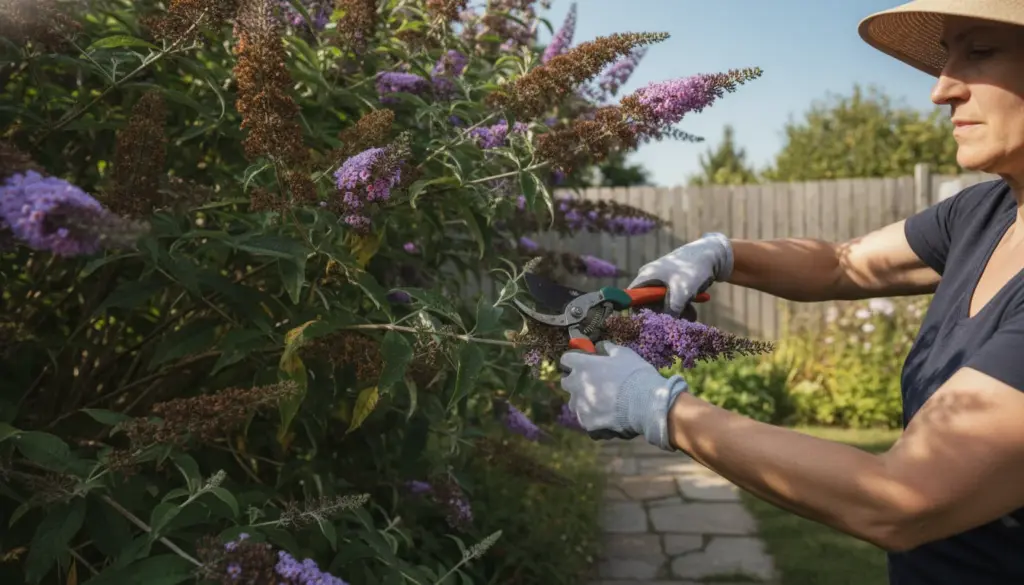
- Strategic Pruning: A vigorous, well-timed trim can physically eliminate heavy infestations while simultaneously revitalizing the plant.
- Comprehensive Care: Implementing a structured, multi-step prevention plan guarantees your shrubs remain robust and vibrant year-round.