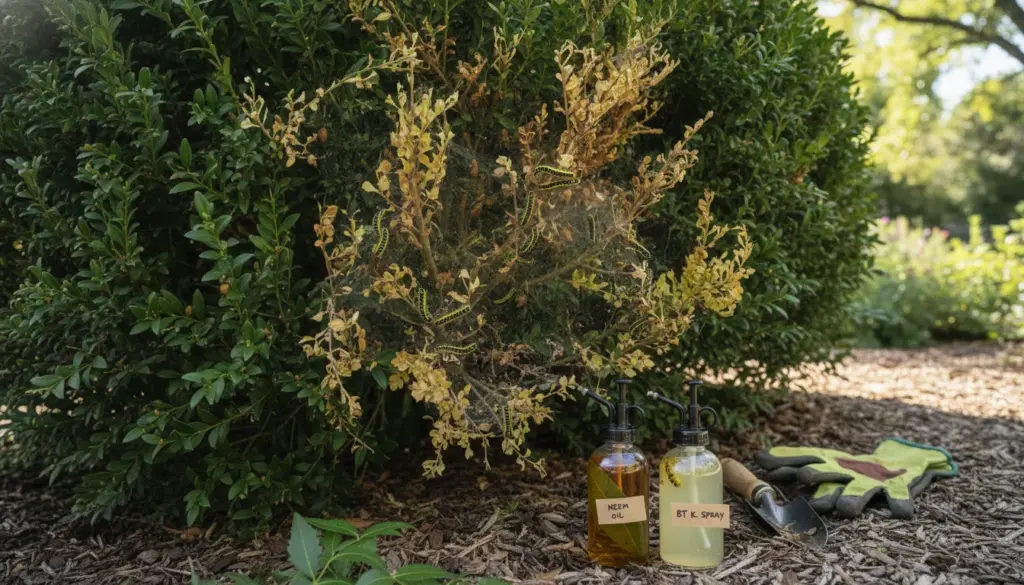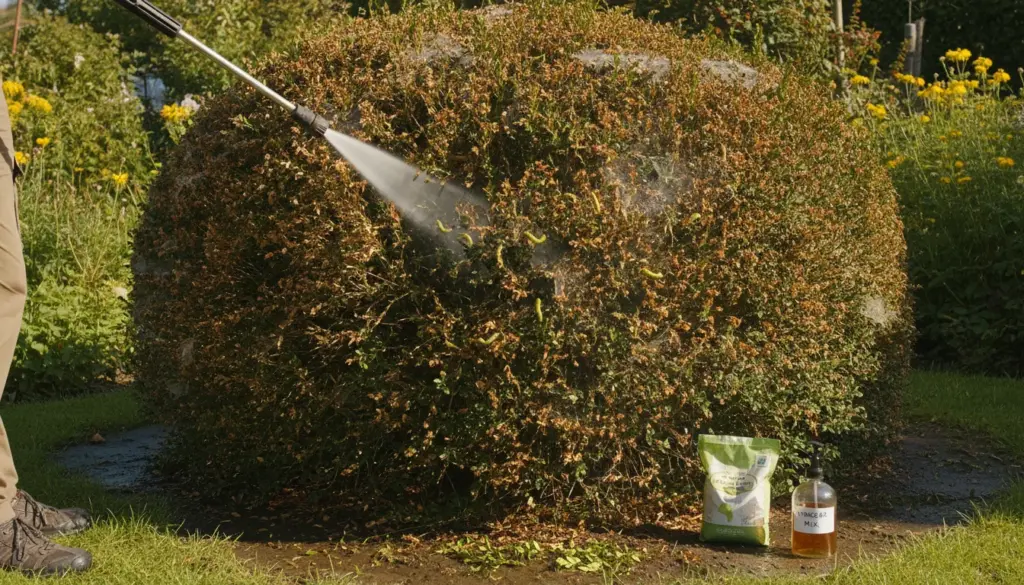
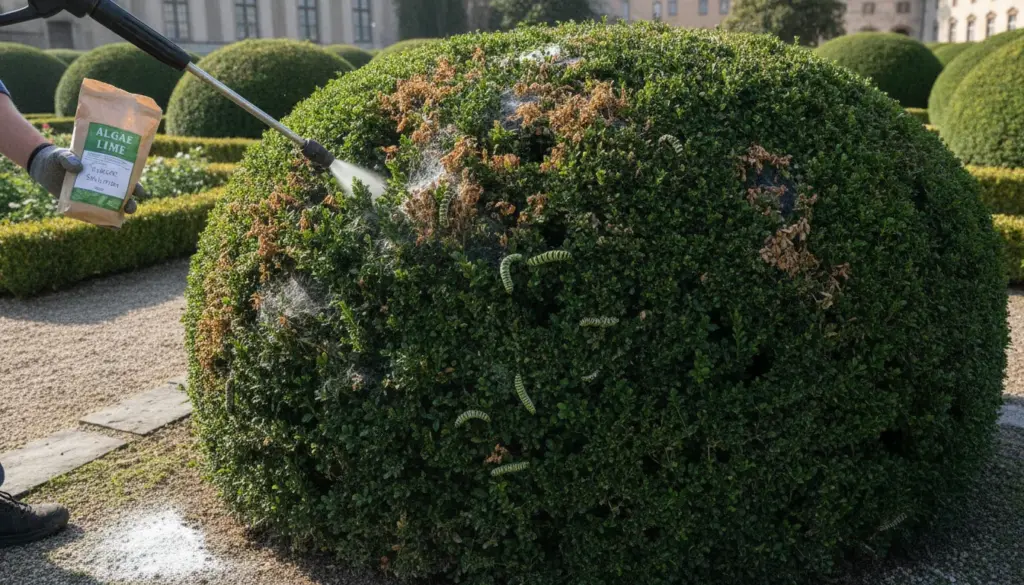
Brown foliage and delicate webbing hidden inside your boxwood shrubs are clear warning signs. By utilizing a pressure washer, algae lime, and a simple vinegar solution, you can quickly send these destructive garden invaders packing.
This invasive pest arrives silently, feeds aggressively, and frequently goes completely unnoticed until it is too late. Originally transported from Asia, the box tree caterpillar has established itself as one of the most feared landscape nuisances today. These ravenous larvae methodically devour the plant from the inner branches outward.
By the time you spot those unsightly brown patches, severe structural damage has typically already occurred. For early detection, always watch out for pale, almost translucent foliage and intricate silky webs tucked deep within the plant’s core.
Natural solutions to stop the box tree moth in its tracks
There is absolutely no need to reach for harsh, toxic chemicals immediately. Instead, successful gardeners rely on two highly effective, eco-friendly strategies to tackle these resilient intruders. If you are managing extensive boundary hedges, the mechanical removal of the larvae proves incredibly successful and immediately reduces the pest population.
Another powerful organic approach takes prevention a crucial step further. This targeted method effectively neutralizes the laid eggs entirely, ensuring that no future generations will ever have the chance to hatch and cause further destruction.
It is equally important to understand which popular gardening hacks simply do not work for this specific problem. While standard baking powder is widely celebrated for treating aphids and fungal issues, it completely fails to make a dent against these robust caterpillars.
To discover exactly how to execute these two successful techniques, learn the optimal application timing, and see step-by-step garden instructions, you can refer to the detailed video guide featured above.
Essential strategies for a healthy, pest-free garden
Staying ahead of an infestation requires a proactive approach. When dealing with these stubborn insects, keeping a few fundamental expert principles in mind will protect your greenery long-term:
- Master early detection: Understanding the subtle, early indicators of a moth infiltration allows you to act before significant defoliation happens.
- Implement strategic pruning: An aggressive, well-timed trim can physically evict the pests and remove heavily damaged sections from your beloved shrubs.
- Follow a structured defense plan: Establishing a comprehensive, multi-step care routine is the ultimate secret to maintaining perfectly healthy plants year-round.