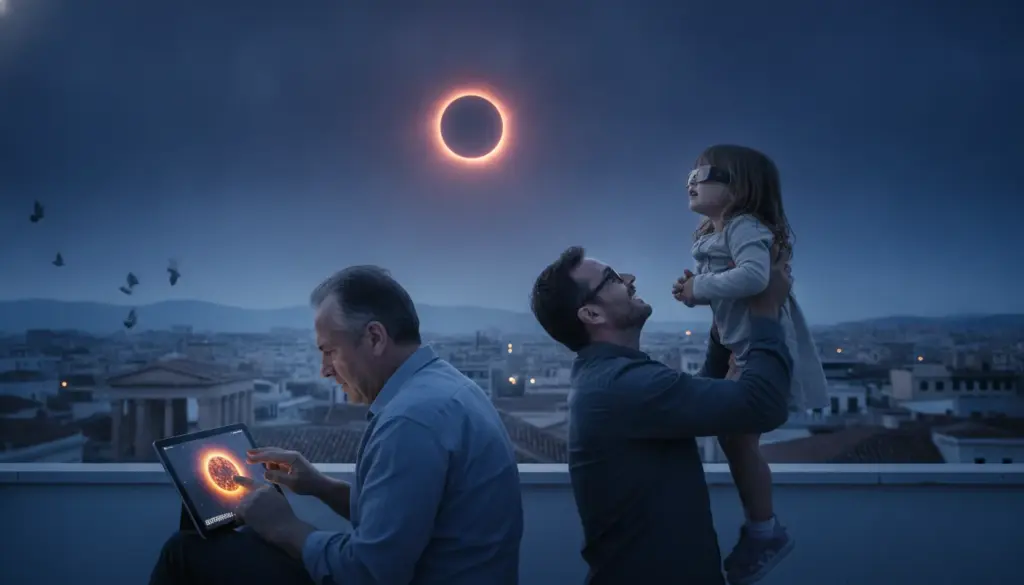
High above the bustling streets of Athens, a father hoists his little girl into the air while a frustrated neighbor aggressively refreshes a buffering livestream. As the most extended solar eclipse of the current century creeps across the sky, a strange chill sets in and the local bird chatter abruptly stops. Yet, even sharing the exact same rooftop, their experiences couldn’t be more different. One person witnesses a spellbinding, sudden darkness, while the other simply notices a mild afternoon dimness.
Thousands of miles away in a rural Pakistani village, the midday sky plunges into near-total night. Locals cheer in excitement, quiet prayers are whispered, and a startled toddler begins to cry. We are talking about a single astronomical marvel marked on everyone’s calendar. However, what individuals actually perceive, measure, and carry in their memories varies wildly. Ultimately, the most astonishing aspect of this record-breaking celestial event is how one cosmic occurrence fractures into countless different earthly realities.
Why This Eclipse Has So Many Different Faces
Your exact geographic footprint during this century’s longest eclipse dictates everything. If you find yourself directly inside the narrow path of totality, expect a sudden, eerie daytime nightfall accompanied by a brisk drop in temperature and a peculiar azure twilight. Just a few counties over, onlookers will merely spot a crescent-shaped sliver missing from the sun. That is certainly enough for a quick snapshot, but it absolutely won’t trigger roosting chickens to head back to their coops.
This striking disparity heavily influences how communities discuss the phenomenon. Certain towns are already branding it the defining celestial moment of a generation. Meanwhile, neighboring regions might shrug it off as just some unusually flat lighting during their lunch hour. It remains the exact same headline event, yet translates into a drastically different neighborhood reality.
The moon’s shadow tracing across our planet is notoriously narrow and unforgiving. Step inside that specific boundary, and you get the full sensory package. Stand just slightly outside of it, and you are basically watching a galactic movie trailer. Meteorological data confirms this stark contrast: thermometers often plunge several degrees within the totality corridor, whereas surrounding areas register barely a blip. The further away you are positioned, the more watered-down the spectacle becomes.
Consider the massive 2017 total eclipse across the United States. Entire households packed into cars for overnight drives just to squeeze into that coveted path. Campgrounds were overflowing with eager sky-watchers gripping cheap protective eyewear. What happened in the adjacent partial zones? Office workers stepped outside for a few minutes, snapped a single grainy photo, and went right back to their desks. It felt like two distinct societies separated by an invisible boundary in the atmosphere.
Experts anticipate an even wider gap in experiences for this upcoming record-setting event. Various schools in Asia are already integrating the phenomenon into their curriculum, organizing playground observations equipped with specialized measuring tools. Conversely, similar educational institutions a few time zones away have opted to keep students indoors with the blinds drawn, purely as a precautionary measure. Statistically speaking, millions of individuals will entirely miss the direct climax, even if they have flawless, cloud-free skies above them.
These discrepancies are far from random. Variables like totality duration, the sun’s solar altitude, local cloud cover, and even urban smog heavily dictate the visual outcome. Heavily polluted metropolitan areas often yield a muddy, muted sky that dulls the eclipse’s sharpness. Contrastingly, high-altitude mountain towns with pristine air quality will reveal every intricate, glowing wisp of the sun’s corona. It is the exact same moon blocking the exact same sun, yet painted on a completely different atmospheric canvas. Observational experts often refer to these fragmented experiences as highly localized eclipses hiding within a global phenomenon.
How to Truly Experience the Eclipse, Wherever You Are
Everything boils down to one fundamental question: are you located inside or outside the primary shadow path? By punching your zip code into various astronomical databases, you can instantly discover the exact percentage of solar coverage heading your way, right down to the minute. While that might sound incredibly technical, knowing those digits completely transforms how you absorb the moment.
If your home happens to sit inside the totality zone, treat the afternoon like a highly anticipated mini-festival. Block out time in your schedule to step outside, and scout a viewing location free from towering skyscrapers or thick tree canopies. If you reside just outside the border, strongly consider a brief road trip. A quick hour-long drive could be the defining factor between a mild distraction and a spine-tingling, magical memory.
Most of us have experienced the regret of missing a rare event because we were too busy working, running errands, or assuming we could just catch the highlight reel online later. This exceptionally long eclipse represents the ultimate crossroads. Throughout the regions expecting total darkness, communities are already chartering buses, prepping town squares, and organizing rooftop viewing parties. Neighbors are frantically exchanging digital maps and organizing specialized viewing picnics.
Naturally, a significant portion of the population will simply let the day pass. In areas restricted to a partial view, you will inevitably hear people brushing it off, claiming they will just catch a recap video later. While completely understandable given our hectic modern lives, ignoring the event means missing out on incredible subtle shifts. You lose out on the strange gray tint of the surrounding light, the sudden sharpness of your own shadow, and the way your breathing naturally slows down in the quietness.
Let’s be completely transparent: nobody drops everything for every minor meteor shower or lunar event. However, for a solar eclipse of this unprecedented duration, breaking your daily routine is undeniably justified.
Veteran eclipse chasers frequently emphasize that witnessing totality is a full-body experience rather than just an astronomical fun fact. You literally feel the ambient heat vanish, listen to the local wildlife go silent, and notice the people around you naturally lower their voices to a whisper. You simply cannot replicate that profound combination on a smartphone screen.
Simple Steps for a Memorable Viewing
Anyone wanting to intentionally absorb this event can elevate their experience with a few basic preparations:
- Verify your exact geographic positioning well in advance to see if you fall within the primary shadow path.
- Secure certified protective eyewear early on, and give them a quick trial run on a standard sunny afternoon.
- Carve out a dedicated time slot, keeping your schedule completely clear for ten minutes before and after the peak coverage.
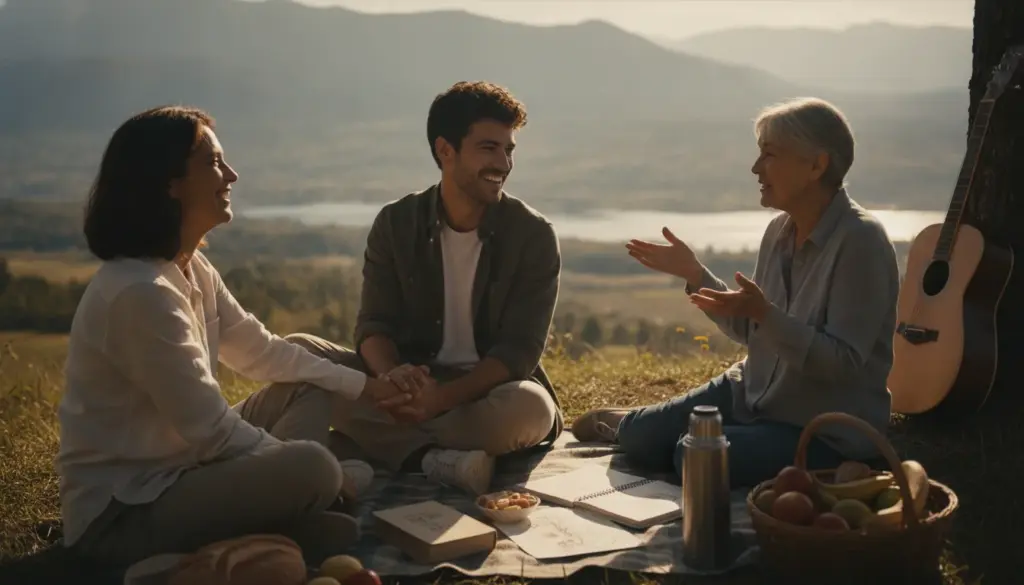
- Select an unobstructed vantage point and try to gather a few friends or family members to share the surreal atmosphere.
- Make a deliberate choice beforehand: are you prioritizing taking photographs, or do you want to simply watch and feel the environmental shifts? Trying to do everything often ruins the moment.
These straightforward habits completely bridge the gap between those left with a lifelong memory and those left wondering what all the fuss was about. In an era where every piece of media can be paused or rewatched on demand, this is a remarkably rare, un-pausable slice of reality.
The Lasting Impact Long After the Darkness Lifts
When looking back at this century’s longest solar eclipse, humanity won’t share a single, unified memory. Instead, we will be left with a complex patchwork of stories. A handful of observers will vividly recall the horizon glowing with a bizarre, 360-degree sunset. Others might primarily remember the chaotic logistics, such as sitting in bumper-to-bumper traffic, stressing about arriving at their viewing spot before the clock ran out.
For younger generations positioned directly under totality, those few minutes of sudden darkness could permanently shift their perspective of the universe. Educators who have previously worked inside eclipse zones often note that their students can recall the exact physical sensation of the sun vanishing, even years later. Conversely, individuals stuck in partial viewing areas usually retain only a fuzzy recollection of the sun looking slightly misshapen. It is the exact same astronomical phenomenon occurring in the same year, yet it leaves behind vastly different emotional footprints.
This is precisely where the greatest surprise lies for dedicated sky-watchers. Astrophysics allows us to predict the timing and location of these events down to the absolute millimeter, yet the human emotional response remains wildly unpredictable and unevenly distributed. Standing inside that narrow ribbon of complete shadow provides an almost mythical story to tell. Standing just a few miles outside of it requires significantly more imagination to feel connected to the cosmos.
Ultimately, this staggering difference in perspective is what makes the impending eclipse so magnificent. It highlights not only the intricate orbital dance between the Earth, moon, and sun, but also our own diverse circumstances. Certain enthusiasts will spend months obsessively planning travel routes. Others will simply glance out their office window, briefly captivated by the odd lighting. And inevitably, some will only experience it via a fleeting breaking news notification.
Regardless of how you approach it, we currently possess the distinct advantage of advanced mapping, scientific knowledge, and ample warning. The moon’s shadow is locked into its trajectory, leaving the final decision entirely up to us. The only question remaining is exactly where you plan to be standing when the middle of the afternoon briefly masquerades as midnight.
Frequently Asked Questions
- When exactly does the century’s longest eclipse occur?
The precise timing and date rely entirely on your global coordinates. Reputable astronomical organizations provide detailed, region-specific maps that pinpoint the exact moment of maximum coverage for your specific neighborhood. - Will my hometown get a total or partial view?
This depends entirely on your geographical alignment with the moon’s central shadow path. Various digital astronomy tools allow you to type in your local details to discover your exact viewing status down to the mile. - Do I actually need to buy special viewing glasses?
Absolutely. Staring directly at the sun, even when a massive chunk of it is obscured, can cause permanent, irreversible eye damage. The only phase where it is momentarily safe to look with the naked eye is during the brief, fleeting minutes of 100% total coverage. - Is driving long distances to see it really worth the effort?
For countless sky-watchers, the answer is a resounding yes. The visual and atmospheric leap from 99% coverage to full totality is often described as stepping onto an alien planet. Veterans of the shadow path frequently label the experience as deeply addictive and completely life-altering. - What happens if a rainstorm or heavy clouds block the sky?
While clouds might obscure the visual spectacle of the glowing corona, the environmental shifts become incredibly moody. You will still experience the dramatic plunge into darkness, the sudden temperature drop, and the bizarre, eerie energy of sharing a unique cosmic moment with your local community.