Ensuring your herbs and vegetables flourish requires a consistent moisture level in your elevated planters. When the summer heat hits, keeping that soil hydrated becomes a real challenge, but a few clever strategies can stop the earth from turning to dust.
Elevated garden boxes have become incredibly popular, offering a fantastic way to cultivate crops in limited spaces. However, treating these wooden or metal containers exactly like a traditional ground-level plot is a common gardening mistake. The environmental conditions differ significantly here. Because they are raised above the ground, these structures warm up much faster, which inevitably leads to rapid moisture loss. Applying a few specialized techniques will easily mitigate this issue.
Improving Moisture Retention in Elevated Planters
Feeling the need to grab your watering can multiple times a day is not just exhausting. It also serves as a clear indicator that precious hydration is evaporating straight off the soil surface before it can properly reach the root systems. To create a more self-sustaining microclimate, consider these expert approaches:
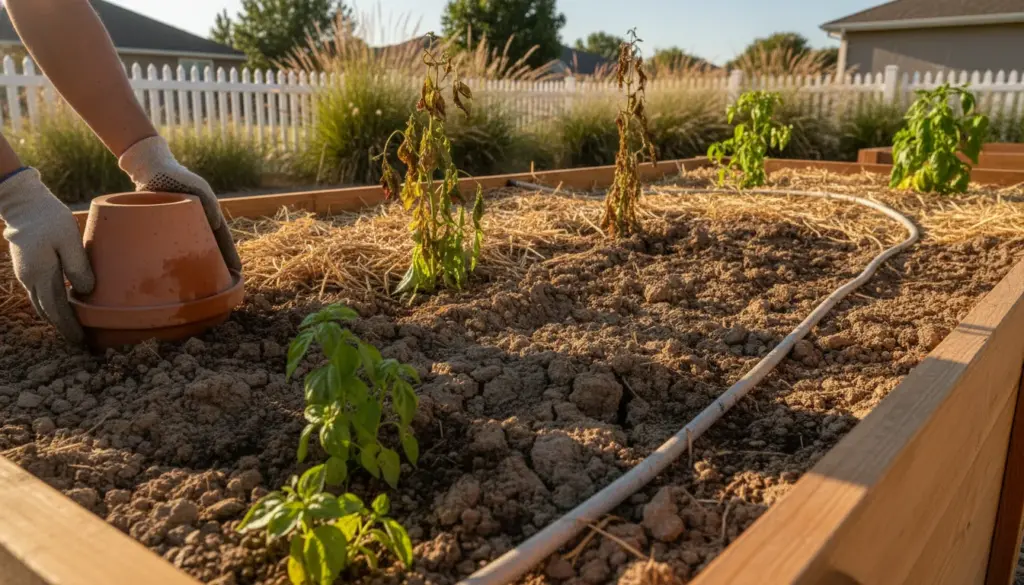
- Install clay ollas: These unglazed terracotta pots are a phenomenal, ancient irrigation tool for delivering even hydration. You simply bury the vessel in the dirt among your crops and fill it to the brim with water. The porous walls slowly release moisture directly into the subterranean root zone, completely bypassing surface evaporation.
- Apply a mulch layer: Covering the exposed topsoil drastically improves the overall water balance inside your planter. Adding a thick protective layer of organic materials like straw, freshly cut nettles, or dried grass clippings shields the earth from harsh sunlight.
- Incorporate soil conditioners: Standard potting mixes are fantastic for delivering essential nutrients to your crops, yet they often fail miserably at retaining moisture. By blending in specific mineral additives derived from stones and fossil deposits, you can vastly improve the earth’s water-holding capacity. Highly recommended amendments include perlite, biochar, clay powder, and algae lime.
- Line the inner walls: Another highly effective method is to secure a heavy-duty plastic liner along the interior walls before filling the box. This impenetrable barrier prevents water from seeping out through the sides of the structure.
Perhaps your soil hasn’t turned to dust, but rather the entire level has noticeably sunk over the season. If you are dealing with significant settling, understanding the correct refilling process is vital for the next harvest cycle.
Additional Gardening Insights
If you are struggling with a planter full of ants, a simple manual trick can often drive the crawlers away without the need for harsh chemical treatments.
For those looking to maximize their mid-summer growing season, certain vegetables and herbs are perfectly suited to go straight into the soil during June and July.
Finally, planning your crop rotation like a professional ensures you can harvest heavily throughout the entire year with a well-structured planting guide.