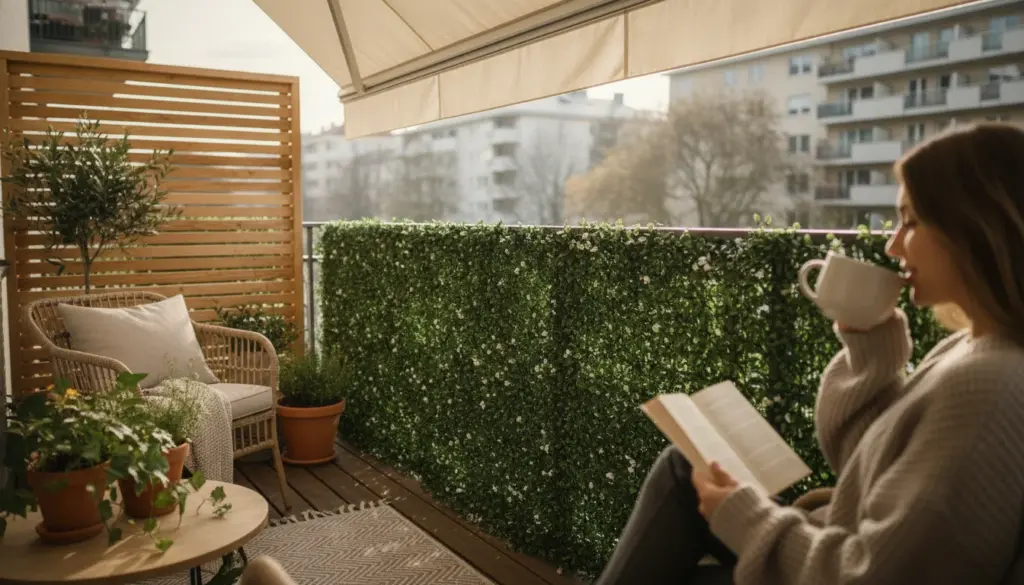
Imagine sipping your morning brew, but instead of enjoying peace, you find yourself locking eyes with the neighbor across the street. Transforming your outdoor space into a genuine personal retreat shouldn’t feel like sitting in a display window. Thankfully, creating a secluded oasis is entirely possible, even if you are just renting. The ideal shielding solution ultimately depends on the specific angles you need to block.
Front-Facing Privacy: Blocking Views from the Street
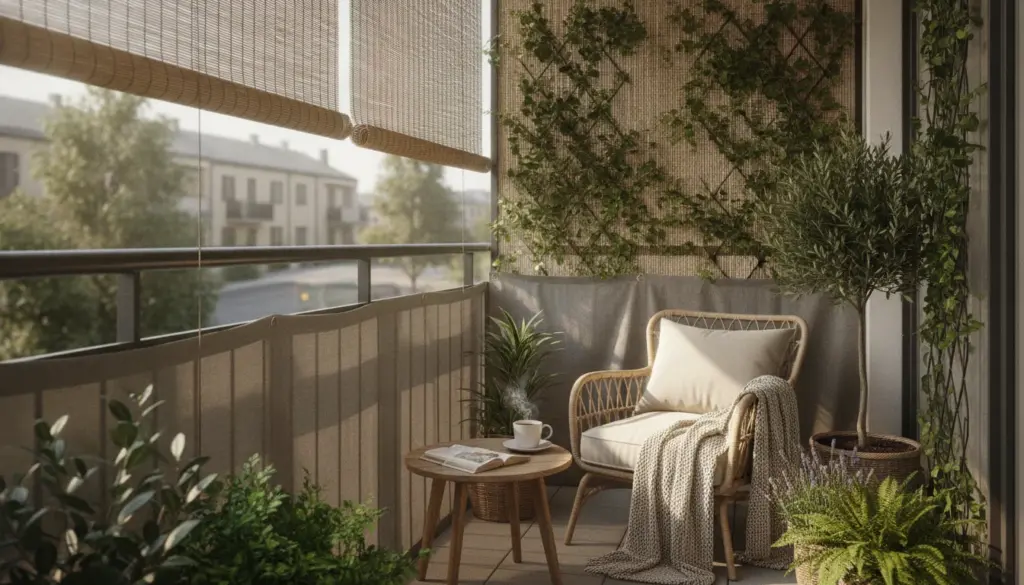
Whether it is bustling traffic or curious ground-floor neighbors, feeling exposed from the front ruins any chance of outdoor relaxation. The most straightforward defense mechanism is a weatherproof balcony fabric. These textiles usually feature integrated eyelets, allowing you to easily attach them to your railing using sturdy cords or cable ties. As any exterior design specialist would advise, always ensure the material is strictly UV and weather-resistant to prevent rapid deterioration.
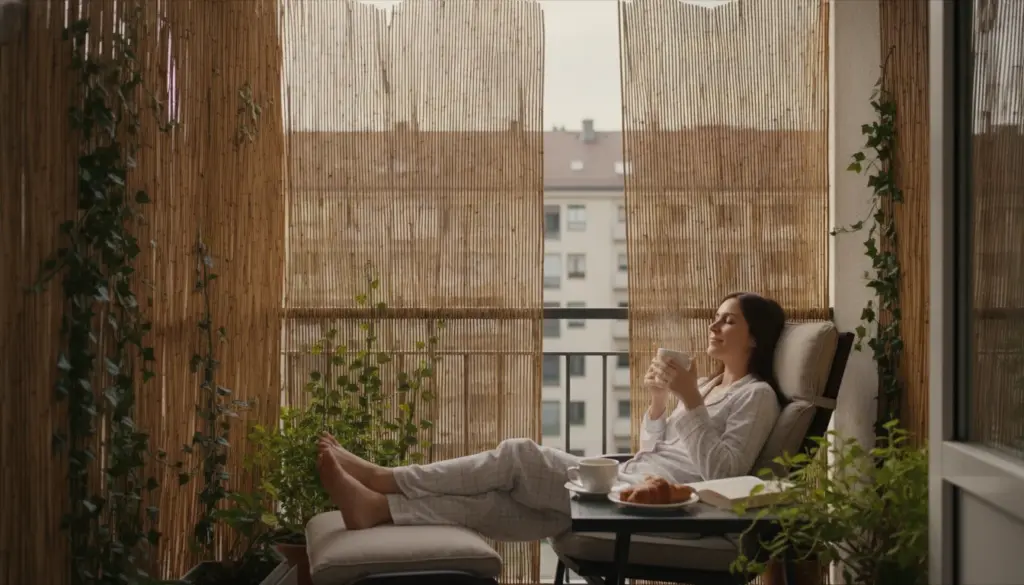
If you prefer a more organic aesthetic, natural screening mats made of bamboo, reed, or willow are excellent alternatives. Just like fabric covers, these can be swiftly secured with zip ties. However, for maximum longevity, ensure the natural material never touches the ground directly. Continuous moisture contact will inevitably cause the bottom edges to rot.
Both of these options share a massive advantage: they are incredibly renter-friendly. You will not need to touch a drill, and the entire setup can be removed instantly without leaving a single trace.
Side Shielding: Creating Boundaries with Neighboring Balconies
Many apartment complexes feature tightly packed layouts where side-by-side balconies offer direct, unfiltered views into each other’s spaces. Fortunately, several effective strategies exist to establish solid lateral boundaries.
- Folding screens (Paravents): This is a lightning-fast, renter-approved fix that requires zero drilling. The downside? They struggle against strong winds and demand additional securing mechanisms.
- Solid partitions (Wood, WPC, or Plastic): These offer supreme stability and complete opacity. While plastic and WPC are incredibly low-maintenance, wooden variants require regular upkeep. Note that permanent installation typically mandates landlord approval.
- Retractable side awnings: Exceptionally stylish and space-efficient, making them perfect for cramped areas. Just like solid walls, structural mounting requires official permission from the property owner.
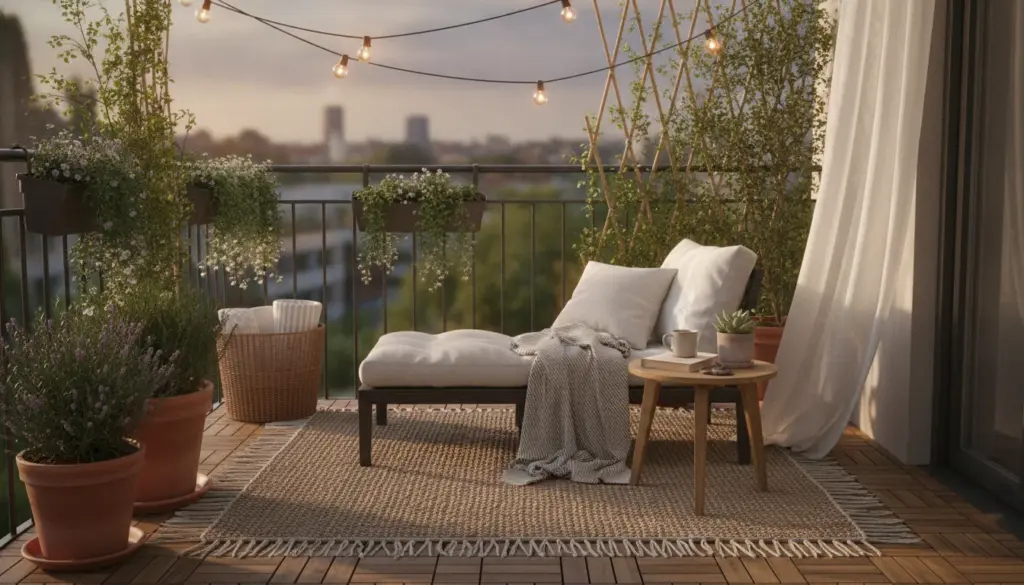
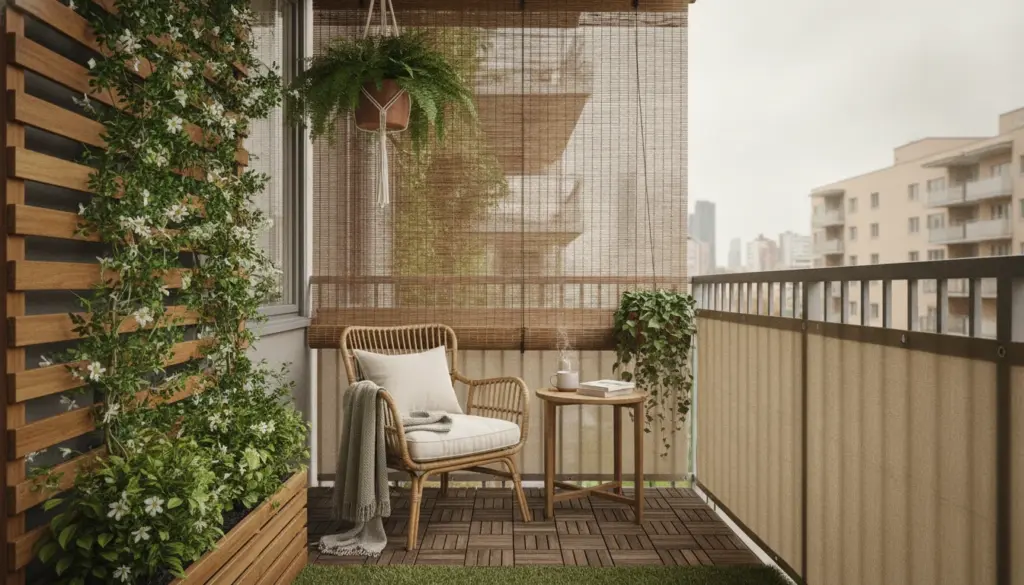
- Trellises with climbing vines: Visually stunning and easily fastened to existing railings using simple pipe clamps. The main drawback is the complete loss of visual protection during the barren winter months.
Navigating Renter Rules: What is Actually Allowed?
The golden rule for apartment dwellers is simple: if a fixture can be dismantled without leaving a mark, it is generally permitted. Potted foliage also requires no special authorization. Conversely, anything requiring screws or wall anchors—such as heavy awnings or permanent wooden dividers—demands written consent from your landlord. Whenever in doubt about a specific installation, reaching out to property management beforehand can save you significant headaches upon moving out.
Overhead Coverage: Escaping Top-Down Glances
Residents in multi-story buildings often face a unique challenge: the balcony directly above has a perfectly clear view downwards. Resolving this privacy breach requires a horizontal barrier, essentially functioning as a textile roof.
For tenants seeking a completely fuss-free approach, a tilting patio umbrella is unbeatable. It angles effortlessly, sets up in seconds, and completely avoids power tools. On the flip side, the coverage area is highly localized, and even robust models will struggle against heavy gusts.
A tensioned sun sail offers a much larger shielding footprint and remains securely anchored during breezy afternoons. It also does double duty by protecting delicate foliage from harsh sunburn. The catch is that securing the required wall hooks or freestanding poles almost always requires drilling.
When it comes to pure luxury, motorized retractable awnings remain unmatched. Extending or retracting at the push of a button, they deliver flawless all-weather reliability. Naturally, this premium comfort comes with a higher price tag and strictly requires facade installation.
Finding the Ultimate Shield for Tiny Balconies
When square footage is severely limited, preserving floor space becomes your top priority. The smartest solutions are those that hover above the ground. Railing fabrics and natural mats block frontal lines of sight without stealing a single inch of your footprint. Similarly, railing-mounted planters filled with ornamental grasses or vertical trellises encourage growth upward rather than outward. Retractable side screens are also brilliant, as they neatly tuck away when not in use. The ultimate design rule here is to always think vertically, never horizontally.
Botanical Barriers: The Most Beautiful Privacy Strategy
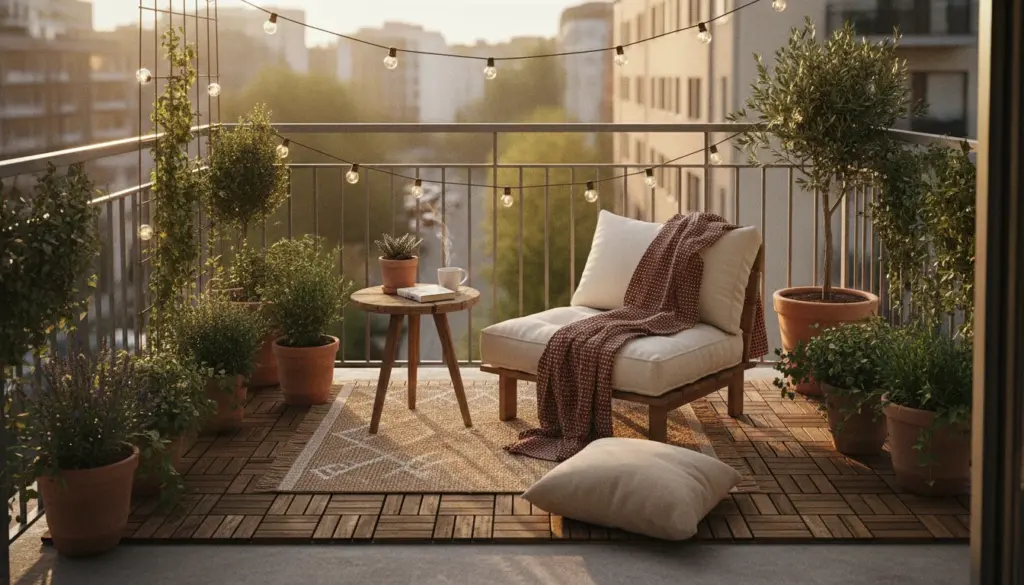
Constructing a living wall of greenery offers arguably the most atmospheric and inviting solution for exposed outdoor areas. Beyond merely blocking unwanted stares, a dense leaf canopy provides cooling shade and injects a distinct vacation vibe into any urban concrete setting.
- Climbing plants trained up a lattice are undisputed classics, and there is a perfect species for every light exposure. Ivy thrives remarkably well on shaded, north-facing facades. Fragrant jasmine and blooming clematis prefer sunny to partially shaded spots, rewarding you with spectacular flowers. Fast-growing Virginia creeper dominates in full sun and puts on a fiery red display come autumn. For a highly productive alternative, you can even train pole beans or trailing tomatoes up your vertical supports, alongside bee-friendly climbing varieties. Just remember that botanical walls take time to mature.
- Potted bamboo or towering ornamental grasses are exceptional container specimens. Grouping several tall varieties tightly together instantly diffuses inward visibility.
- Elevated raised beds serve as phenomenal visual blocks for more spacious layouts, offering incredible gardening practicality alongside their shielding properties.
The singular drawback to a strictly botanical barrier is the inevitable seasonal shift. When deciduous species drop their foliage in winter, your secluded hideaway temporarily vanishes. To guarantee year-round solitude, experienced balcony gardeners highly recommend layering your living wall in front of a permanent fabric screen or natural reed mat.