When the summer sun beats down mercilessly, a well-placed garden water station becomes a literal lifesaver. However, you need to pay close attention to your setup: if positioned incorrectly, your feathered friends will simply stay away.
During the hottest months, local wildlife faces an intense daily battle for survival. Natural puddles quickly evaporate, and the baked, hardened earth makes foraging for natural food incredibly difficult. By providing a reliable water source and the right nutritional snacks, you can give these vulnerable creatures a much-needed boost.
Creating a Safe and Hygienic Garden Water Feature
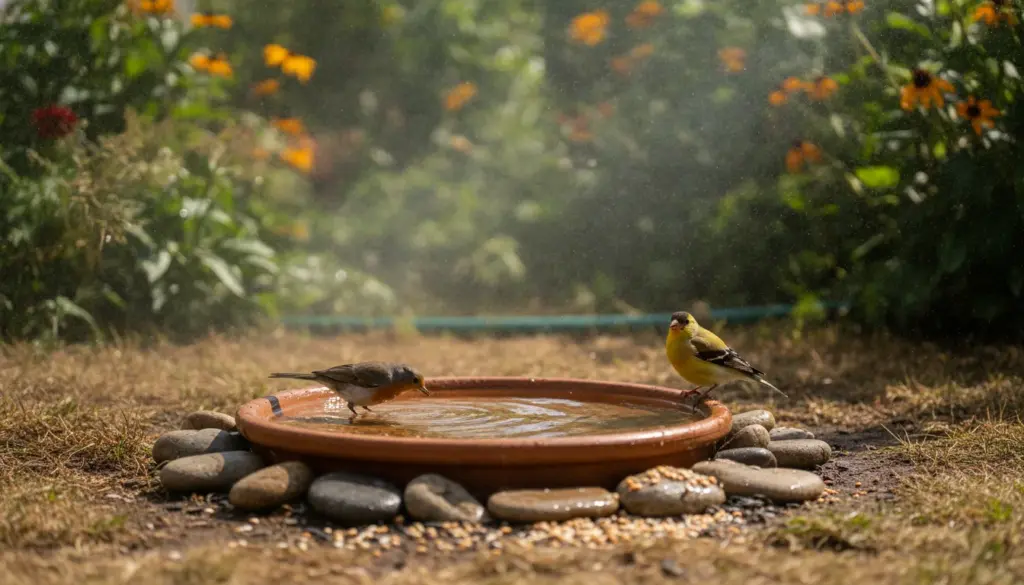
You do not need to purchase an expensive setup—a basic, shallow vessel like an old terracotta saucer works perfectly as a drinking spot. If you want the animals to use it for bathing as well, make sure the water depth stays between 2.5 and 10 centimeters. This precise depth allows them to comfortably wash their plumage and drop their body temperature during heatwaves.
Yet, the specific location of your basin matters far more than the container itself. Feathered visitors will entirely ignore a drinking spot if they sense any danger. Splashing in the water requires their full attention, which unfortunately makes them incredibly vulnerable to stalking neighborhood felines.
To guarantee their security, always place the bowl near protective shrubs or leafy trees where robins, blackbirds, and other backyard species can quickly retreat. Keeping the area pristine is equally critical to prevent the spread of illness. You should swap out the water every single day and scrub the surface vigorously using a stiff brush and boiling water. A brilliant expert trick is to alternate between two different bowls, leaving the spare one out in the blazing sun to naturally disinfect.
Once established, a shallow basin or a tiny container pond will be rapidly discovered by the local flocks, giving you spectacular wildlife viewing opportunities. It is immensely rewarding to watch a chaffinch drop by for a rapid sip, or witness a lively group of starlings engaging in an energetic group splash session.
Proper Summer Feeding Guidelines
Because parched summer soil blocks access to juicy earthworms, flying visitors often struggle to find enough calories. You can provide critical energy during the exhausting breeding season by offering high-protein nourishment. The most beneficial options include:
- Dried insects
- Small, fat-rich seeds
You must pay strict attention to the dimensions of the snacks you leave out, as fledglings can easily choke on large nuts or whole peanuts. Furthermore, human leftovers like baked bread or salted foods are strictly forbidden and can cause severe health issues.
When it comes to dispensing these treats, vertical feeding tubes offer a significantly cleaner alternative to traditional wooden houses or open trays. Their enclosed design ensures that no droppings can contaminate the seed supply. Always remember to sanitize your dispensers on a regular schedule and only put out modest portions that the animals will finish quickly.
Additional Insights for Backyard Bird Care
- Selecting food for seed-eaters: Tailoring your seed mix is the ultimate secret to bringing sparrows, bullfinches, and various finches directly to your yard.
- Troubleshooting empty nest boxes: There are multiple distinct reasons why wild birds might completely ignore or reject your carefully hung wooden shelters.
- Preventing window accidents: Homeowners vastly underestimate how frequently local wildlife crashes into glass panes, but implementing a few simple preventive measures can eliminate this hazard.