While you sleep, an often-unnoticed garden champion is busy patrolling your flower beds. This nocturnal predator guards your beloved plants with far more efficiency than traditional chemical sprays. Let’s explore how you can identify and support this relentless bug hunter.
When it comes to natural pest management, ground beetles (Carabidae) are absolute marvels of the ecosystem. Typically active after dusk, these rapid runners are highly proficient at devouring a variety of garden nuisances. By keeping destructive insect populations in check naturally, they play a priceless role in maintaining ecological harmony. If you are a gardener striving for a chemical-free outdoor space, rolling out the welcome mat for these beneficial predators is a fantastic strategy.
Spotting Ground Beetles in Your Yard
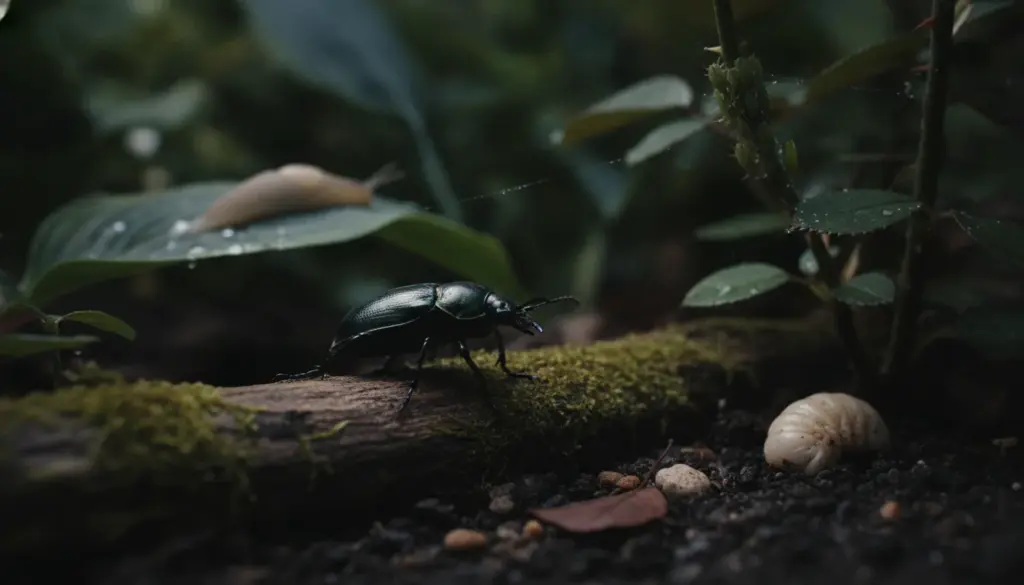
As some of the largest beetle varieties found in local gardens, these insects can grow up to three centimeters in length. Their name is well-earned, thanks to a set of robust, elongated legs built for sprinting. Armed with highly prominent mouthparts, they are formidable hunters capable of consuming three times their own body weight in pests every single day. You will usually spot them in dark hues ranging from deep brown and black to iridescent shades of blue or green. Interestingly, a large number of these species also possess the ability to fly.
The sheer diversity is astounding, with roughly 550 species thriving in regional habitats. Among the most recognizable is the leather ground beetle (Carabus coriaceus), which commands attention with its substantial, pitch-black frame. Alternatively, the green tiger beetle (Cicindela campestris) stands out due to its blazing speed and massive compound eyes, while the golden ground beetle (Carabus auratus) dazzles observers with a brilliantly metallic wing case. Other notable relatives include the bronze ground beetle (Carabus nemoralis) and the fascinating bombardier beetle (Brachininae). You will typically find these creatures seeking refuge under moss, scattered leaves, pine needles, fallen wood, or flat stones.
A Tireless Hunter’s Extensive Menu
These helpful garden allies are opportunistic omnivores. While they occasionally snack on troublesome weed seeds, their true value lies in their massive appetite for plant-destroying pests. Their daily diet frequently consists of:
- Aphids
- Slugs alongside their hidden eggs
- White grubs
- Caterpillars
- Wireworms
- Colorado potato beetles
- Vine weevils
- Carrot flies
Their capacity to clear out massive quantities of prey makes them indispensable partners in biological pest control. It is worth noting that both the mature adults and their growing larvae are active predators. The larger varieties in particular, such as the aforementioned leather ground beetle, have a notorious reputation for aggressively targeting plump caterpillars and slugs.
Creating a Haven for Ground Beetles
Encouraging these natural exterminators to set up camp in your yard requires just a few simple landscaping adjustments. To offer them the perfect environment, consider implementing the following practices:
- Build cozy retreats: Assemble small piles of rocks, stacked brushwood, or decaying logs to serve as daytime shelters.
- Plant dense hedges: Thick shrubbery provides essential cover and a stable habitat.
- Leave the leaves: Allowing a natural layer of autumn foliage to remain on the soil surface offers excellent protection.
- Embrace a little wildness: Tolerating a few patches of native weeds significantly boosts overall biodiversity.
- Enrich the earth: Working organic matter into your flower beds improves soil structure, making it much more hospitable.
- Skip the pavement: Solid concrete walkways act as insurmountable barricades for these ground-dwelling sprinters.
- Ban the chemicals: Completely avoiding synthetic pesticides ensures your beneficial insect populations can thrive safely.
Frequently Asked Questions
What is the typical lifespan of a ground beetle?
The complete developmental cycle, moving from a tiny egg to a fully mature adult, generally spans two to three years. During her reproductive phase, a single female can deposit up to 60 eggs safely into the soil.
Do these insects pose any threat to pets or humans?
Not at all. Despite their fierce reputation among garden pests, ground beetles are entirely harmless to both people and domestic animals. Their hunting instincts are strictly focused on miniature prey.
Are ground beetles capable of flight?
Yes, the vast majority of species are equipped for flight, which aids greatly in their geographic dispersal. However, they are fundamentally terrestrial creatures that prefer to rely on their exceptional running skills to navigate the landscape.