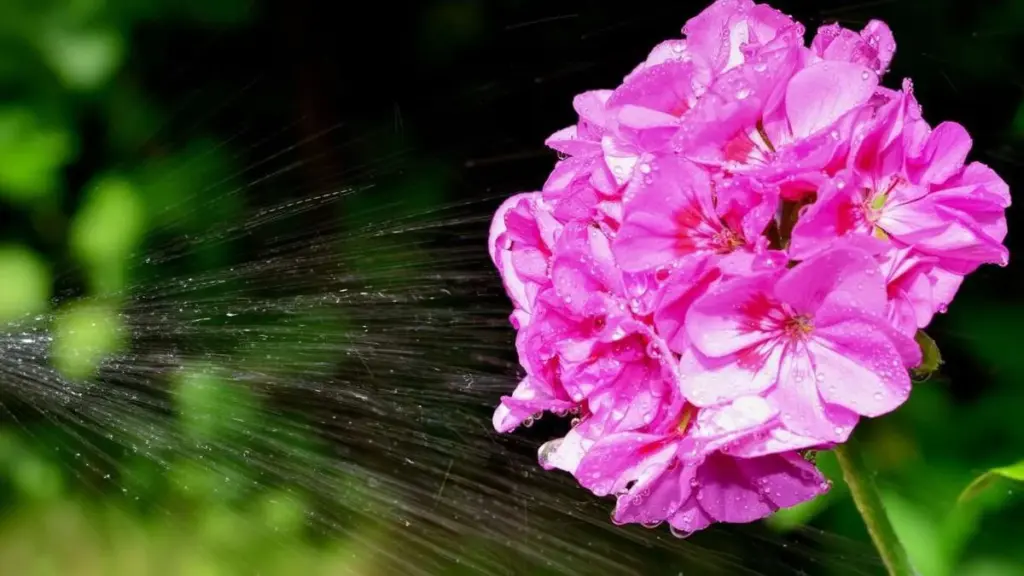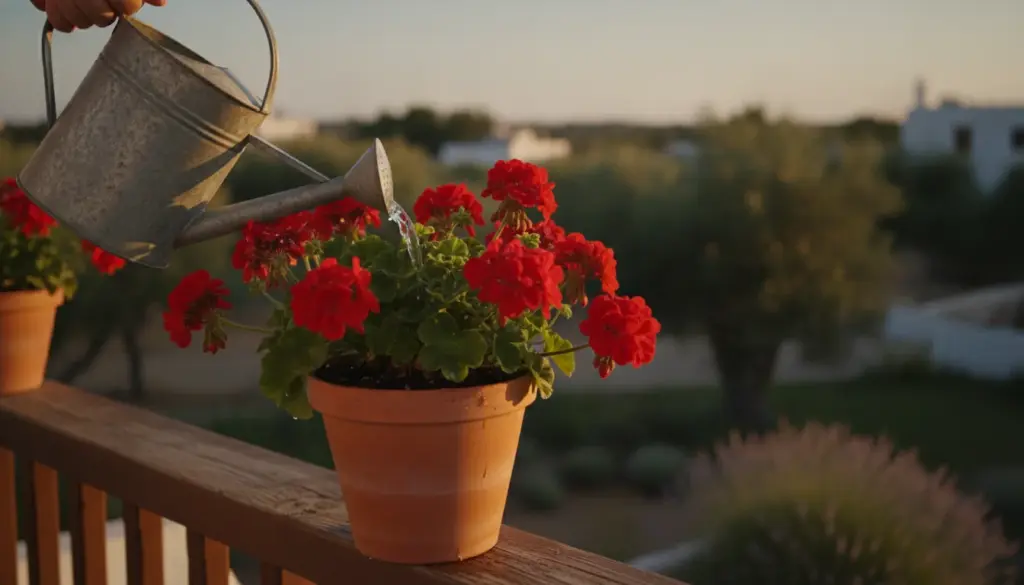
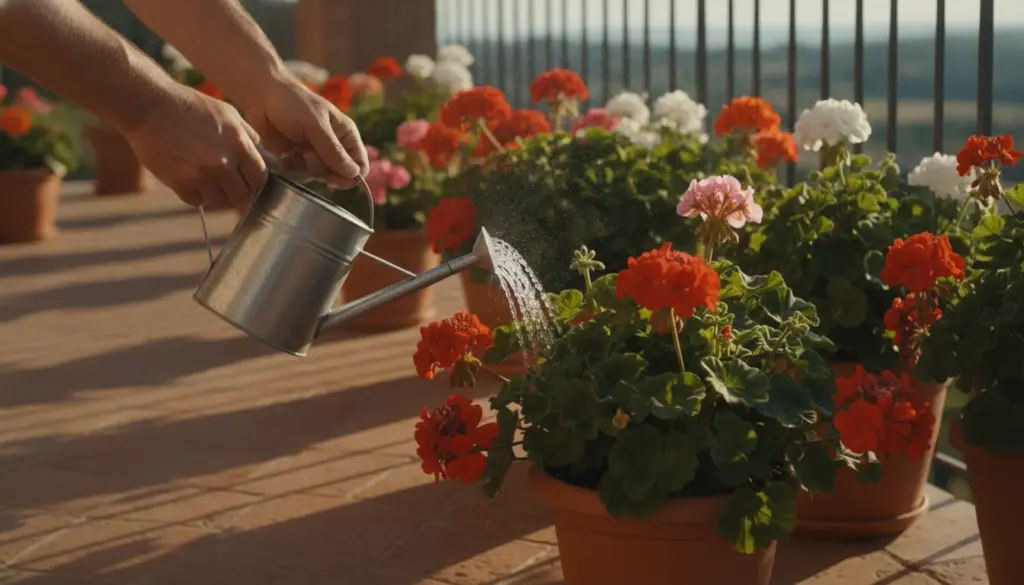
Keeping your geraniums beautifully hydrated during a scorching summer doesn’t have to be a demanding chore. These vibrant balcony favorites, botanically known as pelargoniums, are actually incredible sun-lovers. Originally hailing from the incredibly bright and sunny regions of South Africa, they handle soaring temperatures much better than most typical container blooms. However, to keep those gorgeous flowers pushing through a relentless heatwave, they absolutely need their moisture delivered at the perfect time.
Watering Geraniums in the Heat: An Effective 1-Minute Routine
Thanks to their thick, fleshy foliage, pelargoniums can easily buffer brief dry spells by storing excess moisture. This built-in survival mechanism gives them a massive advantage over more delicate summer plants. Yet, if the drought stretches on too long, their flower production will inevitably suffer. The secret is to maintain a steady hydration rhythm rather than trying to rescue a severely wilted plant after the fact.
When the summer sun is blazing, horticultural experts advise watering your pots during the cooler morning hours or late in the evening. During these temperate parts of the day, the root systems are far more capable of absorbing moisture effectively without the immediate threat of evaporation.
You literally only need sixty seconds a day to keep your floral displays in pristine condition. Simply run through this quick, expert-approved checklist before reaching for the watering can:
- 👉 The Finger Test: Check the top two to three centimeters of the soil. If it feels completely dry to the touch, it is time to water.
- 👉 The Weight Check: Carefully lift the container. A noticeably lightweight pot strongly indicates a lack of moisture throughout the root ball.
- 👉 The Leaf Inspection: Are the leaves and stems looking dull and feeling unusually soft? Your plant is definitely thirsty.
- 👉 The Soil Temperature: If the potting mix is burning hot in the mid-afternoon sun, wait and check the plant’s needs again in the evening.
When you do water, make sure to soak the earth thoroughly until a few drops escape the bottom drainage holes. This deep-watering technique encourages the moisture to reach the lowest roots. Giving your plants tiny, frequent sips is a common pitfall that only dampens the surface while leaving the core of the plant completely parched.
The Perfect Hydration Volume for Geraniums
As a general rule of thumb, your goal should be to completely moisten the entire root ball. This typically requires adding water equal to about ten percent of the container’s total volume. To put this into practical terms, a standard 80-centimeter window box will need roughly 2.5 liters of water to be adequately quenched. If you prefer a simpler approach, just aim to provide one large glass of water per individual plant.
A crucial pro tip: bone-dry soil actually repels moisture initially and needs a little time to swell. It will not absorb a massive deluge all at once. Always apply the water in small, gradual splashes, and ensure any excess can drain away freely.
Choosing Pots and Soil: Maximizing Moisture, Preventing Rot
For optimal growth, these sun-worshippers require a structurally stable potting mix that retains adequate moisture while still allowing vital oxygen to circulate around the roots. This delicate balance is the foundation of a healthy, continuous nutrient supply. If your daily schedule keeps you away from home, investing in self-watering planters or an automated drip system can be a wonderful solution.
No matter what container setup you choose, keeping the drainage holes completely unobstructed is non-negotiable. Never let your plants sit in a water-filled saucer for extended periods, as waterlogging is the fastest, most guaranteed shortcut to severe root damage.
Frequent Heatwave Watering Mistakes
A lackluster summer balcony display is almost always tied to these avoidable hydration errors:
❎ Watering at high noon: Most of the moisture simply evaporates instantly into the hot air.
❎ Giving frequent, tiny splashes: This forces the plant to develop weak, incredibly shallow roots.
❎ Leaving stagnant water in the saucer: This suffocates the root system and leads to rot.
❎ Using heavily compacted soil: Water will either pool uselessly on top or run straight down the inner sides of the pot.
❎ Ignoring blocked drainage holes: This turns the pot into a swamp, even if you apply the “correct” amount of water.
What to Do When the Heat Breaks into a Thunderstorm
Keeping your plants hydrated during a drought is one challenge, but surviving a sudden torrential downpour is another entirely. After a heavy summer storm, your first priority is to let any standing water drain away quickly—this is where your good drainage and quality soil will do the heavy lifting.
Carefully snip away any battered or bruised blossoms to prevent rot and encourage fresh buds. Because heavy rains can flush out the soil, a light application of liquid fertilizer can help replenish washed-away nutrients. Usually, it only takes a few days of returning sunshine for the plants to bounce right back to their former glory. If you live in an area prone to severe weather, placing your fuller, heavier varieties closer to the house wall or behind a sturdy railing will provide much-needed stability against summer gales.