When scorching temperatures arrive, a simple backyard water station quickly becomes a vital lifeline. However, placing a dish in the wrong spot might actually keep your feathered neighbors away entirely.
Searing heat turns daily life into a desperate struggle for local wildlife. As puddles evaporate and the soil hardens, natural food sources dwindle rapidly. By offering a well-maintained watering hole and appropriate seasonal snacks, you can provide essential support to these struggling visitors.
Setting Up Your Garden Bird Bath: Location and Hygiene Matter
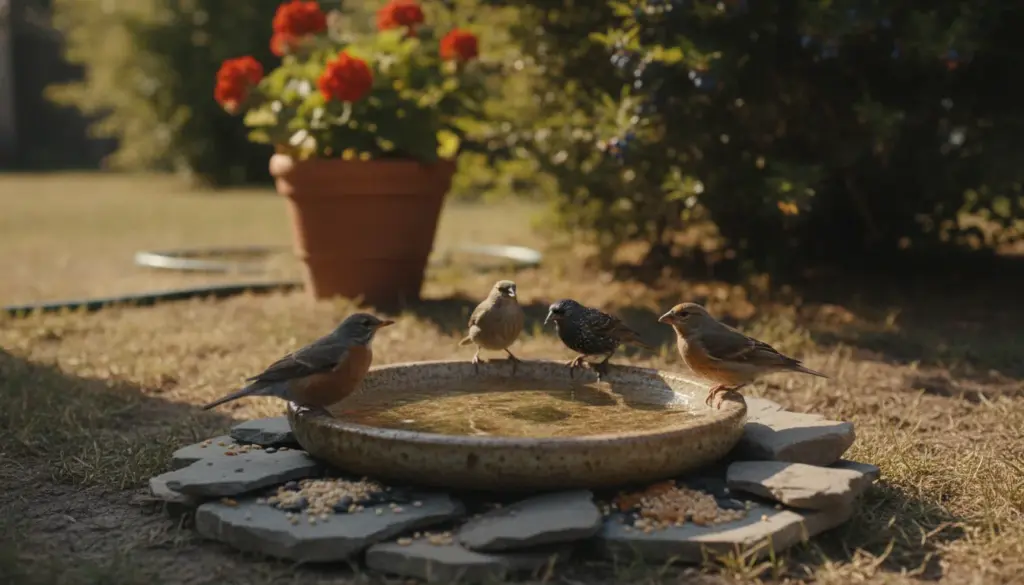
You do not need fancy equipment to create an inviting aquatic retreat. A shallow vessel, such as an unglazed clay dish or an upcycled plant pot saucer, works perfectly. To encourage both drinking and splashing, ensure the water depth sits between two and a half and ten centimeters. This specific measurement allows small garden visitors to comfortably wash their feathers and bring down their body temperature during heatwaves.
Choosing the absolute best spot for your setup is far more critical than the container itself. Our delicate flying friends are highly vulnerable while bathing, making them easy targets for stalking felines. Because of this, always position your water source near dense shrubs or trees. This guarantees that species like blackbirds and robins have an immediate escape route if danger approaches.
Stagnant water breeds disease rapidly, making immaculate sanitation a non-negotiable requirement. You must replace the water every single day and scrub the basin thoroughly using a stiff brush and boiling hot water. As a trusted expert method, try rotating between two different bowls. You can leave one out in the blazing sun to naturally sterilize while the other is in active use.
Once established, a miniature pond or shallow dish transforms your yard into a spectacular wildlife theater. It provides an outstanding opportunity for backyard birdwatching. You will likely spot great tits and chaffinches dropping in for quick sips, while noisy flocks of house sparrows and starlings gather for enthusiastic group baths.
Proper Summer Feeding Protocols for Wild Birds
Parched, concrete-like soil makes it nearly impossible for hungry foragers to extract earthworms. During the demanding breeding season, you can replenish their depleted energy reserves by providing the right kind of nourishment. High-protein provisions are highly recommended for summer feeding.
- Dehydrated insects
- Small, high-fat seeds
Pay incredibly close attention to the size of the snacks you offer. Whole peanuts and oversized nut pieces present a severe choking hazard for newly hatched fledglings. Additionally, human food leftovers, bread, and salty kitchen scraps are strictly forbidden as they can cause severe health issues.
To halt the spread of avian pathogens, enclosed feeding tubes are vastly superior to traditional open-tray houses. These tubular designs successfully prevent droppings from contaminating the seed supply. Remember to sanitize your dispensers on a strict schedule and only distribute small portions that will be consumed quickly.