You probably winced this morning: a watery film on the leftovers, a funky smell, pure doubt. The grapes sitting right beside them looked completely exhausted, too. You check the expiration date, do some mental math, and glare at the appliance. How does everything go bad so incredibly fast?
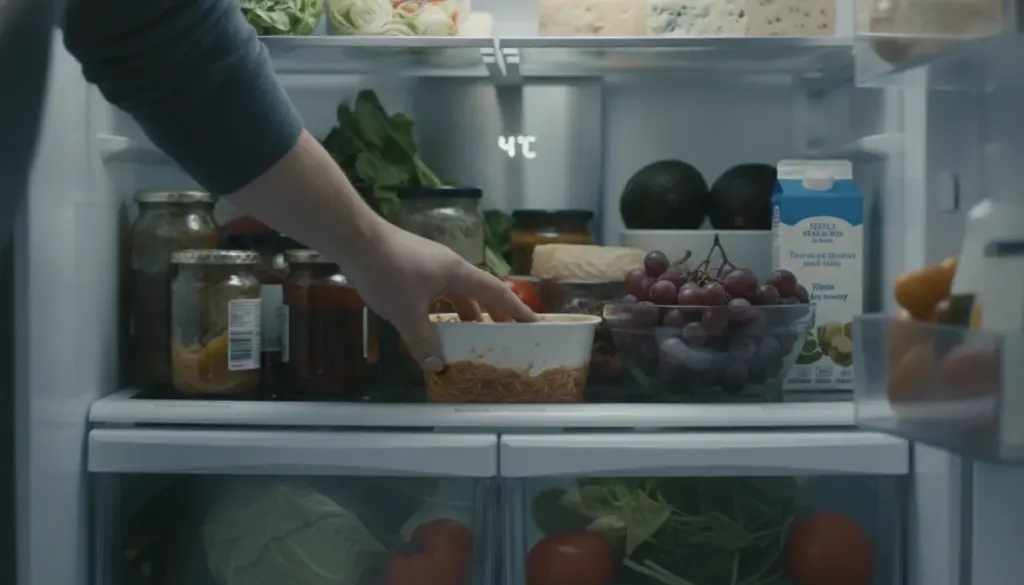
Pushing a few jars out of the way, you run your hand along the chilly back wall. A faint number glows on the display, one you have not touched in forever. Was it 7 °C? Or maybe 6 °C? You are not entirely sure. To be completely honest, you never really gave it much thought.
Lately, however, your garbage bin is filling up much faster. Limp lettuce, spoiled chicken breast, and half-open cheese packages sporting strange edges. They are just small portions, but combined, it feels exactly like tossing cash straight into the trash. Deep down, a nagging question emerges.
What if the food itself isn’t the problem, but rather a tiny digit you’ve ignored for years?
The Hidden Power of a Single Refrigerator Digit
Anyone who has ever cleaned out a kitchen after a long vacation knows exactly how confronting food waste gets. You sniff, you inspect, you hesitate. Ultimately, most of those items end up in the trash because nobody wants to gamble with their health.
Tossing a few items feels minor in the moment, yet it happens far more often than we realize. Half a cucumber today, pasta leftovers tomorrow, a pack of deli meat that looks slightly off. For a single household, these discarded bits quickly add up.
What the vast majority of consumers fail to realize is that their appliance’s temperature setting plays a massive, silent role in this cycle.
Extensive research from European food safety agencies highlights that adjusting your fridge from 7 °C down to 4 °C yields up to three extra days of freshness for everyday groceries. This applies directly to chopped vegetables, deli meats, and dinner leftovers. It might sound like a marginal tweak, but from a microbiological standpoint, the shift is enormous.
Spoilage-causing bacteria absolutely thrive in lukewarm, chilly environments. Hovering around 7 °C, these microorganisms remain surprisingly active. Once you drop the climate to 4 °C, their multiplication rate slows down drastically. It does not stop completely, but it is heavily suppressed. While invisible to the naked eye, your nose and taste buds will undoubtedly notice the difference a few days later.
During one specific test involving fresh chicken breast, keeping the meat at 7 °C triggered an unsafe bacterial threshold within just three days. Conversely, at 4 °C, the poultry remained perfectly safe until the very end of the week. This exact microbiological logic applies to raw fish, soft cheeses, and pre-packaged salads.
Ultimately, a couple of degrees determines whether your groceries remain appetizing and safe by day three, or turn into questionable mush destined for the waste bin.
Despite this, countless households set their cooling dials based on pure intuition, usually landing somewhere between 5 and 8 °C. Often, they just leave the factory default, or they worry about freezing their produce. That is precisely where the problem lies. Fortunately, the solution requires almost zero effort.
The Tiny Adjustment That Makes a Massive Impact
The core concept is almost frustratingly basic: simply lower your temperature dial to 4 °C instead of leaving it at 6 or 7 °C. That is all it takes. No expensive upgrades, no smart gadgets, no complex storage routines. Just one minor shift on the thermostat.
Most modern units feature a digital display allowing you to select exactly 4 °C. Older models frequently rely on a rotating dial numbered from 1 to 5 or 7. In those cases, consulting the manual usually reveals which number perfectly corresponds to the ideal four-degree mark.
Here is an expert trick hardly anyone utilizes, despite its tremendous effectiveness: place a standard refrigerator thermometer right in the middle of a shelf, keeping it away from the back wall. Let it rest there for a few hours. Check if your interior is genuinely sitting at 4 °C, or if it is secretly hovering around 6 or 7 °C. More often than not, it is much warmer than you think.
A Dutch family residing in Utrecht recently participated in a consumer trial where they dropped their fridge temperature from approximately 7 °C down to 4 °C for three full weeks. They meticulously tracked their discarded items without actually changing their normal shopping habits.
By the end of the experiment, the results were highly unexpected: less discolored poultry, fewer brown edges on sliced apples, and far fewer questionable containers of leftover rice. Overall, the household estimated they threw away roughly a third less food compared to previous months.
Their most prominent observation? Groceries didn’t just survive past their expiration dates; they visibly looked far less wilted. Leafy greens maintained their crunch, berries stayed plump, and fresh herbs didn’t immediately droop over their plastic edges. The nagging guilt of wasting hard-earned money noticeably disappeared.
Over an entire year, salvaging those groceries easily amounts to tens or even hundreds of dollars in savings, depending heavily on your household size. If you regularly purchase fresh produce, that single degree shift transforms from an abstract detail into a direct financial lever.
From a scientific perspective, everything revolves around the rapid multiplication of microorganisms. Countless bacteria can literally double their population within hours, but this speed is heavily dependent on ambient warmth. The warmer the environment, the faster they reproduce.
At 7 °C, these biological processes are running at a solid pace. It isn’t an explosive growth, but it is certainly enough to ruin the texture and flavor of fresh fish, meats, and leftovers long before they become highly dangerous. This creates that frustrating gray area of doubt, which inevitably leads to the trash bag.
Dropping down to 4 °C puts a massive brake on this cycle. The bacteria survive, but they become sluggish and largely inactive. Consequently, your meals retain their original flavor profiles and structural integrity far longer. That is exactly where the famous “two to three extra days” metric originates.
For raw poultry, minced meat, chopped veggies, and open dairy cartons, this environmental shift makes an unbelievable impact. It effectively bridges the gap between confidently eating leftovers and nervously throwing them away.
How to Optimize Your Fridge Without Restructuring Your Life
Taking action is straightforward: secure the dial at 4 °C and arrange your groceries slightly smarter across the shelves. The absolute coldest zone is generally located at the very back, just above the crisper drawers. That specific spot is strictly reserved for highly perishable goods like raw meat, fresh fish, and open dairy products.
Conversely, the door represents the warmest area inside the appliance due to constant opening and closing. You should exclusively store robust items there, such as condiments, jams, sodas, and hard cheeses. Do not stash your fresh milk or yogurt in the door racks, regardless of how incredibly convenient it seems. Dairy belongs much closer to the freezing heart of the unit.
Many contemporary models feature a dedicated zero-degree compartment or a specialized crisper drawer. These sections keep herbs and delicate vegetables incredibly crunchy. However, these specialized zones only function as intended when the baseline temperature is strictly set to 4 °C. Everything connects perfectly into one localized household climate system.
We all have a terrible habit of packing our shelves right to the absolute brim. It makes sense, given the soaring cost of groceries and our reluctance to visit the supermarket multiple times a week. However, an overstuffed interior cools incredibly unevenly. Cold air struggles to circulate properly, creating icy dead zones alongside pockets of overly warm air.
Always try to leave breathing room near the back panel and deep inside the corners. Never shove piping hot pots directly onto the glass shelves; allow them to adequately cool down on the kitchen counter first. Additionally, practice routine rotation: place fresh purchases in the back and move older items straight to the front. Doing this ensures you quickly spot what needs to be eaten, rather than letting it rot out of sight.
Let’s be realistic: absolutely nobody is going to draft a daily cleaning schedule or an inventory list for their crisper drawer. Thankfully, you don’t need to. Building minor habits—locking the dial at 4 °C, keeping vulnerable meats on the coldest tier, and reserving the door for resilient sauces—yields surprisingly massive returns.
A registered dietitian recently shared that since lowering her appliance to exactly 4 °C, she barely tosses any deli meats. While it sounds highly technical, it actually delivers immense peace of mind. There is significantly less sniffing of food containers and zero debates at the dining table regarding food safety.
That resulting calmness is the ultimate benefit. You gain profound trust in your stored ingredients, and your kitchen bin stops smelling like slowly decaying leftovers.
- Lock the dial at exactly 4 °C – do not settle for roughly cold enough.
- Utilize a standard thermometer placed right in the center to verify the actual climate.
- Store delicate perishables on the coldest interior shelf, completely avoiding the door compartments.
- Allow heated meals to rest on the counter before placing them in chilled environments.
- Maintain adequate spacing between containers to guarantee optimal airflow.
Why Three Extra Days Delivers More Than Just Less Garbage
When your groceries naturally survive an extra two or three days, your entire kitchen rhythm subtly transforms. You no longer need to strictly plan who eats what on a rigid schedule. Those leftover curries can comfortably wait another evening. The sliced chicken breast isn’t an urgent eat-now-or-never emergency.
This flexibility provides immense mental space. You experience less anxiety over spoilage and gain the freedom to cook whatever you genuinely crave. That is a wonderful luxury after an exhausting workday filled with endless decision-making.
Furthermore, food that actually tastes completely fresh naturally invites you to consume it. A soggy, sad-looking cucumber usually rots in the bottom drawer. A crisp, vibrant cucumber gets sliced onto sandwiches or tossed straight into a hearty salad. Freshness directly dictates our appetite for what is sitting behind that heavy door.
We have all stood awkwardly in front of a bursting trash bag, wondering how things got so spectacularly out of hand. Sandwiched between plastic wrappers, you spot discarded vegetables, half-eaten yogurts, and dinners prepared with excellent intentions.
That overflowing bin represents more than just financial waste; it symbolizes rushed planning, a severe lack of time, and a heavy dose of lingering guilt. Yet, the real solution rarely demands sheer perfection. It does not require meticulous daily meal prepping or transforming every single scrap into a gourmet masterpiece.
One incredibly minor, almost technical adjustment—adopting 4 °C as your permanent standard—is not a magic cure-all, but it acts as a powerful, silent ally. It allows you to remain wonderfully human. It grants you permission to skip cooking for a night without automatically guaranteeing that half your groceries will perish by sunrise.
You will likely notice the profound difference a few weeks down the line. Less hesitation when cracking open sealed containers. Fewer suspicious odors wafting from the deli drawer. More frequent realizations of, “Wow, this is still perfectly fine.” These tiny, accumulating victories make all the difference.
Eventually, it even sparks conversations with your partner, kids, or visiting friends. You end up chatting about the ingredients you actually managed to use up, or the soup that tasted phenomenal days later. And it all traces back to one forgotten dial—proving that a single forgotten setting is quite possibly your home’s most incredibly underrated money-saver.
Frequently Asked Questions
What is genuinely the optimal temperature for my appliance?
Aiming for exactly 4 °C is considered ideal. It remains cold enough to drastically suppress bacterial growth, yet warm enough to prevent your produce from partially freezing.
Doesn’t running at 4 °C consume significantly more electricity than 7 °C?
The actual difference in energy consumption is incredibly minimal, whereas the massive reduction in thrown-away food is instantly noticeable. The financial savings from rescued groceries easily outweigh any fractional increase on your utility bill.
I always keep my fresh milk inside the door, is that really a problem?
The door sections are undeniably the warmest zones in the unit. You should always place milk and highly perishable dairy onto an interior shelf—preferably toward the back—to maximize their safe lifespan.
How can I be absolutely certain my interior is hitting 4 °C?
Purchase a basic, inexpensive refrigerator thermometer and position it squarely in the middle of a shelf, ensuring it doesn’t touch the very back wall. Leave it entirely alone for a few hours before reading the actual climate.
Does this mean I can store everything indefinitely at this setting?
Absolutely not; printed expiration dates always remain your primary guideline. Lowering the climate to 4 °C practically grants you one to three extra days of safe buffer time, but it does not provide an infinite shelf life.