When the blazing summer heat reaches its peak, a simple garden water feature can act as a crucial lifeline for local wildlife. However, if you place it incorrectly, your feathered friends will simply stay away.
During the hotter months, everyday survival transforms into a harsh battle for wild birds. Natural water sources evaporate entirely, while the baked, dry earth makes foraging nearly impossible. By setting up a dedicated watering spot and offering appropriate nutrition, you can effortlessly support these struggling animals.
Garden birdbaths: Choosing the perfect spot and maintaining hygiene
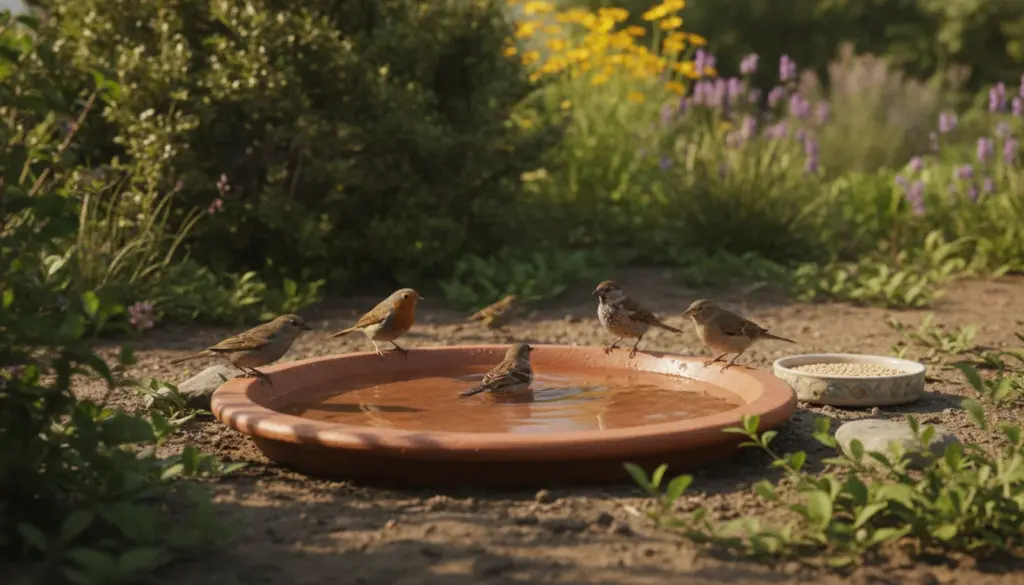
You do not need anything expensive to get started—a flat clay saucer or a repurposed flower pot base works wonderfully as a makeshift basin. To create an inviting bathing spot, ensure the water depth stays between 2.5 and 10 centimeters. This perfectly shallow level allows the animals to wash their feathers and safely cool off from the intense heat.
Finding the ideal location for your setup is actually far more critical than the container itself:
Our winged visitors will only approach a watering hole if they feel entirely secure. While splashing around, they easily lose focus, which unfortunately turns them into easy targets for stealthy neighborhood cats.
For this reason, always position your water bowl near dense trees or shrubs. This provides robins, blackbirds, and other small species with an immediate escape route should danger approach. To guarantee the water remains hygienic, it must be refreshed daily, while the bowl requires a thorough scrubbing with a brush and boiling hot water. For an even safer approach, experts highly recommend rotating between two different bowls, leaving the currently unused one out in the hot sun for natural disinfection.
A well-placed dish or miniature pond quickly becomes a bustling hub of activity, providing a fantastic opportunity for backyard birdwatching. It is incredibly rewarding to watch a chaffinch or great tit dart in for a quick sip, or to observe a lively flock of starlings and house sparrows enjoying an extended group splash.
Summer bird feeding: How to provide the right nutrition
Severe droughts drive earthworms deep underground, leaving parent birds desperately searching for sustenance. You can offer vital energy during the exhausting breeding season by providing high-protein alternatives. Excellent choices include:
- Dried insects
- Small, fat-rich seeds
Pay close attention to the physical size of the snacks you offer out in the yard. Whole peanuts or massive nut pieces pose a severe choking hazard to newly hatched chicks. Additionally, human kitchen scraps like bread or salty leftovers are strictly off-limits and can cause catastrophic harm to their digestive systems.
To successfully stop the spread of dangerous avian infections, vertical feeding silos are vastly superior to traditional wooden houses or open trays. These enclosed dispensers prevent infectious droppings from ever touching the meals. Always remember to clean your dispensing stations routinely and only put out modest portions that will be consumed rapidly by the flock.