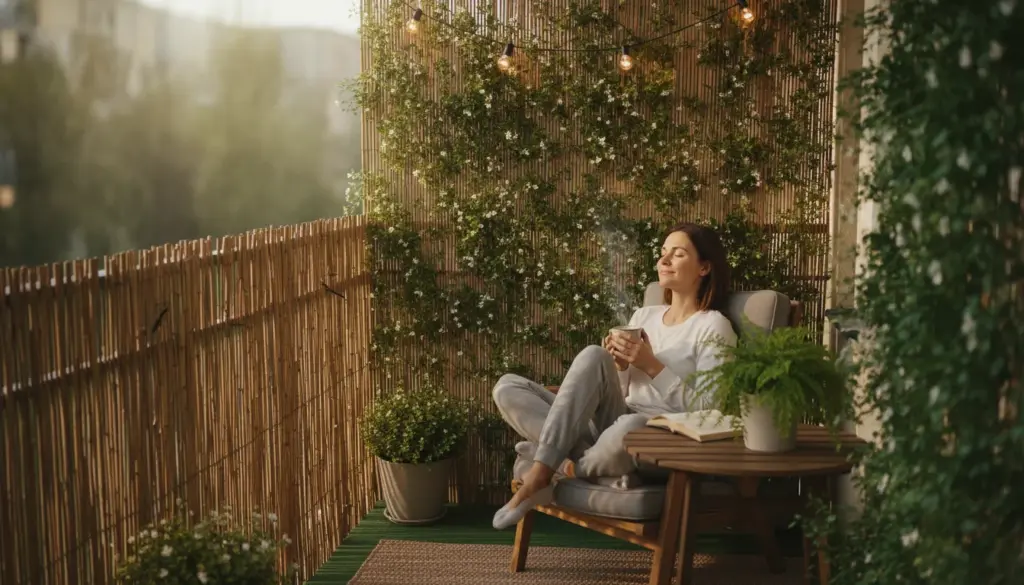
Sitting on your balcony shouldn’t feel like being on a display stage. If you just want to sip your morning coffee without exchanging awkward nods with the neighbor across the street, it is time to upgrade your outdoor sanctuary. Creating a secluded retreat is entirely possible, even if you are renting a compact space. The ideal approach simply depends on where those unwanted glances are coming from.
Shielding the front: Blocking views from the street below
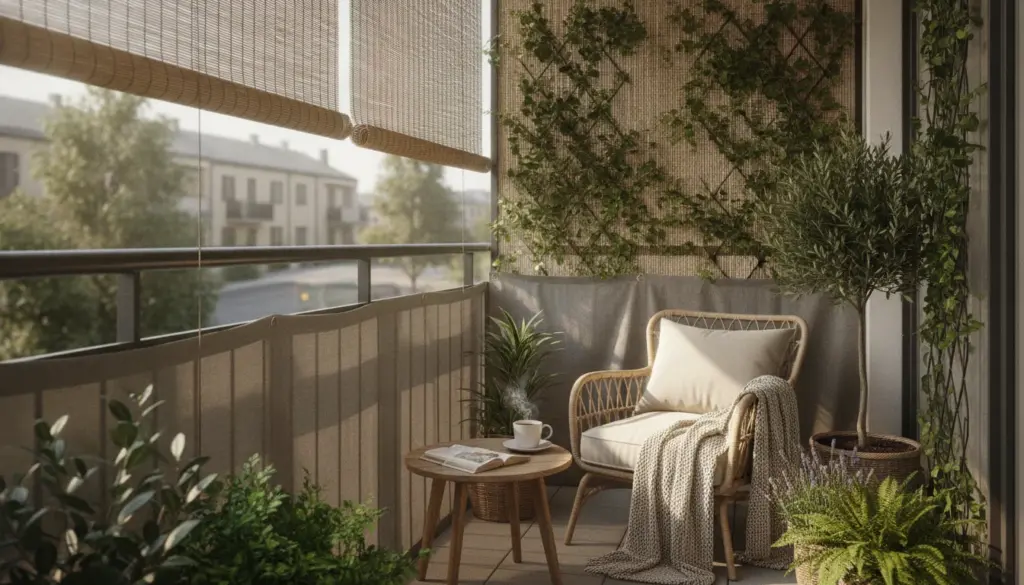
Whether it is a bustling sidewalk or curious ground-floor neighbors, feeling exposed from the front quickly ruins the relaxation. The most straightforward defense mechanism is a weatherproof balcony fabric screen. These typically come equipped with metal eyelets, allowing you to easily secure them to the railing using sturdy cords or zip ties. When selecting your fabric, ensure it is specifically rated for UV and weather resistance so it does not degrade or fade after a single season.
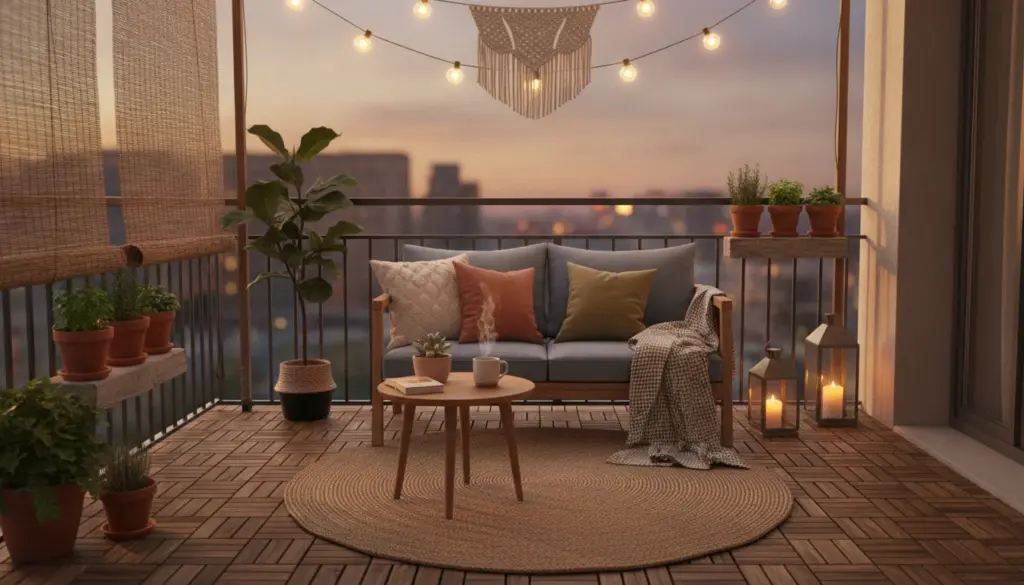
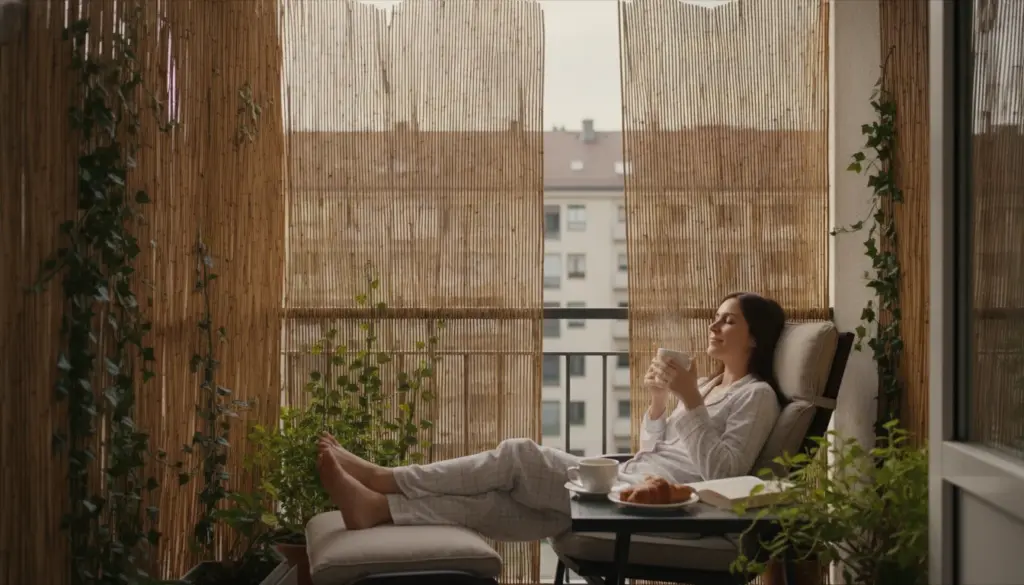
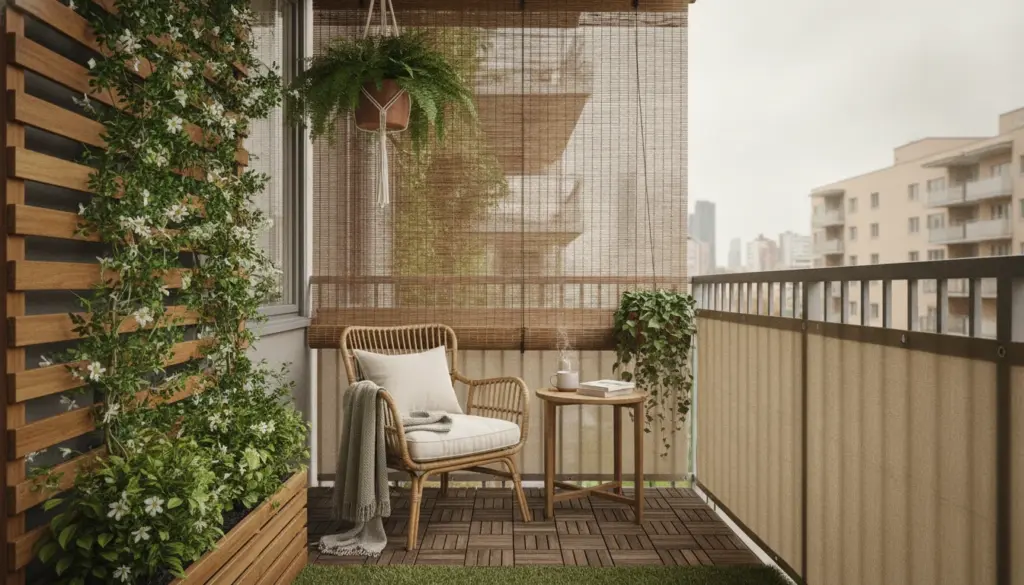
For a more organic aesthetic, privacy mats made of willow, reed, or bamboo are excellent alternatives. These natural barriers can also be quickly fastened to your railing. However, a crucial maintenance tip is to install them slightly above the balcony floor; continuous contact with standing water will cause the natural materials to rot from the bottom up.
The major advantage of both methods is their rental-friendly nature. You won’t need to touch a drill, and you can dismantle the entire setup without leaving a single trace when you move out.
Side defenses: Creating boundaries between neighboring balconies
Modern apartment layouts often place balconies side-by-side, offering a completely unobstructed view into your neighbor’s outdoor living room. Fortunately, you have several effective ways to block this lateral line of sight.
- Folding screens (Paravents): This is a rapid, drill-free, and tenant-friendly fix. Keep in mind that they are vulnerable to strong gusts and require additional anchoring to prevent tipping.
- Solid privacy walls (Plastic, WPC, or Wood): These offer maximum opacity and exceptional stability. While plastic and WPC are essentially maintenance-free, wooden versions require regular upkeep. Be aware that permanent installation typically requires formal approval from your landlord.
- Retractable side awnings: Highly elegant and incredibly space-efficient, making them perfect for tighter areas. Like solid walls, mounting the cassette usually demands property management consent.
- Climbing plant trellises: Visually stunning and easily attached to railings using pipe clamps without causing damage. The downside is the lack of foliage—and therefore privacy—during the colder winter months.
Guidelines for privacy screens in rental apartments
As a general rule, any addition that can be removed without leaving residue is perfectly fine to install. Potted plants and temporary privacy mats rarely need official clearance. Conversely, anything requiring screws or wall anchors—such as heavy awnings or permanent wooden partitions—must receive written permission from your landlord prior to installation. If you are ever unsure about a specific setup, a quick email to property management can save you a lot of trouble and potential fines during your eventual move-out inspection.
Overhead shielding: Blocking views from above
Living in a multi-story building often means the balcony directly above yours has a clear vantage point down onto your seating area. To counter this, you need a horizontal barrier to create a soft, fabric roof.
The most flexible, hassle-free option for renters is a tilting parasol. It pops up instantly, requires zero wall modifications, and can be angled as needed. The trade-off is that the coverage area is quite localized, and even robust umbrellas will struggle against heavy winds.
Alternatively, a tensioned sun sail provides much broader coverage while simultaneously protecting your delicate container plants from intense sunburn. Implementing this requires specific mounting points on walls or freestanding poles, which usually involves drilling and prior permission.
For the ultimate outdoor comfort, motorized retractable awnings are unbeatable. They deploy at the push of a button and withstand various weather conditions reliably. The catch? They are the most expensive investment and strictly require professional facade mounting.
Maximizing privacy on tiny balconies
When dealing with highly limited square footage, every single inch matters. The smartest strategies utilize zero floor space. Rely on railing-mounted fabric or bamboo screens to handle frontal visibility without shrinking your walkable area. Utilize verticality by deploying tall grasses in narrow railing planters or training climbers up a slim trellis. Retractable side awnings are also brilliant here, as they vanish into their housing when not in use. The ultimate rule of thumb: always design upwards, not outwards.
Living privacy screens: Using balcony plants
Constructing a barrier out of vibrant foliage is arguably the most atmospheric way to secure your space. Lush greenery blocks prying eyes while casting cooling shadows, instantly infusing a standard city balcony with a tropical holiday vibe.
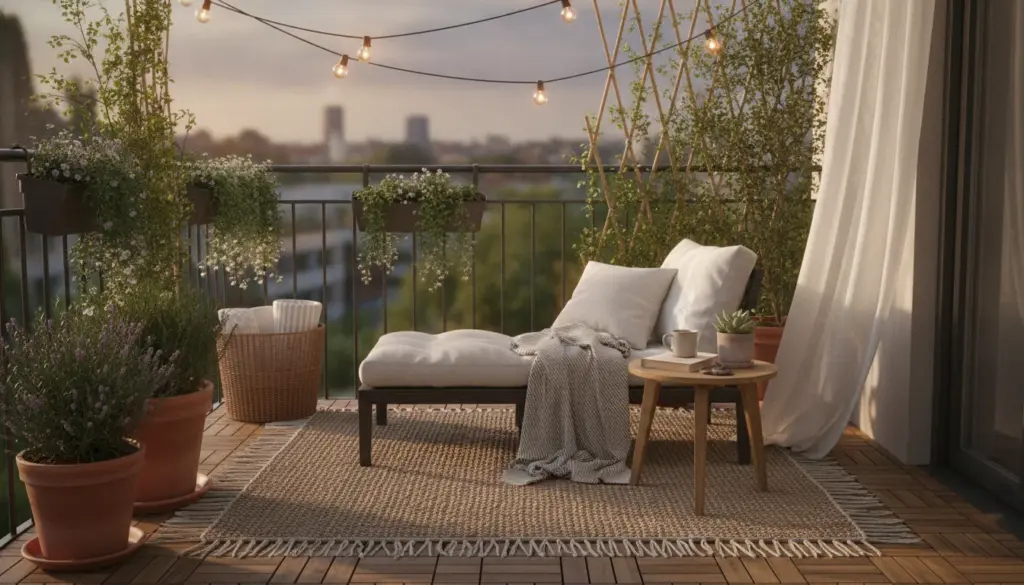
- Classic climbing vines: Trellises offer structural support for a variety of climbers tailored to your specific light conditions. Ivy thrives beautifully on heavily shaded north-facing balconies. Jasmine and Clematis prefer partial to full sun, rewarding you with spectacular scents and blooms. Virginia creeper is a vigorous, sun-loving grower that erupts into brilliant red hues every autumn. You could even opt for bee-friendly varieties or vertically trained vegetables like runner beans and tomatoes. Just remember that establishing a dense, mature leafy wall takes a bit of patience.
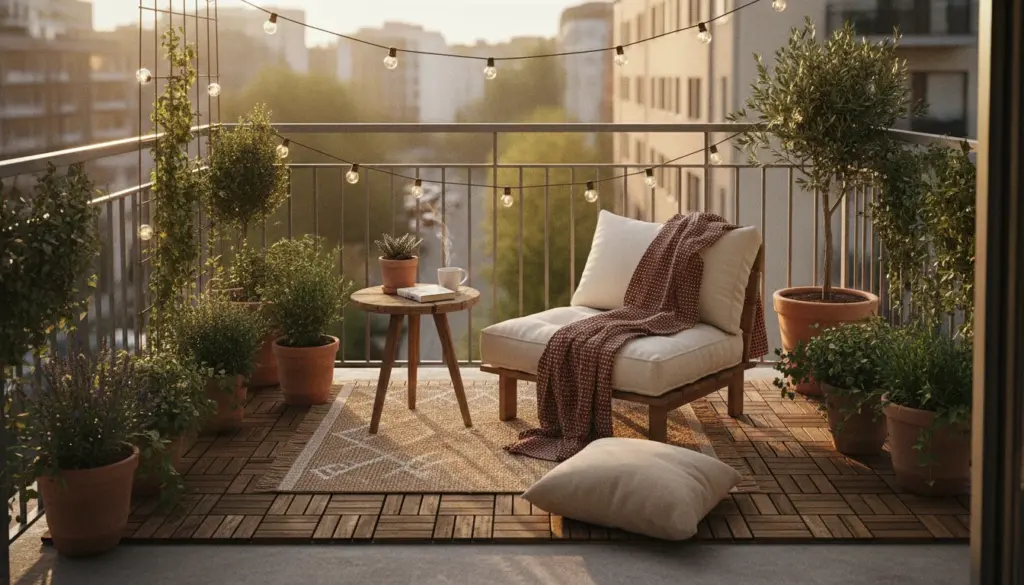
- Towering grasses and bamboo: These species adapt wonderfully to container life. By lining up multiple tall pots densely against the edge, you can instantly obscure the view into your seating area.
- Elevated raised beds: If your floor plan is generous enough, a tall planter box acts as a fantastic physical barrier while offering excellent gardening ergonomics.
The only genuine drawback to a purely botanical screen is the changing of the seasons. Many species drop their leaves as temperatures plummet, leaving you exposed. For guaranteed year-round seclusion, the most effective strategy is layering your lively plants in front of a fixed bamboo mat or fabric background.