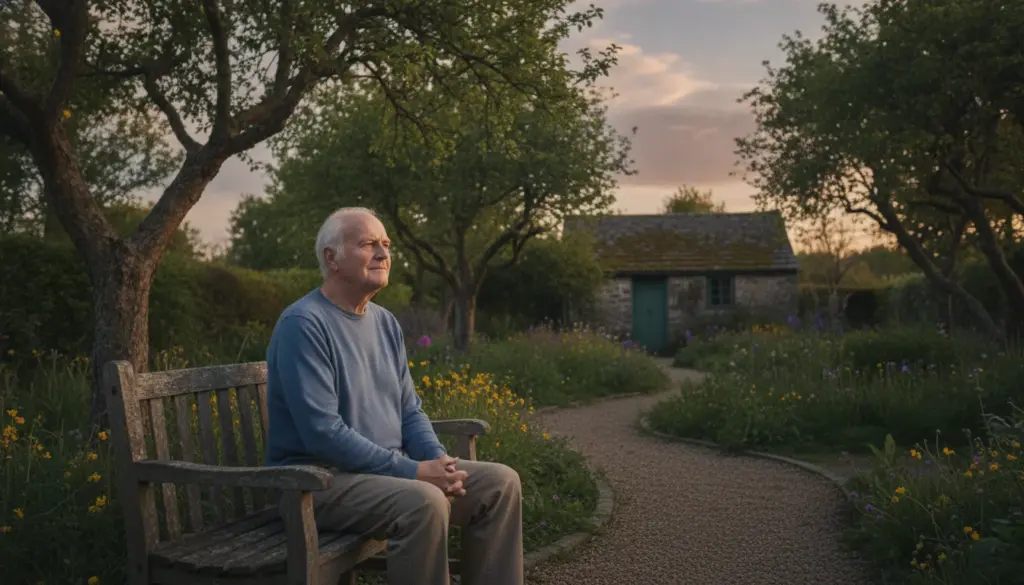

Growing up without a safety net: embracing total self-reliance
Growing up with minimal luxuries and virtually zero expectations surprisingly forged a massive psychological advantage. Behavioral experts are increasingly noticing a fascinating trait among individuals born in the 1950s. It has nothing to do with their legendary work ethic or a nostalgic longing for the past. Instead, it stems from a deeply ingrained belief that nobody else was going to fix their problems.
This pragmatic mindset essentially formed an impenetrable armor against chronic disappointment and an inflated sense of entitlement. Children brought into the world during this post-war decade navigated life without hovering helicopter parents, constant supervision, or quick-fix solutions. Financial resources were usually tight, choices remained limited, and social media simply did not exist to fuel unhealthy comparisons.
Whenever something went wrong, you either figured out a way to fix it yourself, or the situation remained broken. Mental health professionals note that this cohort realized from an incredibly young age that the universe made them no promises. There were no guarantees of a lucrative career, automatic happiness, or unconditional outside support.
While this reality might sound harsh by today’s standards, it produced a highly unexpected outcome. Having profoundly low expectations of the outside world resulted in incredibly high personal effort. When you anticipate very little from others, you rarely feel let down and are far more likely to take immediate action. Confronted with hurdles, members of this demographic instinctively assessed what they could personally do rather than looking around for someone else to blame.
Stress as a psychological vaccine: how minor discomforts build grit
The acclaimed psychologist Donald Meichenbaum formulated a fascinating theory that aligns perfectly with this generational phenomenon: stress inoculation training. The core concept borrows heavily from immunology. Just as a traditional vaccine works by introducing a tiny, harmless dose of a pathogen to help the body manufacture antibodies, psychological tension functions in a strikingly similar manner.
Experiencing small, totally manageable doses of adversity actively helps human beings cultivate deep emotional resilience. However, the precise dosage is absolutely critical for success:
- Overwhelming stress: The nervous system becomes completely flooded, causing individuals to shut down entirely.
- Insufficient stress: Absolutely no mental fortitude or coping mechanisms are developed.
- Manageable stress: People realize they can successfully handle difficult situations and draw vital lessons from the experience.
Kids in the fifties were constantly exposed to exactly this type of highly manageable tension. If you scraped your knee, you simply went inside and found your own bandage. If you wandered slightly off the path while walking home, you figured out the route back without relying on a digital map. If you failed an important exam at school, your parents certainly did not call the teacher demanding a grade change.
These incidents were not severe traumas, but rather repeatable, totally solvable daily puzzles. By continuously tackling these minor roadblocks independently, they gained something that pure comfort can never provide. They acquired tangible, experiential proof of their own capability.
The mental control panel: understanding the locus of control
Back in the fifties, the influential American psychologist Julian Rotter introduced a groundbreaking concept known as the locus of control. This fascinating psychological framework simply asks where an individual places the ultimate responsibility for their life’s direction.
Clinical research consistently demonstrates that people possessing a strongly internal locus of control exhibit much more perseverance, maintain higher motivation levels, and navigate setbacks significantly better. Interestingly, a measurable and profound shift has occurred across different generations. Average university students tested in the 2000s scored drastically more “external” than the student population assessed throughout the sixties.
What used to be a rare psychological outlook has essentially become the modern default. Youth in the 1950s witnessed a remarkably direct correlation between their personal actions and the resulting consequences. There were no convenient apps to simplify tedious tasks, no parents aggressively managing their academic responsibilities, and very few societal safety nets ready to catch them before they stumbled.
Failing to complete homework resulted in a failing grade. Putting in serious effort generally yielded positive results. Consequently, a powerful conviction took root: personal actions truly matter.
Strength through suffering? The myth of unmanageable pain
A dangerous misconception frequently circulates: the harder your life is, the tougher you ultimately become. However, extensive behavioral research heavily nuances this romanticized idea. The famous Kauai Longitudinal Study, pioneered by psychologist Emmy Werner, tracked nearly 700 babies born in Hawaii during 1955 all the way into their middle age.
A significant portion of these subjects grew up surrounded by severe poverty, chronic illness, or deep familial dysfunction. Crucially, not everyone emerged from these harsh conditions stronger. Only about a third of this high-risk group managed to develop into highly stable, responsible adults. These resilient individuals all shared a few specific protective factors:
- A secure emotional bond with at least one incredibly dependable adult figure.
- Consistent opportunities to make independent choices and personally tackle dilemmas.
- An engaging temperament that naturally invited social participation rather than total withdrawal.
The ultimate takeaway is remarkably clear. Suffering simply for the sake of suffering does not magically build character. What truly fosters growth is encountering hardship within an environment where the individual retains some agency, preventing them from feeling completely overwhelmed by the sheer scale of the problem.
Fifties parenting instinctively gave kids just enough breathing room to figure things out alone. It was rarely gentle, but it powerfully taught them that they held influence over their own destiny.
From accepting discomfort to modern entitlement
Many modern behavioral experts view the absolute opposite of resilience not as inherent fragility, but rather as an overwhelming sense of entitlement. This is the ingrained belief that daily existence is supposed to be endlessly pleasant, perfectly fair, and completely frictionless.
When someone firmly holds this conviction, they immediately interpret any minor inconvenience as a fundamental flaw in the universe, rather than a completely normal aspect of being alive. Adopting a highly external orientation naturally breeds a very specific behavioral loop:
- Everyday hurdles are interpreted as things that simply “happen to you” unjustly.
- A strong expectation forms that other people must urgently intervene or provide compensation.
- Showing grit feels entirely pointless, because the perceived power to fix the issue lies completely outside oneself.
The demographic raised mid-century simply did not have the luxury to view the world through such a lens. There was absolutely no expectation that a magical savior would swoop in to right every perceived wrong. Ironically, this incredibly blunt reality provided a unique kind of freedom. If nobody is coming to your rescue, you have no choice but to try fixing it yourself.
Why this mid-century mindset still matters today
Very few people genuinely want to time-travel back to the fifties. Pervasive sexism, a total disregard for mental health awareness, and rigid societal roles offer plenty of distinct disadvantages. Nevertheless, there is immense value in extracting the core psychological principles that were unconsciously passed down during that era.
True tenacity flourishes only when human beings repeatedly experience that they can personally make a tangible difference, even if that impact feels incredibly small at first. For modern parents and contemporary educators, this reveals a handful of highly actionable strategies:
- Allow kids the space to resolve minor squabbles or daily puzzles themselves, even if the process takes significantly longer.
- Resist the overwhelming urge to immediately intervene at school, sports practice, or a part-time job the second a disappointment occurs.
- Actively validate and celebrate their raw effort, rather than exclusively praising the final outcome.
- Demonstrate how you personally navigate failure with grace, rather than hiding your adult mistakes behind closed doors.
Fully grown adults can also actively strengthen their own internal locus of control. This journey frequently begins by intentionally seeking out tiny, mildly uncomfortable challenges where outside assistance is completely unavailable. Consider picking up a complex new skill without a hovering manager or a dedicated mentor checking your progress.
The learning curve will undoubtedly feel sluggish and occasionally infuriating. Yet, every single step forward provides undeniable proof that genuine progress stems from your own sheer willpower.
Navigating uncertain times with a resilient worldview
Our current society operates entirely on extreme convenience. We expect lightning-fast deliveries, seamless automatic software updates, and hyper-responsive customer service departments capable of fixing any grievance instantly. While boundless comfort is undeniably pleasant, the hidden danger is that every minor glitch suddenly feels like a catastrophic failure.
Meanwhile, massive modern shifts—spanning from unstable labor markets to chaotic housing situations—desperately require persistent individuals who refuse to quit at the very first sign of friction. This exact paradox explains why behavioral researchers are passionately re-examining generations raised with incredibly low expectations of life, but exceptionally high expectations of themselves.
The goal is never to romanticize a flawed bygone era, but to deeply understand the underlying psychological mechanics. When you truly view yourself as a capable agent of change, you automatically sustain effort longer in your career, relationships, academics, or entrepreneurial pursuits.
Real-world application always trumps abstract theory. Launching a small business without a hefty financial safety net, pivoting into an entirely new career path in your forties, or struggling to master a musical instrument later in life all present the same harsh reality. They force you to confront the exact same underlying message the fifties generation absorbed in their youth.
Absolutely nobody can guarantee your success, and every worthwhile endeavor demands exhausting effort. Yet, nestled right inside that friction lies the ultimate opportunity to forge unbreakable mental toughness. Embracing this stark truth rarely guarantees an easier path, but it consistently paves the way for a much sturdier, deeply fulfilling existence.