Why a Heavy Downpour Rarely Soaks the Soil
As soon as dark clouds gather, many plant enthusiasts happily put away their watering cans. We naturally assume nature is taking care of the irrigation. However, relying solely on a passing shower can quietly leave your greenery parched. The precise way precipitation hits the ground, flows away, or gets absorbed makes a massive difference to the underlying root systems.
A massive thunderstorm might leave your patio completely soaked, giving the illusion of a thoroughly drenched yard. Yet, intense precipitation drops water so rapidly that the earth’s surface quickly seals up. Instead of seeping downwards, the moisture simply runs off. Consequently, you are left with sparkling walkways, but roots resting in completely bone-dry dirt.
Violent cloudbursts typically only moisten the top few millimeters of earth. Meanwhile, the vital root zones usually sit comfortably ten to thirty centimeters below the surface. What truly matters for plant hydration is not the volume of water falling from the sky, but the exact amount that successfully penetrates the root area. In agricultural practice, a gentle, continuous drizzle does far more to boost deep soil moisture than a dramatic ten-minute thunderstorm.
- Intense showers: Deliver massive volume rapidly, causing high surface runoff and minimal deep penetration.
- Prolonged light rain: Minimizes runoff and allows for optimal soil absorption.
- Brisk winds: Accelerate surface evaporation rapidly, even while the landscape appears drenched.
The Illusion of a Soaked Garden
Dripping foliage, overflowing saucers, and wet pavements all signal that adequate watering has occurred. Nevertheless, a quick manual inspection often reveals a different reality. Digging just five centimeters down might expose earth that remains entirely powdery. Compacted or clay-heavy areas are especially prone to this issue, as rainfall creates a slick crust on the top layer while the interior stays completely arid. Greenery responds to this hidden dehydration through stunted growth, wilting foliage, or crisp brown edges.
The Hidden Umbrella Effect of Dense Foliage
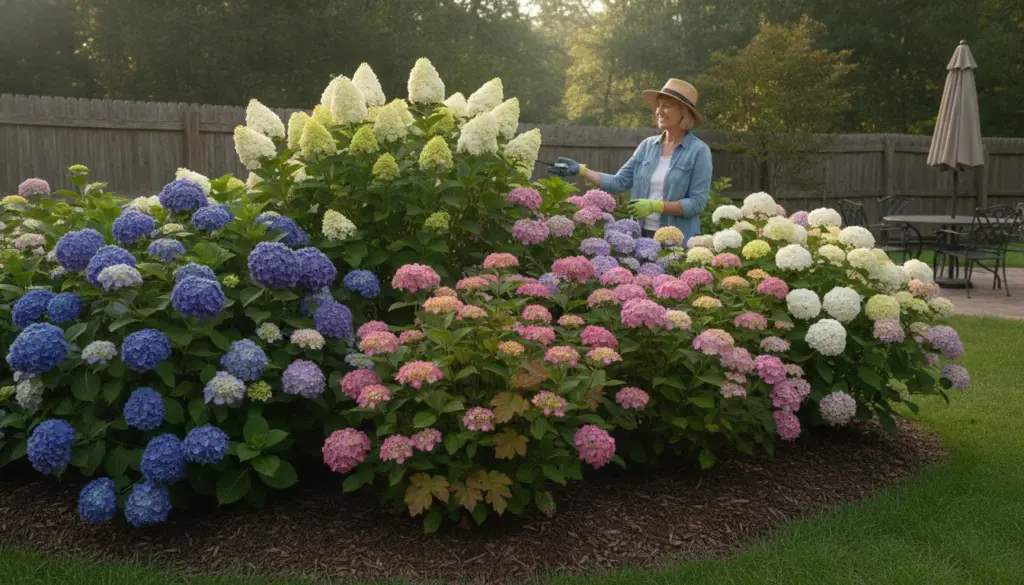
A lush, expansive canopy feels like a horticultural victory, yet a surprising phenomenon occurs beneath that verdant dome. Broad-leaved species such as hostas, rhododendrons, hydrangeas, and courgettes literally function as organic umbrellas. As raindrops hit the upper leaves, moisture travels along the outer edges and drips safely away from the center. Right in the middle, directly above the primary root ball, the earth remains shockingly arid.
Even after several consecutive days of gloomy weather, you might discover dusty dirt hidden beneath a mature shrub. This shielding effect intensifies during the robust spring growth period. Shrubs invest heavily in dense foliage to capture sunlight, inadvertently blocking out the vital precipitation their root systems desperately require.
Detecting Hidden Droughts Near Large Specimens
Mature hedges, packed borders, and established bushes frequently develop a unique microclimate. They look incredibly lush from above, yet suffer from chronic dryness near the base. If you only evaluate the visible canopy, you might falsely assume the soil is completely saturated.
A quick physical check reveals the truth:
- Get low: Kneel down and physically touch the dirt right next to the main stems.
- Dig slightly: Scrape away the top layer using a small hand trowel.
- Evaluate color: Determine if the earth is pale and crumbly, or dark and distinctly damp.
Even famously resilient, low-maintenance varieties experience significant dehydration stress in these shielded zones. If you notice foliage drooping helplessly while it is actively raining, it serves as a clear distress signal.
Why Potted and Balcony Plants Miss Out on Rain
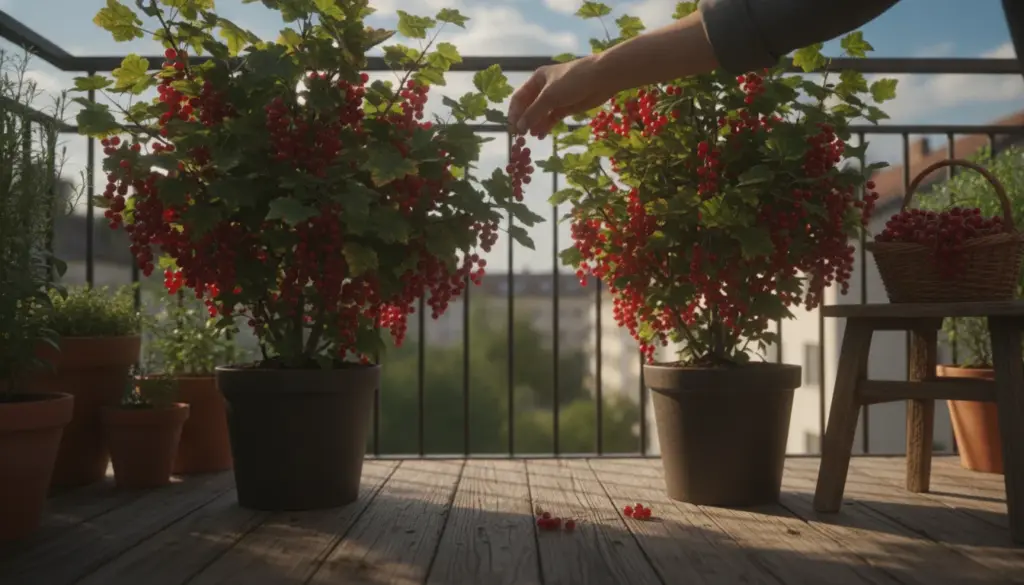
Urban gardeners face an entirely different set of environmental challenges, primarily dictated by architecture. Deep loggias, overhanging eaves, and balconies situated directly above yours effectively block natural rainfall. Precipitation almost never drops perfectly straight down. Driven by the wind, rain usually slants heavily to one side. You might be standing at an open window getting splashed, while the containers sitting flush against your wall remain perfectly dry.
You can spot this architectural shielding when:
- Container rims stay completely devoid of moisture.
- Drainage saucers hold absolutely no accumulated puddles.
- Foliage surfaces show zero water droplets following a storm.
The Rapid Evaporation of Potting Soil
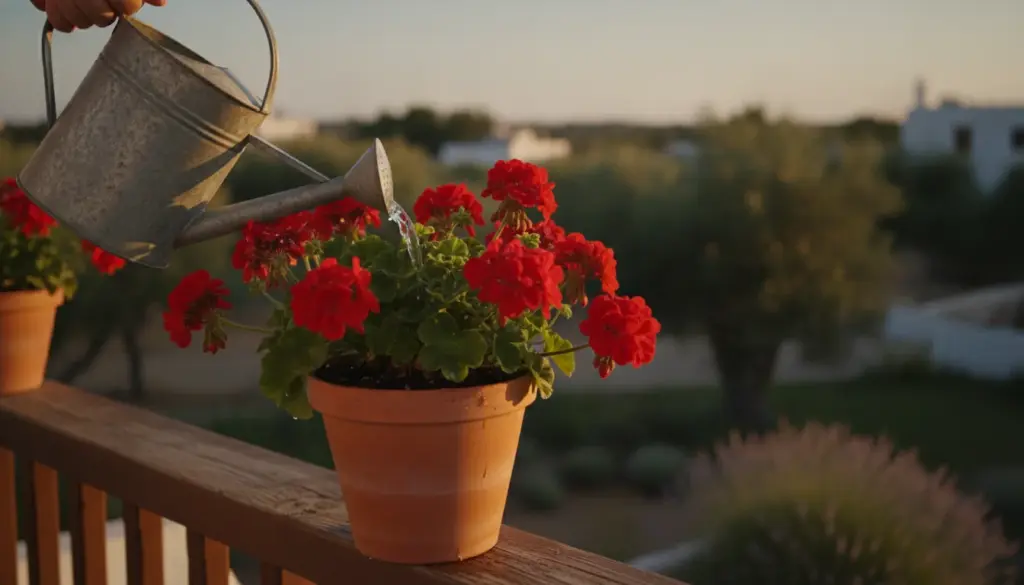
Container-grown greenery relies on a highly restricted root ball, usually confined to just a few liters of substrate. There is virtually no moisture buffer. Unlike garden varieties that can send roots deeper to hunt for hydration, balcony specimens depend entirely on what you provide or what directly falls into the planter. If the weather bypasses the container, manual hydration becomes absolutely essential, regardless of how dreary the afternoon appears.
Air circulation further complicates the situation. Elevated terraces and balconies typically experience much stronger wind currents than sheltered ground-level beds. This constant breeze rapidly accelerates evaporation from potting mixes, especially when the sun occasionally breaks through passing clouds.
Effective Methods to Test Soil Moisture
You certainly do not need advanced technological gadgets to monitor your plant’s hydration levels. The most reliable assessment method requires merely a few seconds of your time. By simply inserting a finger deep into the dirt, you gain immediate tactile feedback. This straightforward habit quickly builds an intuitive understanding of microclimates. You will soon realize that a vine growing against a warm fence dries out drastically faster than the exact same species planted in an open border, despite receiving identical weather conditions.
The Container Weighing Technique
For hanging baskets, smaller planters, and houseplants enjoying a summer vacation outdoors, the lifting method proves incredibly effective. Simply hoist the container with one hand right after a thorough soaking and memorize that specific heaviness. During future inspections, use that baseline for comparison. An unusually light planter almost always indicates a parched root system, no matter how heavily the storm is raging outside.
Consistently repeating this lifting exercise builds excellent muscle memory. After just a few weeks of practice, you will be able to instantly gauge hydration needs in a single fluid motion.
The Surprising Benefits of Watering in the Rain
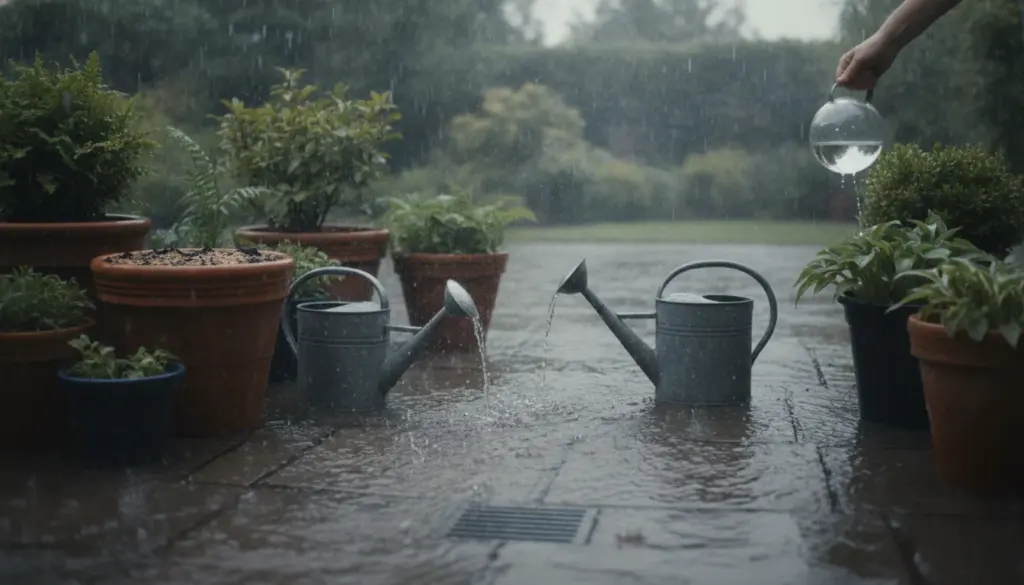
Grabbing a watering can during an active downpour seems highly counterintuitive. Yet, dreary days offer distinct horticultural advantages. High ambient humidity combined with practically zero evaporation creates the perfect environment for rehydrating stubborn, compacted potting soil.
Severely parched potting mixes often become completely hydrophobic, violently repelling moisture. When this happens, liquids simply rush down the inner sides of the plastic container, leaving the central root mass totally dry. By applying lukewarm water slowly during damp weather, the compacted substrate finally gets the necessary time to gradually absorb and retain moisture.
Many experienced horticulturalists harvest precipitation in rain barrels specifically to hydrate sheltered containers during gloomy weather. Blending naturally soft rainwater with a humid atmosphere prevents wasteful runoff and actively restores the soil’s structural integrity.
Targeting the Overlooked Zones
While the open lawn appears drenched, take a moment to visit your garden’s dry pockets. Focus your efforts directly beneath large structural plants, near building facades, and below architectural overhangs. Aim your spout as close to the foundational stem as possible, directly targeting the specific area shielded by the foliage canopy. Applying moisture gradually across several small sessions ensures the earth absorbs it thoroughly, rather than immediately shedding it away.
Building a Smarter Hydration Strategy
Rainy seasons provide the perfect opportunity to critically observe your landscape’s drainage patterns. Notice exactly where puddles form and where moisture quickly disappears. Understanding these natural pathways allows you to strategically relocate certain specimens or select drought-tolerant varieties for chronically dry spots, like placing resilient herbs directly under a roof overhang.
Applying a generous layer of organic mulch—such as shredded leaves, grass clippings, or wood chips—offers immense benefits. This protective blanket drastically slows surface runoff, maintains a looser soil structure, and significantly reduces evaporation rates. By combining strategic mulching with targeted hydration during wet weather, you systematically cultivate a far more resilient, water-efficient micro-ecosystem across both your garden beds and container displays.