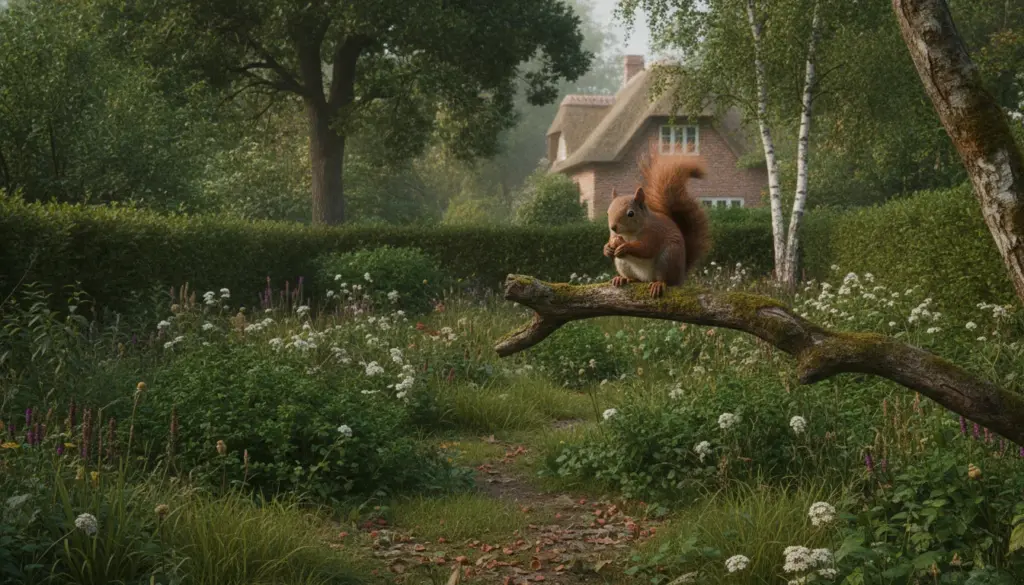
A Bushy Red Tail Signifies a Thriving Mini-Forest
A sudden russet blur darting along the hedgerow, freshly cracked hazelnut shells scattered beneath shrubs, and tiny, freshly dug pits in the turf usually mean one thing: your outdoor space is shifting from a neatly raked showcase into a thriving habitat. Sightings of the charming red squirrel are becoming increasingly common in our backyards. When this agile creature claims a patch of your property, it signifies a profound ecological transition. Your yard is no longer merely a backdrop; it functions as a vibrant, interconnected mini-forest supporting countless plant and animal species.
Spotting a bushy-tailed visitor often brings to mind stolen nuts or uprooted flower bulbs, but their presence actually delivers a powerful ecological message. These nimble rodents are highly selective about their territories. If you regularly spot one, your local greenery likely provides the perfect puzzle pieces of shelter, shrubs, and mature trees.
To feel genuinely secure, a squirrel prefers navigating via interconnected branches, keeping ground-level leaps to an absolute minimum. Tree canopies that brush against one another create vital aerial bridges. Observing them leaping seamlessly from branch to branch above your lawn proves your property is integrated into a dynamic natural network.
This valuable corridor effect emerges when your property links up with surrounding greenery. Such pathways might include an overgrown mixed hedge, a line of mature fruit trees along the fence, or a nearby woodland patch. These elevated highways allow safe passage between territories, simultaneously providing safe travel routes for local bats, songbirds, and beneficial insects.
Dead Wood and Wild Corners: The Hidden Architecture of Survival
Many homeowners instinctively prune away dead wood or fill in hollow trunks, viewing them as unsightly hazards. However, from an arboreal perspective, these untouched imperfections are premium real estate. A hollow apple tree or a thick, decaying limb offers the ultimate sanctuary for building nests, resting, or escaping harsh weather.
Wildlife experts recognize these natural cavities as essential arboreal fortresses. Placed high and dry, surrounded by a maze of twigs, these shelters effectively deter predators like domestic cats or birds of prey. Furthermore, leaving messy garden corners untouched provides critical emergency cover. Piles of fallen leaves, stacked brushwood, and dense undergrowth like ivy or brambles offer immediate hiding spots when danger strikes overhead. Preserving a decaying branch isn’t a landscaping failure; it is a life-saving refuge for neighborhood wildlife.
The Red Squirrel as Your Unpaid Head Gardener
Beyond being highly entertaining backyard acrobats, these russet mammals unknowingly act as the neighborhood’s most dedicated tree planters. They obsessively forage for acorns, beechnuts, pine seeds, and hazelnuts, burying massive caches deep into the soil across their territory.
Inevitably, a portion of this buried treasure is completely forgotten. These neglected stashes eventually sprout, resulting in young oaks or hazel bushes popping up in entirely unexpected places. Wherever a forgotten nut takes root, the next generation of woodland begins to grow.
Their diet extends far beyond seeds, too. By foraging for tree buds, wild berries, fungi, and wood-boring insect larvae, they actively help control certain pest populations. While they might occasionally pinch a ripe strawberry, they compensate by aerating the soil, managing insect loads, and single-handedly planting tomorrow’s canopy.
Why Winter Gardens are Crucial for Survival
Unlike hedgehogs and various other small mammals, red squirrels do not hibernate. Their metabolic rhythm slows down slightly, but they remain active foragers throughout the freezing months. That meticulously hidden autumn stash serves as their primary life insurance policy. Yet, during prolonged freezes, these vital reserves can run dangerously low, particularly for pregnant females requiring immense energy.
If you wish to support them during severe weather, consider offering a temporary feeding station stocked with unsalted nuts, black sunflower seeds, or a specialized foraging mix. Always position supplemental food at least six feet off the ground, securely fastened near a sturdy trunk. Ensure the location is quiet, far from busy patios, and completely inaccessible to neighborhood cats. Remember that modest, seasonal support is always better than keeping a feeder overflowing year-round, which can foster unhealthy dependency.
Protecting Your Harvest While Welcoming Wildlife
Inviting wild rodents into your cultivated space can occasionally test your patience. Dug-up flower bulbs, raided bird feeders, and nibbled fruit can easily clash with the desire for a pristine yard. Fortunately, practical compromises can keep both the gardener and the wildlife perfectly happy.
A few strategic adjustments can protect your harvest without banishing your visitors. Try wrapping the base of young fruit trees with fine wire mesh to prevent bark damage. Applying a heavy layer of mulch over dormant flower bulbs encourages these foragers to dig elsewhere in looser, unprotected soil.
To safeguard your avian visitors’ meals, invest in bird feeders equipped with protective outer cages. Providing a dedicated, separate feeding platform specifically for the squirrels, placed well away from your prized vegetable plots, naturally redirects their energy. Embracing the reality that an outdoor space is a dynamic ecosystem rather than a sterile showroom transforms occasional mischief into an acceptable part of cohabitation.
Observing the Acrobat: Keep Your Distance
Despite their seemingly bold and endlessly curious demeanor, we must remember that these are deeply instinctive wild animals. They are incredibly prone to stress. Should you unexpectedly lock eyes with one while stepping outside, freeze immediately. Avoid making sudden gestures and refrain from staring directly into its eyes.
By granting the animal a few seconds to assess the threat level, it will usually relax and resume its foraging or climbing. Attempting to approach, pet, or corner the creature will trigger immense terror and could easily provoke a defensive bite. Never attempt to hand-feed a wild squirrel, as habituating them to human contact draws them dangerously close to glass windows, busy terraces, and predatory pets.
Practical Steps to a Wildlife-Friendly Yard
Transforming an ordinary plot into an inviting habitat requires only a few deliberate landscaping choices. Simply allowing at least one native tree to reach its full natural height, rather than aggressively topping it, provides an essential canopy anchor.
Consider planting mixed hedgerows utilizing species like hawthorn, field maple, or hazel, and stretch out your pruning schedule to ensure dense cover remains available year-round. Designating a specific wild corner for fallen leaves and stacked timber works wonders. Instead of enthusiastically weeding every single sapling, carefully select a few self-seeded natives to reach maturity.
These gradual adjustments create a beautiful, layered mosaic of open sunlight, dappled shade, and impenetrable thickets. This structural diversity acts as a magnet not just for acrobatic rodents, but for amphibians, foraging hedgehogs, and melodic songbirds.
Decoding Behavior: What They Reveal About Your Landscape
Observing exactly how these visitors navigate your property yields fascinating insights into your local habitat’s structural health. Their daily routines serve as a natural diagnostic tool.
- Frequent ground travel: If they constantly sprint across the grass, your canopy is too sparse. The gaps between mature trees are too wide, signaling a need for additional tall shrubs or a new sapling.
- Autumn-only appearances: Spotting them solely during the fall harvest indicates your yard acts merely as a temporary pantry. Introducing evergreen shrubs could stretch their visits through the winter.
- Raiding the bird table: A constant presence at your seed silos suggests natural foraging options are scarce. Planting native, berry-producing bushes reduces their reliance on your purchased seed.
- Heard but rarely seen: Hearing their chattering but failing to spot them is actually the highest compliment. It signifies optimal canopy density and profound tranquility, making your yard a premium core territory.
Essential Ecology Glossary for the Modern Gardener
As you dive deeper into cultivating a naturalistic landscape, certain professional ecological concepts frequently pop up. Understanding this terminology helps clarify exactly what is happening right outside your back door.
- Micro-forest: This refers to a space mimicking the complex, multi-layered architecture of young woodlands. It features tall canopy trees, mid-level brush, ground-level herbs, and rich leaf litter. True success depends on vertical layering, not sprawling acreage.
- Ecological corridor: A continuous, unbroken ribbon of vegetation that enables safe wildlife migration. Overlapping tree crowns, dense neighborhood hedgerows, and connected green spaces all form these vital transit routes.
- Mycorrhizal networks: An intricate underground alliance between soil fungi and plant roots. Trees trade vital sugars in exchange for hard-to-reach minerals and water. By consuming and excreting wild mushrooms, our bushy-tailed friends actively spread these beneficial fungal spores across the soil.
Grasping these intricate natural mechanisms highlights why a single visiting rodent is far more than mere backyard entertainment. They act as living barometers of ecological health. Wherever you see them confidently leaping and burying their treasures, you can be certain your outdoor space has successfully transformed from a sterile patch of grass into a thriving, deeply interconnected natural sanctuary.