Houseplants can easily cause mild panic for their caretakers. Finding sudden moisture on your foliage the next morning often leaves plant lovers scratching their heads. The explanation behind this overnight occurrence is wonderfully straightforward.
The Mystery Behind Droplets on Monstera Leaves
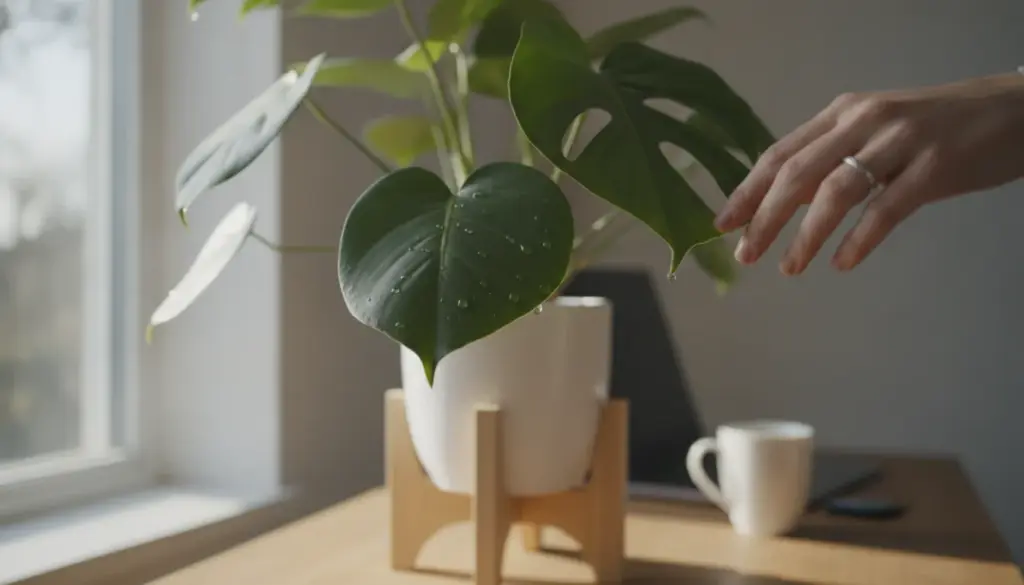
An online forum member named Hoplite_26 recently experienced exactly this situation. Upon waking up, they noticed something peculiar on their Monstera deliciosa: distinct beads of liquid resting on several leaves. The shared photograph displayed a vibrant, lush plant housed in a white container elevated by a wooden base, where the classic dark green foliage with deep fenestrations was clearly visible. Two specific areas were highlighted with orange circles to point out the moisture, and while the image cannot be conclusively verified, it appears entirely genuine.
In the accompanying text, the plant parent explained they had provided a drink the previous day and feared they had given too much. This worry was compounded by confusing guidance from a local botanical shop, where staff had previously claimed the tropical beauty was far too dry and needed a strict watering schedule. By early June 2026, the post had gathered 73 upvotes from the community.
Understanding the Process of Guttation
Many indoor jungle enthusiasts are unaware that this specific behavior is scientifically known as guttation. During this process, the organism actively pushes internal moisture out through tiny, specialized pores located along the margins and points of the foliage. Observers frequently compare this visual to morning dew or plant sweat. Once the moisture evaporates, faint white marks are often left behind, which are simply mineral salts and other natural compounds dissolved in the fluid.
Expert Tip: Gently wipe away the guttation moisture with a damp microfiber cloth. This simple maintenance step prevents those stubborn mineral rings from staining your beautiful leaves or damaging delicate surfaces like windowsills and hardwood floors.
This botanical mechanism shows that the water transport system is functioning perfectly, typically occurring under these specific conditions:
- Saturated soil: The potting mix contains plenty of moisture from a recent watering.
- Elevated humidity: High moisture in the ambient air prevents normal leaf transpiration.
- Early hours: The phenomenon is most prominent right before sunrise.
A Widespread Phenomenon Among Houseplants
The most helpful response in the thread offered a deep dive into the science of guttation. The commenter reassured everyone that the expelled liquid is completely non-toxic and will not ruin home furnishings, though they noted that giant plant specimens could make the surrounding floor a bit messy.
Another participant summarized the general sentiment perfectly, noting that their own green companions exhibit this behavior constantly while thriving. This weeping effect is absolutely not exclusive to the Monstera family. One contributor mentioned their initial shock upon first seeing it, adding that they have witnessed the same moisture release on Peace Lilies and even Pothos vines. The overarching consensus in the digital community is clear: there is absolutely no reason to panic.
Frequently Asked Questions About Plant Weeping
Does this mean the potting soil is too wet?
Not inherently. The presence of these drops primarily confirms robust vascular health and effective moisture uptake. However, if your indoor greenery exhibits constant, heavy guttation, it may suggest the root zone remains consistently damp, meaning you should slightly adjust your routine to prevent root rot.
Can this process harm the foliage?
For the vast majority of cases, it is completely safe. On rare occasions involving excessive fertilizer application, the mineral concentration within the expelled fluid might be strong enough to cause minor edge burns. Usually, the remaining white crust is nothing more than a temporary cosmetic nuisance.
How does guttation differ from regular dew?
Moisture generated by guttation originates from deep within the plant’s vascular system and is actively pumped out through specific glands. In contrast, dew is simply atmospheric humidity that condenses externally across the entire flat surface of the foliage. Because of this structural distinction, you will almost exclusively find guttation beads clustered at the very edges and pointy tips of the leaves.