The Hidden Culprit Behind Mossy Lawns
Many homeowners assume that throwing expensive fertilizers at their yard is the ultimate secret to eradicating moss. In reality, the root cause usually hides in a much simpler mechanical setting. The exact position of your lawnmower blades dictates whether you cultivate a lush, vibrant yard or invite invasive growth. Shaving off just a tiny bit too much or too little can dramatically weaken healthy turf while giving moss the perfect opportunity to take over.
Why Cutting Height Changes Everything
It helps to think of your yard not as a static outdoor carpet, but as thousands of individual living plants. Every single blade relies on its leaves to capture sunlight, storing energy through photosynthesis to nourish the underground root system. When you slice those blades down too far, the plant faces severe exhaustion.
Leaving adequate length provides a larger surface area for sunlight absorption, which directly encourages roots to push deeper into the earth. A deeper root system unlocks better access to underground moisture and essential nutrients, creating a highly resilient turf that easily survives scorching heat and dry spells.
Essentially, your equipment’s dial decides the fate of your yard. Scalping the grass forces it to drain its emergency energy reserves. The roots become dangerously shallow, while the exposed soil quickly heats up and dries out. Soon, the blades turn a sickly yellow, creating bare patches that act as VIP landing zones for weed seeds and moss spores.
Conversely, letting the turf grow excessively long creates a different set of problems. A dense, suffocating layer of dead organic matter and old clippings—known as thatch—builds up at the soil level. This soggy, unventilated blanket traps moisture perfectly, creating a damp paradise where moss thrives effortlessly.
The Ideal Height for Every Situation
There is no universal magic number that works for every single property. The perfect length depends entirely on your specific environmental conditions and daily foot traffic.
Sunny areas: 4 to 5 centimeters
For a standard family yard basking in full sunlight—where kids play, dogs run, and weekend barbecues happen—aiming for 4 to 5 centimeters is generally your safest bet. The turf stays dense and looks well-manicured, yet retains enough foliage to stay robust.
- Under 3 cm: Massive risk of sun scorching and rapid dehydration.
- Around 4–5 cm: The sweet spot for aesthetic appeal and biological strength.
- Over 6 cm in full sun: Increases the likelihood of thatch buildup and subsequent moss invasions after rainy weeks.
Shady and damp spots: 6 to 8 centimeters
Grass struggling under large trees or shadowed by a north-facing wall desperately craves sunlight. Allowing a taller leaf surface helps the plant harvest whatever meager light is available. Adjusting your deck to between 6 and 8 centimeters usually yields the best results in these gloomy corners. The extra foliage offsets the sun deficit, cools the soil to prevent evaporation, and naturally outcompetes moss. Buzzing these areas short almost guarantees a frail, yellowed patch where moss quickly claims victory.
Fine ornamental lawns
If you maintain a pristine, decorative yard featuring delicate grass varieties that rarely see foot traffic, you can safely drop the deck lower. Heights around 2 to 2.5 centimeters are utilized for those flawless, bowling-green aesthetics. However, this look demands rigorous, expert-level maintenance: frequent mowing, precise feeding schedules, diligent irrigation, and routine aeration. For the average homeowner, staying near 4 to 5 centimeters is vastly more forgiving.
The Golden One-Third Rule
Professional groundskeepers swear by an unbreakable rule: never chop off more than one-third of the total grass height during a single session. If you return from vacation to find your yard standing at 9 centimeters, do not immediately hack it down to 3 centimeters. Instead, trim it to 6 centimeters first, let it recover, and lower it again a few days later.
Removing a maximum of one-third minimizes biological shock to the plant and drastically lowers the chances of a moss invasion. Naturally, adhering to this principle requires bringing the mower out more frequently during the peak growing season, especially during the explosive spring months. The payoff, however, is immense: the root structure remains vigorous, the emerald green color stays vibrant, and ugly bald spots never form.
Step-by-Step Mower Calibration
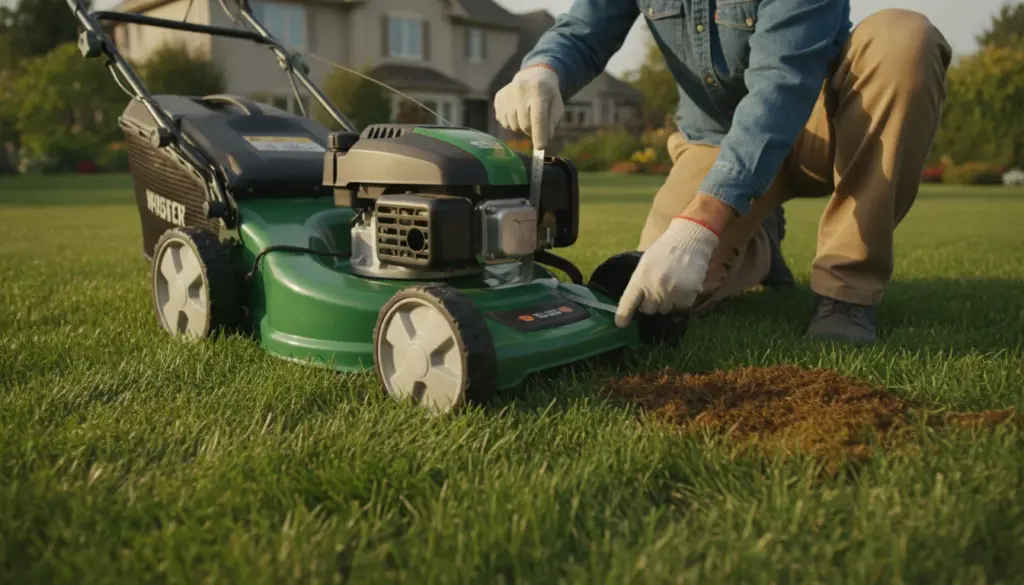
Most residential lawns are routinely cut far too short, often due to sheer habit or a desire to mow less frequently. You can reverse this damage with just a few clicks of an adjustment lever.
- Following winter, start your first cut on the highest possible setting.
- Keep the deck elevated for the first two sessions to clear away winter debris without shocking delicate spring roots.
- Gradually dial down the height over subsequent weeks until you hit 4–5 cm for sunny zones or 6–8 cm for shadows.
- Always visually verify your work after a pass. If you are unsure, grab a ruler and measure the remaining standing blades.
- Only operate your equipment when the yard is completely dry to prevent tearing the foliage and clogging the undercarriage.
Beyond Mowing: Extra Moss Prevention
While correcting your cutting height works wonders, eliminating moss entirely requires addressing underlying soil conditions. This invasive green sponge loves compacted, damp, and slightly acidic environments.
Aeration and thatch removal
Heavily utilized yards eventually suffer from compacted topsoil, which crushes root development and stops water drainage. Using a garden fork or a specialized hollow-tine aerator punches vital breathing holes into the ground, allowing oxygen and rainwater to penetrate deeply.
If a thick, spongy thatch layer has already formed, you will need to rip it out using a scarifying rake or a powered verticutter. The yard will look heavily scarred immediately afterward, but assuming you correct your mowing habits, it will bounce back beautifully.
Balancing acidity and nutrients
An overly acidic soil profile actively sabotages grass while promoting moss. Applying garden lime periodically—especially crucial for sandy soil compositions—nudges the pH balance back to a turf-friendly range.
Pairing this with a high-quality lawn fertilizer encourages the grass to grow incredibly dense. A thick, impenetrable canopy naturally chokes out invading weeds by blocking their access to light. Just be careful not to overdo the feeding, as excessive nutrients trigger rapid, floppy growth that easily succumbs to fungal diseases.
Tailored Strategies for Every Garden
A tiny urban courtyard requires a completely different approach than a sprawling suburban backyard. Yet, the foundational principle of correct cutting height remains identical.
In heavily shaded, compact city plots, it is often wiser to embrace a slightly shaggy look. A thicker, taller canopy looks significantly healthier and greener than a scalped, patchy mud pit.
For active families dealing with pets and sports, never drop the blades below 4 centimeters in high-traffic zones. Taller blades act as tiny shock absorbers, cushioning heavy footfall and recovering rapidly from damage.
If you rely on an automated robotic mower, you are already at an advantage. These clever machines trim tiny increments daily, perfectly mirroring the one-third rule. Just ensure the digital or mechanical height setting isn’t secretly dialed down too low.
Managing extreme weather
Whenever a brutal summer drought hits, preemptively raise your cutting deck. Taller blades cast tiny shadows over the soil, drastically reducing moisture evaporation and keeping the yard green longer.
Conversely, after extended periods of relentless rain, moss gains a massive environmental advantage. The moment the weather dries up, get out there to maintain your optimal height bracket, and immediately consider aerating the soil. Being proactive stops the damp-loving spores before they spread.
By simply adapting your cutting height to the seasons and strictly following the one-third rule, you will drastically reduce your reliance on harsh chemical moss killers. A quick twist of a dial is the ultimate foundation for a resilient, velvety yard that feels incredible under your bare feet all year long.