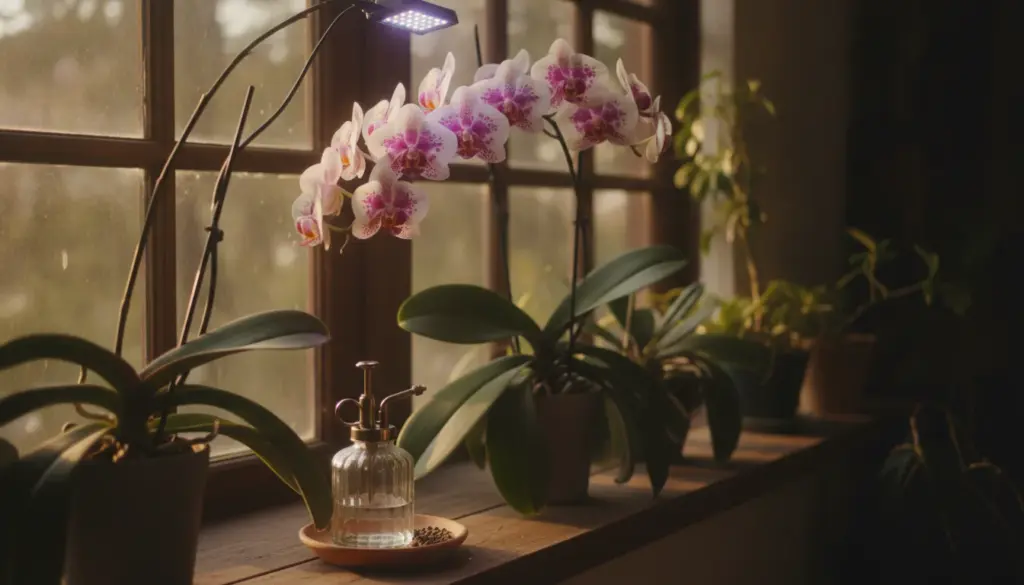
A dormant orchid is far from a lost cause. Making a few targeted changes to its hydration, nutrition, and lighting can easily stimulate the plant into producing fresh flower spikes. There is even a straightforward lighting technique that helps many enthusiasts achieve nearly continuous blossoms.
Why flowering suddenly stops
Orchids carry a reputation for being finicky, but they are simply responding closely to their environment. In their natural habitat, many varieties grow high up in trees, clinging directly to branches. This environment provides them with excellent air circulation around the root system.
They also receive regular moisture without constantly sitting in water, highly diluted nutrients from rainfall, and gentle light filtered through the forest canopy. Living rooms present a stark contrast, often featuring potting material that stays wet much too long, excessive synthetic fertilizer, and locations right above drying radiators.
When this happens, the foliage might stay reasonably green, but fresh floral stems become incredibly rare. Treating your plant like a tropical tree climber rather than a standard potted houseplant often yields the best possible results.
Feeding sparingly for better blooms
Overfeeding is an incredibly common pitfall for indoor gardeners. Commercial greenhouses grow these plants under flawless conditions with highly precise feeding schedules. At home, plant lovers often pour in a splash of universal houseplant fertilizer just to be safe, which rarely ends well.
What excess fertilizer does to roots
These exotic plants generally sit in an airy medium made of bark or coconut husk. When fertilization is too strong or applied too frequently, mineral salts accumulate heavily around the root zone. These built-up salts act exactly like a sponge, pulling essential moisture straight out of the root cells.
While the foliage may still appear perfectly healthy, the plant slowly weakens from the inside out. Producing blossoms becomes the very first activity it abandons to save its dwindling energy. Following a mild feeding routine works best to prevent this:
- Use specialized orchid food or heavily diluted regular fertilizer.
- Apply nutrients only during the active spring and summer growth windows.
- Schedule an occasional rest week where you only provide plain water.
This strategy keeps the potting medium breathable, delivers just enough nutrients, and leaves plenty of reserved energy for developing buds.
A natural household boost
A popular household remedy circulating among growers involves using milk as a gentle, natural booster. The logic makes complete sense, as milk contains calcium, proteins, and traces of sugar that offer a minor nutritional push when heavily diluted.
To try this safely at home, you must stick strictly to a few basic guidelines:
- Dilute the mixture heavily, using one part milk to ten parts water.
- Apply this organic mixture no more than once a single month.
- Ensure absolutely no liquid remains stagnant in the pot to avoid unpleasant odors and fungal growth.
Combining a very conservative regular fertilizing schedule with an occasional mild milk treatment can help sustain the plant’s vitality over the long term. It isn’t a magical cure, but it certainly offers a helpful nudge.
The correct way to hydrate
Hydration routines are just as critical as your feeding schedule. Many people simply pour a weekly splash of water from a watering can right over the top. This wets the surface of the bark, but often leaves the deep center of the pot completely bone dry.
A brief soak for stronger growth
A much better technique involves giving the entire pot a brief, temporary soak. Submerging the container allows the root system to absorb exactly the right amount of moisture without lingering dampness at the very bottom.
Within weeks of adopting this consistent soaking method, you will likely notice thicker, vibrant green root tissue. Eventually, this renewed vigor pushes out a fresh, healthy flower spike.
Misting as a weekly supplement
To further encourage active growth, you can mist the leaves, aerial roots, and stems once a week with a remarkably weak fertilizer solution. This replicates the nutrient-dense, gentle mist these species experience naturally in the wild.
A fine spray acts just like a passing rainforest shower, providing brief nourishment without flooding the container. Just be incredibly careful not to let any liquid pool in the central crown of the plant. Stagnant moisture trapped in the tight spaces between leaves quickly causes devastating rot.
The dark weeks technique
If your plant remains stubbornly green despite excellent care, you can try a lesser-known method: temporarily reducing its overall light exposure.
Tropical environments naturally feature seasons with shorter days or less intense sun, causing the plant to enter a restful phase. When environmental conditions eventually improve, the orchid responds by pushing out new blooms. You can replicate this natural rhythm directly in your home:
- Relocate the pot to a cool, fully shaded room for two to three consecutive weeks.
- Alternatively, loosely place an opaque paper bag over the plant, ensuring you allow for daily airflow.
Maintain steady room temperatures and water very sparingly during this specific timeframe. This gives the orchid a clear biological signal to rest before shifting back into its flowering mode.
Afterward, you will often spot a new spike emerging from a dormant node on an old stem or rising straight from the base. Always be patient, as these resilient plants move at a slow but remarkably steady pace.
Mistakes that delay flowering
Anyone aiming for year-round blossoms should avoid several classic indoor gardening traps.
- Keeping the plant in heavy shade leads to lush greenery but zero flowers, so aim for a bright spot away from harsh, direct rays.
- Forgetting to repot allows the bark to decompose, which suffocates roots and traps excessive moisture. Replacing the medium every two to three years easily prevents this.
- Too much ambient heat from nearby radiators will rapidly dehydrate delicate buds and roots before they can open.
- Overwatering after the blooming phase is highly dangerous because the plant requires far less hydration during its natural dormant period.
Achieving continuous displays
Once you master these subtle nuances, a stubborn orchid becomes surprisingly predictable. You will notice a distinct pattern of leaf and root development, followed quickly by budding, blooming, and a brief resting stage.
While not every variety will push out flowers twelve months a year, popular indoor types like the Phalaenopsis can achieve a nearly continuous cycle. Some growers keep a small rotation of plants in different stages to ensure there are always blossoms on display in the living room.
You can also research the specific temperature preferences of your chosen variety, as many require cooler nights to trigger bud development. A windowsill that naturally drops in temperature overnight often provides this exact environmental benefit.
Ultimately, successful care doesn’t require expensive gadgets, just a careful appreciation for natural rhythms. By adjusting your watering, feeding lightly, and utilizing strategic light changes, your silent houseplant will transform into a reliable, stunning bloomer.