When the blazing sun beats down mercilessly, a simple water station in your backyard can literally save lives. However, you need to be careful: placing it in the wrong spot will leave your feathered friends staying far away.
The hotter months often turn into a brutal daily battle for survival for local wildlife. Natural water sources evaporate, and the baked earth makes it nearly impossible to forage for food. You can easily support these struggling creatures by offering a well-maintained drinking spot and the right nutrients.
Garden Birdbaths: Getting Placement and Hygiene Right
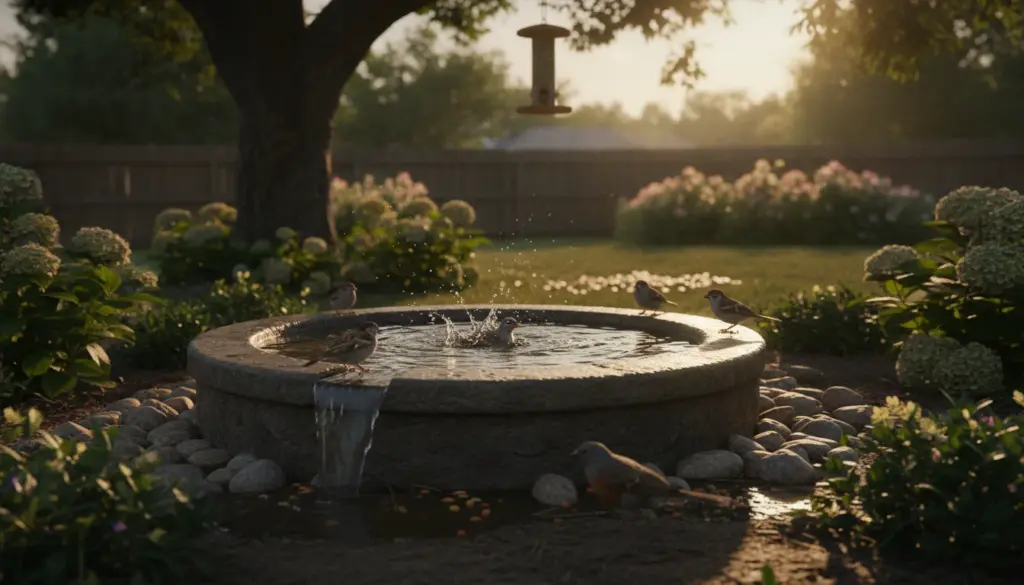
You do not need anything fancy to create a functional watering hole. A shallow dish, a repurposed clay saucer, or a simple terracotta bowl works wonderfully. To encourage actual bathing, aim for a water depth of roughly 2.5 to 10 centimeters. This specific depth allows the animals to wash their feathers safely while escaping the oppressive heat.
Location matters even more than the type of container you choose. Our winged visitors will only land if they feel completely secure in their surroundings. Splashing around causes major distractions, which unfortunately turns them into easy targets for neighborhood cats on the prowl.
Always position your water feature near protective bushes or trees so that robins, blackbirds, and other species have a quick escape route. Daily maintenance is absolutely essential to stop the spread of harmful germs. Scrub the basin thoroughly every single day using a stiff brush and boiling hot water. A brilliant expert trick is to alternate between two different bowls, leaving the unused one baking in the direct sunlight for natural disinfection.
Setting up a small aquatic station or mini-pond provides fantastic wildlife watching right from your window. It is truly a joy to see great tits and chaffinches swoop in for a rapid sip, or watch energetic groups of house sparrows and starlings gather for an extensive splashing session.
Proper Summer Feeding Strategies for Backyard Birds
Drought-hardened soil means earthworms are virtually impossible to reach. Providing supplementary meals during the exhausting breeding season gives exhausted parents a much-needed energy boost. Focus on offering protein-packed options like:
- Dried insects
- Small, fat-rich seeds
Pay close attention to the size of the snacks you leave out. Bulky peanuts and whole nuts pose a serious choking hazard for tiny fledglings. Furthermore, you must completely avoid offering human food scraps, especially baked goods like bread or heavily salted items.
To maintain a healthy feeding environment, enclosed silo dispensers are significantly safer than traditional open houses or flat trays. These vertical designs prevent droppings from contaminating the seed supply. Remember to wash your equipment frequently and only distribute small portions that will be consumed rapidly.
Extra Tips for Protecting Our Feathered Friends
- Attracting seed eaters: Draw finches, sparrows, and bullfinches to your yard by tailoring your seed mix specifically to their dietary needs.
- Empty nesting boxes: If your birdhouses remain unoccupied, evaluate factors like mounting height and nearby disturbances that might be scaring them off.
- Preventing window collisions: Take proactive measures to make your glass panes visible, as window reflections are a vastly underestimated danger for flying visitors.